
21 Ways to Grow as a Writer (Whatever Stage You’re At)

This post was first published in June 2012 and extensively updated in March 2021.
Do you ever feel like you’re not really progressing with your writing?
Perhaps you’re at the start of your writing journey, but it’s hard going. You feel unconfident and unsure: you want to move forward, but you don’t know quite how.
Perhaps you’ve been writing for years and years, and you’re in a bit of a rut. You feel bored, stagnant: you want to take the next steps, but you’re afraid of leaving your comfort zone.
Here are 21 ways to grow as a writer, whatever stage you’re at. See what you could try this week.
Getting Started
If you’re new to writing, here are some things to try:
#1: Read Something – and Think About It
How did the author grab your attention on page one of that novel? How did the blogger keep you reading post after post on their site? What about the subject line persuaded you to open that marketing email instead of deleting it unread?
You can learn something from everything you read. Even if it’s a novel that you give up on after a few chapters, you can pinpoint what didn’t work, so you can avoid it in your own writing.
#2: Learn a New Word or Phrase (or Correct One You’re Getting Wrong)
If you come across a new word or phrase when you’re reading, look it up, and find out what it means. It might not be a word you want to use frequently, but the wider your vocabulary is, the more options you’ll have when you’re writing.
You may also want to make sure you’re using certain phrases correctly. Common mistakes like “for all intensive purposes” when the correct phrase is “for all intents and purposes” won’t do you any favours as a writer. Here’s a handy list of phrases that people often get wrong.
#3: Tackle A Writing Exercise or Prompt
Use a book (or website) with writing exercises, pick an idea from a list of prompts, or simply flick through a magazine and choose an image to write about.
While prompts and exercises can seem a bit artificial, they’re a great way to practice your writing, especially if you don’t yet have a big writing project you want to work on.
#4: Write As Often As You Reasonably Can
You might not be able to write every day (and I think trying to write daily doesn’t work for many writers). However, it’s important to make regular time to write, ideally at least once a week.
If you’d like some ideas for creating time when things are busy, join the Aliventures newsletter. You’ll get a free copy of my mini-ebook Time to Write, which is packed with practical tips. Plus, you’ll get the weekly blog posts (Mondays) and short newsletter articles (Thursdays) to support and encourage you with your writing.
Practice Makes Perfect
If you’ve been writing for a while now, then improving is all about practice. Keep writing on a regular basis, and be conscious and deliberate about trying to make each piece a little better than the last.
#5: Correct Persistent Mistakes
Do you frequently confuse words like “its” and “it’s”? Do you muddle “affect” and “effect”? Spend some time learning the difference between them so you can easily correct these in your writing.
You might want to use a tool like Grammarly to help you edit your work. This will flag up grammatical mistakes (as well as spelling errors) and give you a brief explanation of what’s wrong.
#6: Practice One Element of Your Writing
When you’re aiming to improve your writing, it can help to hone in on specific areas. If you’re a novelist, try writing scenes that include lots of dialogue (my collection of posts on writing dialogue should help you) or practice creating brief but telling character descriptions.
If you write non-fiction, you might want to nail great introductions, or create several different outlines to get to grips with planning and structuring your pieces.
#7: Keep a Writing Journal
After each writing session, take a minute or two to reflect and jot down your thoughts. How did it go? What worked (and what didn’t)? Did anything surprise you?
You might want to use the materials in Supercharge Your Writing Session to help you with this. Make sure you print out the writing session planner, which has space for recording notes on how your session went and what you want to do next time.
#8: Go Through Your Past Pieces of Writing
Look back at something you wrote months or years ago. See if it might have potential for development: is it something you want to return to?
This is also a great opportunity to see how your writing has developed. On a week by week basis, it’s often hard to see ourselves improving: by looking back at something you wrote quite a while ago, you’ll be able to see how far you’ve come.
Help and Support
Everyone needs a helping hand sometimes, and as a writer, you might find you grow fastest with a little support from others.
#9: Share Your Writing with Someone Else
Show a completed piece of writing to someone you trust: maybe a family member or a close friend. You don’t need to ask for their feedback, unless you want to — just let them read it.
If you haven’t ever shown your writing to anyone, this can be a daunting step, but the more you share your work, the more comfortable you’ll get with putting your writing out there into the world.
#10: Get Your Writing Edited
If you want to improve your writing fast, pay a professional editor to edit an article, blog post, novel chapter, or whatever you’re working on. There are plenty of freelance editors out there who can do this for you.
When you get the edits back, look through everything carefully and see what you can learn. Is there a particular issue that comes up again and again? Is this something you could watch out for when self-editing your work in the future?
#11: Join a Writers’ Group (Local or Online)
Becoming part of a group of writers is a great way to meet other writers, get feedback on your work, and learn more about the craft of writing. You might join a small local critique group, or a large online forum … or even both!
If you’ve bought any of my products or courses in the past, or belonged to any groups I’ve run, you can join the Aliventures Club on Facebook completely free. It’s a private members-only group for writers to chat about writing, share their work, and support one another.
Shaking Things Up
Are you in a bit of a writing rut, or feeling uninspired? Here are some ideas to help boost your creativity.
#12: Try a New Form of Writing
If you only write in the third person, try first person. If you only write prose, try poetry. If you only write serious non-fiction, try a humorous piece. If you only write freelance pieces, try a short story.
Branching out into something new will help you explore your creativity in a different way. You might even find a new type of writing that you love. For some help getting started, check out Get Writing, which is designed to help you dip into new areas of writing (and go further with the ones you’re already working on).
#13: Read Something Outside Your Comfort Zone
That could be literary fiction, biography, erotica, westerns, a trade journal, a tabloid newspaper … absolutely anything that you normally wouldn’t read.
You might find you enjoy it more than you think you would. You’ll almost certainly spot interesting ways to use words or structure, or get a deeper understanding of the different conventions in different types of writing.
#14: Write In a New Location
If you’re struggling to get inspired, it could be your writing environment working against you. Try writing in a different room of your house. Make sure you’ve done what you can to make your writing space an inviting place to work. (Check out Supercharge Your Writing Environment for help with that.)
If you can get out and write somewhere away from home, try a library, a coffee shop, a park, or even booking an overnight stay in a hotel on your own. You might find it’s much easier to feel inspired in different surroundings.
#15: Take a Writing Course
There are so many options of writing courses out there. You could take an online course, attend an afternoon workshop, or even enrol on a creative writing degree course.
Writing courses can be a great way to get inspired in the presence of like-minded writers. Many people also find it helpful to take a course that includes deadlines and some degree of feedback, either from classmates or from your tutor. Just try to avoid buying writing courses without actually writing.
Aiming for Publication
Are you hoping to get your writing published? Here are some ways you might want to move forward with that.
#16: Enter a Writing Competition
There are dozens of websites, magazines, and writers’ groups that have competitions you can enter, particularly if you write short stories. Some of these require an entry fee, which will often only be a few dollars.
Even if you don’t win or get shortlisted, short story competitions are a great way to get practice in writing to a deadline. You’ll also often have a specific word count limit, and sometimes a particular theme or structure to use for your work.
#17: Pitch Your Book Idea to a Publisher
Developing your book idea into a proposal for a publisher helps you to hone your thinking. Even if your book proposal gets turned down, you’ll have gained valuable experience.
For a novel, you’ll normally need to send a synopsis of the whole thing, plus the first three chapters. For non-fiction, you’ll normally need a chapter by chapter outline plus at least one complete chapter as a sample.
#18: Submit Articles or Short Stories to Magazines
Getting a short piece in a magazine is often much easier than getting a book published. It can be a real thrill to see your name in print, plus this gives you valuable experience that you can mention when submitting your book proposal.
With articles, you’ll normally need to pitch your idea to the editor first, as they may have specific requests for how they want you to write it. With short stories, you’ll normally need to send the complete story.
Going Further
Maybe you’re looking for some next steps or wondering what could make the biggest difference to your writing life over the next few months or years. Here are some things to try.
#19: Get Testimonials or Reviews of Your Writing
If you’re a freelance writer, or if you’re a blogger who’s created a written product that people can buy from your website, ask your clients/buyers for testimonials. This is a huge help in encouraging new business.
If you’ve written a novel, try to get as many reviews as possible on sites like Amazon and Goodreads. Avoid asking friends or family for these (Amazon doesn’t permit this), but look for opportunities to give out free copies to people who might want to leave an honest review.
#20: Set Yourself a Challenge
What would you like to achieve with your writing? What would make you really proud of what you’d accomplished?
Maybe you want to get published in a national newspaper, or see your writing on a website that you admire, or win a specific competition. Set yourself a goal, figure out the next few steps, and start working towards it.
#21: Self-Publish Your Work
It’s easier than ever to get your writing in front of readers, and self-publishing has become much more accessible and legitimate over the past decade.
You might want to think about starting a blog, where you can publish pieces as often as you want, and build up an audience. If you’re a novelist or non-fiction author, you might want to publish your book on Amazon yourself. Some self-publishing authors make a very good living from this (J.F. Penn and Steffanie Holmes are great examples).
One of the great things about being a writer is that, whatever stage you’re at, you can keep growing and improving. Even if you don’t have very much time to write, you can make the most of what you do have.
Check out some of these recommended posts here on Aliventures to help you with your next steps … and send me a tweet @aliventures to let me know how you get on!
About

I’m Ali Luke, and I live in Leeds in the UK with my husband and two children.
Aliventures is where I help you master the art, craft and business of writing.
Start Here
If you're new, welcome! These posts are good ones to start with:
Can You Call Yourself a “Writer” if You’re Not Currently Writing?
The Three Stages of Editing (and Nine Handy Do-it-Yourself Tips)
My Novels
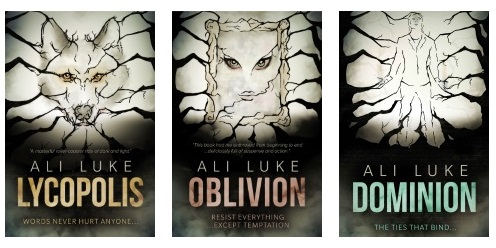
My contemporary fantasy trilogy is available from Amazon. The books follow on from one another, so read Lycopolis first.
You can buy them all from Amazon, or read them FREE in Kindle Unlimited.
How do you exactly go about doing #17: pitching your idea to a publisher? Seems like an idea from someone unpublished would get lost in the shuffle. Any advice? Thanks!
That’d be a whole article in itself … if not several! For non-fiction, find a specific publisher to target, and look at their guidelines on sending a proposal. (For fiction, they usually want you to have written the whole novel first, and — in the UK — you send a synopsis and first 3 chapters.)
How about #22: Read Aliventures
Good list I’ve tried most of these at one point. But in seriously, I know there are a lot of writing blogs out there, and I always keep coming back to yours.
Zac’s last blog post ..Why You’re Blog Is Like An Abandoned Amusement Park, And What You Can Do About It
Aww, cheers, Zac! 🙂 And thanks for your continued support of Aliventures!
A great list. It gave me a few new ideas. I’d like to add a suggestion and expand on #1 and #13. Read something you may not like and try and figure out why you don’t like it. Is it the characters? Is it the dialogue? You can learn a lot from trying to understand your own preferences, and why you think you would write it differently.
Michelle Blake’s last blog post ..Live your Dreams
This is a great suggestion, Michelle; thanks for adding it!
totally agree Ali
especially with number 1
my writing keeps improving as i keep reading
you rock 🙂
Farouk,
It’s good to see your comments here at Aliventures. I sometimes puzzle over our connections as writers.
Tom
TNeal’s last blog post ..Does Playboy Influence Your View of Christian Community?
Thanks farouk and TNeal — it’s great to have you both here. 🙂
Really good advice! We have to work hard all the time and sometimes it’s handy to find a new way to do things, or look at things. As far as pitching to a publisher, conventions! There are writing fairs and conventions all over the country, big and small…and publishers go to them all. As an editor, I go to several a year and we take pitches, formally and informally everywhere we go. Just make sure the person you’re talking to is actually in pitch taking mode when you do it. I hear stories about editors trapped in bathroom stalls…
kate richards’s last blog post ..Release Day for An Apple Away is June 8, 2012! A Wiccan Haus book from Musa Publishing
Thanks, Kate! And that’s a fantastic tip about conventions — here in the UK, a couple of the major writing conferences have lots of agents and editors attending, and authors can book short (15 min) one-to-one appointments with them … a really great opportunity to by-pass the slushpile.
Excellent progression in your list. It gives a clear picture to a writer as to where he or she is on the writing journey. Even if you’ve gone through them all, it helps to review the steps. Great job!
TNeal’s last blog post ..Does Playboy Influence Your View of Christian Community?
Thanks, TNeal! And I’m not suggesting that this is in any way a definitive set of steps, of course; just a grab-bag for people to choose from if they’re looking to go a little further. 🙂
I completely agree with #7. Before I had a writing journal on me I would think of great ideas but forget about them by the time I got home. Now that I have one I keep track of ideas for my novel and new blog post ideas.
I’m going to try #2 learning a new word. It never hurts to expand your vocabulary.
Thanks Shaquanda! There’s nothing more frustrating than not having anything to write on when you come up with a great idea…
It’s a very interesting list.
In this week I published my first ebook, so I have already applied the #21 and I will try the #8 I have a brief “incipit” of a new novel ho knows what will come…
Thanks for your valuable advice
Congrats, Anna! Well done on publishing your first ebook … and I hope the new one goes well. 🙂
#8 scares the dickens out of me. I’ve done it before and my LORD my stuff was wonderfully horrible back then. It’s comforting to see how much I improved, but it’s also horribly embarrassing to know that I wrote that kind of stuff back then… 😛
I often have similarly mixed feelings! Towards the end of my MA, I looked back at some the work I’d done at the start of it … and I was staggered at how much I’d improved (especially as I didn’t *feel* like I was making particularly dramatic progress). But sometimes, an old piece can hold a real gem — even if it’s just one image or idea or sentence that you can use.
Hi Ali, I have done quite a few things on your list and yet I need to do more. I don’t know where you get all your energy from to accomplish what you do.
No.17 looks to be a great one for me albeit challenging.
I did get my ebook edited and proof read. Learnt heaps and found my writing wasn’t too bad after all. I always think that we have a blind spot when it comes to our own writing and a fresh pair of eyes can really lift our game.
warm regards
Carole
Carole Lyden’s last blog post ..Justice for Lindy as Australia embraces its shadow side
I write fast, which helps — and I have a very supportive husband! Good luck with #17, if you do go for it; the first time I pitched a book was way before I was ready, and I predictably got turned down, but putting together a proposal was a valuable learning experience all the same.
So glad you had a great editing experience; I know how tough it can be to seek critical feedback … but it’s also an invaluable way to suddenly see some of those blind spots.
Writing as frequently as four to five times a week really played a big role in polishing my writing skills. Sure, I read more and more, and try choosing the material I’m about to digest carefully, but practicing how to use and bend those words, phrases and sentences, gives the best results for me. I love reminiscing from time to time too, just to see how much progress I’ve made. It also helps if you want to make your tone and writing style show the progress you’ve made.
Slavko Desik’s last blog post ..How To Feel Fit And Energized Most Of The Time
I think writing frequently — and consciously practising, too — is a great way to improve. Glad it’s working for you, Slavko. 🙂
I put down my pen for a few months while I was involved in a different project. Came back to writing and there was a noticeable shift in my flow. So I’m taking particular notice of #4 – write as often as possible even when you’re on a break.
Reeta Luthra | Paradox of Reality’s last blog post ..7 Irresistible Ways Role Models Empower Your Success
I always find it tough to pick up a project after a break (and much easier to keep going when I’m writing several times a week) — and I’m often surprised how much of what I’ve already written that I forget after a break, too!
Thanks for sharing this…love it so much…
Thanks for providing these 21 powerful tips.Its very hard to write in language which is not your native language but the steps you mentioned here are worth following and will surely help in increasing writing skills.
Ashish’s last blog post ..Best Smartphones Below Rs.10000
Informative read, Thank you for the suggestions and tips.