
When Your Novel is Taking Way Longer Than You Expected
I hear from a lot of novelists who find it’s taking far longer than they expected to write their first novel.
They started out thinking they’d be done in a year or two – and they’ve been working on it for perhaps four, five, even ten years, without being done.
Does that sound like where you’re at right now, too?
If so, please don’t think that there’s anything wrong with you or your writing.
Here are some likely reasons why your novel’s taking way longer than you expected at the outset … and some practical ways to speed things up.
I’ve split these reasons into two broad categories, though inevitably they overlap a bit. The first set of reasons are to do with the writing itself; the second set of reasons are more about your own energy and time.
Why the Writing Itself is Tough When You’re Working on a Novel
Reason #1: Writing a Novel is a Big, Complex Project
Some novels are inherently less complex than others. For instance, writing a novel with only one viewpoint character is generally going to be easier than juggling multiple viewpoints. Writing a contemporary novel that’s set in a town you know well (or a fictionalised version of one) is going to be easier than writing a historical novel, or one set in an unfamiliar location, where you need to do a ton of research.
But all novels are going to be big and complicated in at least some ways. When you’re writing a short story, it’s relatively easy to have the whole thing in your head … but when you’re working on a whole novel, you’ll almost certainly find that you’ve forgotten bits of it, or missed an opportunity to tie things together. (That’s where editing comes in…)
The amount of thinking, structuring, drafting, redrafting, and so on means that it can take a lot longer than you might think to put together a novel … especially if this is the first time you’ve tried writing one.
Speed it Up:
Keep good notes. You may well have to work on your novel in a stop-start way; by having clear notes on your characters and plot, you’ll find it easier to pick up where you left off.
Consider simplifying your novel. This won’t work in all situations, but if you’ve got a complicated, multistrand plot with six different point of view (POV) characters, you might find the writing flows a lot more easily if you go for a more straightforward plot and just three POV characters.
Reason #2: Writing a Novel Isn’t Always Intuitive
If you’ve read (or watched!) a lot of stories, then you probably have a good grasp of story structure, characterisation, pacing, and so on. You know when a story feels like it’s dragging, or when a character behaves in a nonsensical way because it suits the plot … and you can (often) spot or avoid these mistakes in your own writing.
Chances are, you’ve read a bunch of writing books and blogs, too. Perhaps you’ve even taken courses on writing, or studied English literature. But even so, there’ll be times when you feel stuck on your novel.
That could be because you just don’t know what happens next in the story, which we’ll come to in a moment. Or it might be that you don’t have confidence in specific aspects of your writing – like your handling of dialogue, character descriptions, or point of view.
It’s easy to grind to a halt at these points: to put your writing down and not pick it up again because of those nagging uncertainties. Or if you are still writing, you might be doing so sporadically, without feeling like you’re really getting into the flow.
Speed it Up:
Deliberately practice specific aspects of writing. If you’re not too confident on dialogue, try writing a scene or two that are mostly dialogue. If you can, get some feedback on your writing, to get a sense of what’s working well already.
Focus on finishing the first draft. It’s very understandable to want to get everything right the first time round … but a messy, patchy first draft that makes it through to something approximating “The End” is far more helpful than a first draft that’s stalled in the middle.
Reason #3: Writing a Novel is Hard When You Don’t Know What Happens Next
Have you ever written a scene just to write something? Maybe it seemed logical to write about that journey your character needed to take, even though not much was going to happen during it, or you decided to have your characters chat over coffee. But you have the sense that your story is drifting off course.
This is what some writers call the “messy middle” or “saggy middle” of the novel. You probably knew how things should begin – with the story kicking off for your protagonist, and with all your characters coming into play. But once you’ve got all that in place, it can be tricky to know what goes next.
This is where story structure comes in! While I’m not keen on “cookie-cutter” approaches to story writing, I do think that having big, key structural points in place is a huge help when drafting.
Speed it Up:
Do a bit more planning. Even if you’re a “pantser” (discovery writer), it’s really hard to get through a whole novel by simply wandering around. Think about where your story is heading: what’s the big confrontation (climax) at the end?
Use my free worksheet to nail the seven main events in your plot – just pop your details in here to grab a copy:
You’ll also get my weekly newsletter and blog posts, though you can unsubscribe at any time.
Why it’s Hard to Have the Time and Energy for Writing a Novel
Reason #1: Your Life is Already Full of Something (Without Writing a Novel)
Obviously, some writers will have busier lives than others – by which I mean, they’ll have many hours of commitments that are tricky to move or avoid.
If you work full-time, then you won’t be able to write from 9am–5pm Monday–Friday (or whatever your work hours are). If you have small children, writing from, say, 5pm–7pm is unlikely unless someone else is handling the whole of tea time, bath time, and bedtime.
But even if you’re retired, you’ve probably got at least some demands on your time: maybe you’re heavily involved in a church or community group, you’re caring for a relative, or you’re looking after grandchildren, for instance.
Even if, on paper, you have a lot of free time, your life is already full of something before you start writing a novel. You’re presumably not sitting around for hours each day just staring at the walls.
This means that novel-writing inevitably has to displace something else in your life. That might be relatively easy (e.g. if you usually watch three hours of T.V. each evening, you might watch two hours of T.V. and write for an hour). But for many of us, there’s not an awful lot of space for writing without giving up much-needed downtime. And that can leave you without much energy to write.
Speed it Up:
Look ahead in your calendar and block out writing time. Perhaps this month is packed … but maybe you can get a whole Saturday afternoon next month, and a full weekend in three months’ time.
Use my free Make Time to Write worksheet to figure out where writing could fit into your life. (You don’t need big chunks of time, even 10–15 minutes is enough to write.)
You’ll also get my weekly newsletter and blog posts, though you can unsubscribe at any time.
Reason #2: The Mental Load is Stopping You Focusing Easily on Your Writing
The “mental load” is the cognitive effort we all make to keep track of tasks that need to be done, anticipate tasks that are coming up, and so on. We often use the phrase to describe household/personal tasks (like remembering birthdays, buying cards, getting stamps, etc) … but work life can also have its own mental load, and a long list of work to-dos might well on your mind when you want to write.
I was chatting about this with a writer on a coaching call recently: they mentioned having a lot of household tasks on their mind, and how that was often intruding into mental space that could be used for their novel. This is such a common issue – but not one that people talk about much.
If you sit down to work on a scene in the evening, but your mind is also on the laundry that you mustn’t forget in the dryer, the work email you forgot to send earlier in the day, and the homework that you need to check up on … it’s going to be really hard to enter that imaginative world of your story.
Speed it Up:
Jot down tasks that intrude on your mind. It’s tempting to try to put things out of your mind – but I find it actually helps to pause for a second in writing, get the thought down on paper (“birthday card for Sam”), then carry on writing without worrying about forgetting it.
Do a brain dump before your writing session. Open up a blank file (or grab a sheet of paper) and write down what’s on your mind. You could do this journal-style, create a categorised list, make a mindmap, or anything that works to clear some mental space.
Reason #3: Writing a Novel (Generally) Isn’t Urgent
Unless you’re on a deadline from a publisher (or you’ve committed to self-publishing your novel by a certain date), then writing your novel probably isn’t urgent.
Let’s say you’ve planned to write 500 words today … but things have been busier than you expected. You could write those 500 words tomorrow instead, or the next day: there’s no urgency to completing them. After all, your novel may still have another 50,000+ words to go.
A lot of other tasks in life are much more time-sensitive. My kids need feeding every day at around 6–6.30pm – I definitely can’t put that off till the morning, or even for a couple of hours! Work tasks often have deadlines. Even little tasks, like replying to your friend’s WhatsApp message, or making a dentist appointment, tend to need doing within a fairly short time frame.
Skipping one planned writing session is fine, of course (and there’ll be times when it definitely makes most sense to do so). The problem comes when, day after day, other things are always more urgent than your writing.
Speed it Up:
Put writing on the calendar. We do this in Writers’ Cafe through our near-daily writing hours, so that there is some urgency to writing: we’re only there together for an hour. Having a set time to write – and the gentle accountability of others! – makes it much more likely that you’ll get some words down.
Recognise that your writing matters. While other tasks may be more urgent, or have a visible impact, your writing is important. On New Year’s Eve, you’re unlikely to be looking back thinking how pleased you are that you were always on top of the laundry this year … having a finished novel in your hands would feel far more significant.
As you write your novel, even if it’s taking (a lot) longer than you hoped, please be kind and patient with yourself! So long as you’re still writing, you will finish. It’s okay if it takes years – most people’s first novels do.
But you also don’t need to struggle on alone.
Novel Coaching: Get Unstuck and Reach “The End”
One of the main reasons writers come to me for one-to-one coaching is because they’re feeling stuck on their novel or they’re moving a lot more slowly than they want to. Perhaps it’s really hard to make writing a priority, or they wrote a few chapters then ran out of steam, or they’ve got a rough draft but they’re not sure how to shape it.
You can book a free call with me here so we can talk through any roadblocks that are getting in the way of you finishing your novel. There’s no obligation to go on and book further coaching if you don’t want to. This is a chance for us to get to know one another … and together, we can hopefully get you moving forward faster with your novel.
If you’re interested, just head to that page and click the “Fill in the Booking Form” button. I’ll then get back to you with a range of times for you to choose from.
About

I’m Ali Luke, and I live in Leeds in the UK with my husband and two children.
Aliventures is where I help you master the art, craft and business of writing.
Start Here
If you're new, welcome! These posts are good ones to start with:
Can You Call Yourself a “Writer” if You’re Not Currently Writing?
The Three Stages of Editing (and Nine Handy Do-it-Yourself Tips)
My Novels
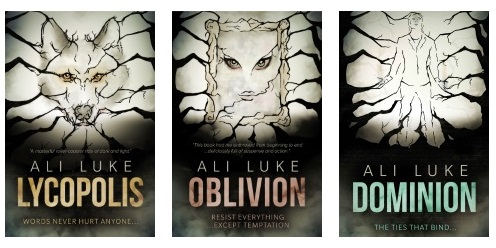
My contemporary fantasy trilogy is available from Amazon. The books follow on from one another, so read Lycopolis first.
You can buy them all from Amazon, or read them FREE in Kindle Unlimited.
This is an incredibly thoughtful and reassuring piece — thank you. Writing a novel is a big, complex project, and it’s easy to feel discouraged when progress doesn’t match our expectations. I really appreciate how you break down both the structural challenges of novel‑writing and the practical realities of life’s demands. Your advice on keeping detailed notes, simplifying difficult elements, and planning milestones is both clear and actionable. Most importantly, your reminder that taking longer than expected doesn’t mean something is “wrong” — it just means this process is hard but worthwhile — is a message many writers need to hear. This has given me new perspective and motivation to keep moving forward with my own novel.
Great article! I really appreciate how you compiled such a comprehensive list of instant approval blog commenting sites — especially ones with high domain authority and low spam scores. This is incredibly useful for bloggers and SEO practitioners who want to grow their backlinks, traffic, and niche visibility without getting bogged down in approval delays.