
How to Write a Novel: Your Seven Step Plan
Have you got a novel idea … but you’re not quite sure where to begin?
In this article, I’ll be taking you through all the key steps for writing a novel: from your initial idea to your finished first draft.
These are:
Step #1: Come Up With an Idea You Want to Write About
Step #2: Explore Your Idea, Setting, and Characters
Step #3: Craft Your Basic Novel Outline (Structure)
Step #4: Create a Writing Plan to Get You to “The End”
Step #5: Figure Out the Perspective and Tense for Your Novel
Step #6: Write Your First Chapter (But Don’t Get Stuck There)
Step #7: Keep Writing … and Get Support Along the Way
Frequently Asked Questions About Writing a Novel
(Click any link to jump straight to that section.)
You might already have tackled some of these steps, or you might be right at the start of the process. Whatever stage you’re at, I’ve included lots of resources to help you.
Take your novel from idea to finished manuscript with Writers’ Cafe. We’ve got monthly workshops, live writing hours, virtual writing retreats, weekly check-ins, feedback sessions, and more … all designed to get you to “The End”.
Step #1: Come Up With an Idea You Want to Write About
All novels begin from nothing.
Your novel will likely begin as a tiny spark: the flickering of an idea.
That idea could come in all kinds of forms. Some novelists picture a character; others are inspired by an unusual news story or a “what if” question. You might be drawn in by an artwork or a song, and find a novel idea emerging from that. Or perhaps something from your own life – your childhood, career, or an unusual experience – gives you that initial spark for your novel.
Here are just a few examples of novelists talking about where their story ideas come from:
All my seven Narnian books, and my three science-fiction books, began with seeing pictures in my head. At first they were not a story, just pictures. [The Lion, the Witch and the Wardrobe] all began with a picture of a Faun carrying an umbrella and parcels in a snowy wood. This picture had been in my mind since I was about sixteen. Then one day, when I was about forty, I said to myself: ‘Let’s try to make a story about it.’
– C.S. Lewis, quoted here
After moving to London, I was sitting on a delayed train back home from Manchester when suddenly I had the idea of a boy wizard who went to wizarding school. Harry Potter and Hogwarts came out of nowhere in the most physical rush of excitement, and ideas came teeming into my head. I simply knew it was something I would love to write, but that day I was pen-less for once in my life, so as I sat there on the train, I had to rely on imagining the details, most of which ended up being in the books.
– J.K. Rowling, in My Story
For me, ideas come out of themes and questions, not necessarily intellectual, and often emotional. I think about the premise of the story. For instance, what does it feel like if you reach a certain age and it dawns upon you that you’ve wasted much of your life? With experience, it becomes easier to recognize fruitful ideas.
– Kazuo Ishiguro, quoted/paraphrased here
Some ideas are compelling “what if” situations, tackled in different ways by different authors. I’ve seen several books in recent years – across several genres – built around the premise of “what if two babies were switched at birth”.
I don’t think you can force a novel idea. (You can absolutely generate ideas, but you can’t make yourself have an idea that you’re determined to commit a year or more of your life to.) Whenever I’m between novels, I feel like I’ll never have an idea that’s engaging enough for me to write a whole novel about it … but I invariably do!
Many first-time novelists, however, do have an idea already. They’ve often been carrying that idea for years or even decades, not quite ready to develop it. I developed my characters and plot for my novel Lycopolis in late 2008 … but I’d had the spark of an idea for that novel for over two years by that point. I just didn’t feel ready to write it.
Try This
#1: If you’ve already got a novel idea, write it down! See if you can encapsulate the core idea in a sentence or two. If you’ve got several ideas, choose the one you’re most excited by.
(Don’t try to “save” your best idea for a future book – you’ll get much further tackling an idea that really grabs you than one that’s only moderately interesting for you.)
#2: If you don’t have an idea yet, but you want to write a novel, don’t try to force yourself to come up with something. Enjoy books, art, music, anything creative … and an idea may come when you’re not expecting it. Joanna Penn also has a really helpful post on finding and capturing novel ideas, which I’ve linked to below.
Resources
Writing Tips: How To Find And Capture Ideas For Your Novel, Joanna Penn, The Creative Penn
Novel Ideas and Where to Find Them, Gina Sorell, The Novelry
Step #2: Explore Your Idea, Setting, and Characters
Once you’ve got an idea that you want to explore, you need to develop it.
(You don’t have to commit to anything at this stage, and you might want to go through the process of developing several different ideas if you’re not sure which novel you want to work on.)
You can find all kinds of plans out there for developing a novel idea – the Snowflake Method is a popular one – but in practice, most writers follow a more organic process.
When I’m at this stage with a novel, I jot down lots of notes. I used to do this in a dedicated notebook for each novel: now I tend to do it in Google Docs. I get everything out of my head and onto the page – ideas about the characters, the setting, what might happen, and so on, in whatever order it comes to me.
At this point, I also do a lot of “maybe” notes: possibly paths I may or may not take.
This is such a fun stage of novel writing … so if you can, find the time (and place) to fully immerse yourself in it. Have an hour or two in a coffee shop with your favourite drink, or take an evening curled up in bed to scribble down all your ideas … whatever helps you feel creative and inspired. Years ago, as a teenager, I used to get through the tiny door into the eaves space of our loft room, where I could lie on my stomach and write about my ideas, undisturbed!
As you brainstorm, you’ll hopefully start to think about what setting (when and where) makes sense for your novel, and what characters are going to be in it.
You’ll usually have a protagonist (main character), some supporting characters, and an antagonist (not necessarily a “villain” as such, but someone who opposes the main character or gets in the way of them achieving their goal).
Try This
#1: If you get stuck when brainstorming, you might feel that you’re not sure where else to go with your ideas. When I talk to coaching clients about this, we often dig into why questions. Why would your main character finally snap and leave their marriage? Why would an organisation take on this huge vanity project?
Figuring out possible reasons can nudge you forward into more ideas, with one train of thought leading to others.
#2: Another great resource here is ChatGPT (or your AI tool of choice). Generative AI is great at reflecting things back at you and giving you prompts. Here’s a prompt you can use:
I’m brainstorming a novel, and this is what I’ve got so far. Could you ask me some specific questions to explore as I brainstorm further?
Just paste in or upload your notes with the prompt.
Resources
Writing a Fiction Novel (Part 1): How to Brainstorm Ideas and Test Your Concept, Miffy Seideman, MiffieSeideman.com
Character Name Generator, Ali Luke, Aliventures
Step #3: Craft Your Basic Novel Outline (Structure)
A lot of people treat steps 2 and 3 as the same thing … but I think they’re quite different.
Developing your idea is a highly creative, exploratory process. Crafting a novel outline tends to be more analytical: sure, you’re still thinking about different possibilities, but you’re taking a much more ordered and structured approach.
This is also a point in the novel writing process where you’ll find a couple of different approaches, often described as “plotters vs pantsers”. In practice, I think this is a slightly false dichotomy … most writers fall somewhere between the two!
But let’s take a look at these basic approaches:
Plotters are writers who outline in detail before starting their first draft. They will likely have a chapter-by-chapter outline, perhaps even an outline that digs down into individual story beats, not just a high-level novel structure.
Pantsers (“seat of the pants” writers, or “discovery” writers) just dive into drafting. They may have a vague idea of how the story should end, and a few things that might happen along the way, but mostly they’re operating by instinct alone.
For years, I was well towards the “pantser” end of that spectrum. My personal writing process was to develop an idea, know how the novel would begin and end, and to just dive in and write a scrappy first draft. I’d start over, with a fresh blank document, for the second draft.
I don’t think that’s a bad process – and it suited me well because I like to write fast! – but it’s started to feel inefficient and frustrating for me, so I’m leaning into doing considerably more upfront planning.
When I see writers getting stuck, often in their first three chapters, it’s usually because they’re taking a pantser approach. They have a clear picture of how their story begins – which carries them through those early chapters – but then they simply don’t know what happens next.
To avoid that, I recommend spending a bit of time working out the major structural points for your novel.
Those are:
- The Hook – what happens on the first page (or very close to it) to draw readers into the story?
- The Inciting Event – what breaks the status quo and kickstarts the story for your main character? (Also called the inciting incident and the call to adventure.)
- The First Plot Point – what big change pushes your main character into reacting to events?
- The Midpoint (Second Plot Point) – what major reversal happens in the middle of your story, driving your character from reaction to action?
- The Third Plot Point – what’s the “darkest hour” for your main character?
- The Climax – what big showdown happens between your protagonist and the antagonist?
- The Resolution – what’s the new status quo at the end of the story?
You can get more details on all of these, plus examples of how they play out in The Hunger Games, in my post on three act story structure.
Try This
Spend an hour outlining your novel’s plot. If you’d like a free worksheet to help with this, just pop your name and email address in below:
If you’re on the “plotter” end of the spectrum, dig deeper, if you want! You might like to plan out individual scenes (individually or in sequence), at least for the first 25% or so of your story (up to the first plot point).
Resources
Three Act Story Structure (Including the Seven Key Plot Points Your Novel Needs), Ali Luke, Aliventures
How to Outline Your Novel, K.M. Weiland, Helping Writers Become Authors
Step #4: Create a Writing Plan to Get You to “The End”
Once you’ve got an outline – even a very high-level one – you might be tempted to jump straight into drafting.
I think it’s really helpful at this stage to pause and figure out what you need to do to get to “The End” of your first draft.
Sometimes, I’ll hear from writers who feel that they need to be able to take a year’s sabbatical from work, or wait until they’ve retired, to write a novel.
Other writers are at the other extreme: they expect to write a novel in a few months, despite a hugely demanding day job and hectic family life.
Writing a novel takes time … but it might not be as much time as you’d imagine.
This is where it’s really helpful to break things down into a plan.
Let’s say you want your first draft to be finished by the end of the year, and that’s currently 10 months away.
You might want to allow a month for extra outlining, trying out scenes, and figuring out the point of view for your novel (see step #5).
Then, assuming your novel’s going to be about 80,000 words, you could aim to write 10,000 words a month – which gives you a bonus month in case things run over.
Once you’ve figured out how many words you need to write per month, you can work out potential ways to fit that in. For instance, for 10,000 words a month, you could decide to write:
- 330 (ish) words every day
- 450 (ish) words every weekday
- 1,100 words every Saturday and 1,100 words every Sunday
There are all kinds of writing schedules that can work for a novel. (One of the more unusual ones I’ve come across was Kazuo Ishiguro’s four-week “Crash” for writing the first draft of The Remains of the Day.)
To get my guided worksheet (Make Time to Write) to help you build an achievable writing plan, just pop your name and email address in below:
Try This
Track your time for a week – it’s a bit tedious, but it can be eye-opening! You can use a spreadsheet, an app (there are loads of options), or even just a notebook. After a week, you’ll hopefully be able to see patterns – e.g. perhaps you’re spending an hour scrolling on your phone most evenings, and you could use 30 minutes of that time for writing.
Consider writing alongside other people doing something creative/writing-related. Sometimes I do a co-working session like this with my husband, but mostly, I do this through the Writers’ Cafe live writing hours. I’m much more likely to fit in an hour of writing when it’s on my calendar and it’s happening alongside other writers!
Resources
17 Ways to Make the Most of Your Writing Time, Ali Luke, Aliventures
How Do You Find the Time to Write? Joanna Penn, The Creative Penn
Step #5: Figure Out the Perspective and Tense for Your Novel
One major decision you’ll need to make before you start the first draft is what perspective (first or third person) and tense (past or present) you’re going to use for your novel.
Sometimes, you might feel that the choice is obvious: e.g. third person past tense just “feels” right for your story.
As a very rough rule of thumb:
- First person, present tense is very immediate, often associated with YA fiction, and can lend itself to a lot of interiority (being inside the character’s head, rather than focused on what’s happening externally).
- First person, past tense gives a little bit more distance, and allows you to have a character reflecting back on events that happened in their past.
- Third person, present tense can be seen as a more literary choice – though that’s far from invariable.
- Third person, past tense is probably the most “standard” option out there across genres, and it’s unlikely to attract any hatred!
Some readers do have strong opinions about perspective and tense: you’ll find readers who only or never read first-person narratives, for instance, and some people really dislike present tense.
This may also mean figuring out what’s the norm within your genre. For instance, most current romance novels are first-person. If you’re writing a YA dystopian novel, you might lean towards using first person, present tense (that’s what The Hunger Games and Divergent use – though The Maze Runner is third-person, past tense).
Try This
#1: Write a sample scene from your story in whatever perspective and tense seems to make most sense. How does it feel? Does the writing flow or does it seem awkward or stilted?
Try changing the scene, or part of it, to a different perspective and tense. That might mean switching from third to first person, or changing from a limited third person to an omniscient perspective.
#2: ChatGPT (or your AI of choice) is also great for switching around perspective and tense. Feed in the scene you’ve written and prompt it like this:
Change this scene to [past/present tense] [first/third person]. Keep everything else exactly the same.
You’ll probably find that some sentences don’t read quite as well in the new tense/perspective, but this can give you a quick glimpse at whether you might want to experiment further with adjusting these.
Resources
Choosing the Right Viewpoint and Tense for Your Fiction [With Examples], Ali Luke, Aliventures
How to Choose the Best Point of View for Your Story, Savannah Gilbo, SavannahGilbo.com
Step #6: Write Your First Chapter (But Don’t Get Stuck There!)
At some point, you need to start the novel “proper”.
Some writers will have written bits and pieces of scenes by this stage, perhaps to get a better feel for a character – or to try out the perspective and tense, as we mentioned above.
But eventually, you need to begin on Draft One for real.
I completely understand why writers end up putting this moment off! Everything up until now may feel quite exploratory and even playful: you’re trying out ideas, jotting down notes, and the actual novel exists only in your head.
As soon as you type Chapter One and start writing, any sense of perfection is gone!
(I still remember doing this for Lycopolis, when those first few words on a blank page felt like I was trampling over pristine, freshly fallen snow, and leaving my ugly footprints everywhere.)
The thing is, your novel could exist as a perfect idea of a story in your head … but then it can’t exist in reality, for actual readers.
I’ve never read a perfect novel. I have, however, read novels that stayed with me for decades, novels that moved me to tears, novels that were a massive bright spot in an otherwise dull or difficult week, novels that made me feel braver and more compassionate. Novels that changed me.
Your first chapter will likely go through a lot of rewrites. It’s fine for it to feel inadequate to begin with – it almost certainly won’t do justice to your idea, and that’s just the nature of the writing process.
And here’s something else I want you to know: you almost certainly won’t feel ready.
Sometimes, writers wait for a sense of readiness before beginning their draft. They tell me they need to take another writing course, or spend more time developing their plot, or fill out a detailed character questionnaire … all kinds of things.
But you probably won’t ever feel completely ready to begin your draft. That’s okay! You can begin anyway.
Try This
#1: Set a start date for your novel’s first draft. Decide when (and even where) you’re going to sit down and begin the first scene. Without a firm date, it’s easy to keep putting this off.
#2: Consider beginning partway through your story, if writing the first scene feels too daunting. Some writers like to work in a patchwork way, jumping around between different parts of the story as inspiration strikes. (If you do want to do this, though, make sure you at least the seven major structural points mapped out, or you can end up with a lot of scenes that don’t seem to fit anywhere.)
Resources
How to Start a Novel: Eight Options, Plus Examples, Ali Luke, Aliventures
Fear of the Blank Page: Tips for Starting a New Novel or Story, J. Paul Roe, JPaulRoe.com
Step #7: Keep Writing … and Get Support Along the Way
Once you’ve begun your draft, it’s a bit like taking a very long walk.
You just need to keep putting one foot in front of another (or in the case of your novel, one word in front of another). Take breaks when you need them, but get moving again before you completely lose momentum.
As you write your first draft, you’ll probably realise there are things you still need to know. Perhaps:
- You struggle with writing dialogue
- You don’t yet know enough about a particular setting / profession / time period / etc
- You aren’t sure what happens in the next chapter
You’ll likely find that you need to take a step back from the actual writing to dig into these things, from time to time. But don’t let that stop you making forward progress: give yourself a limit. E.g. you might decide to read 2–3 articles about writing dialogue or listen to a podcast episode, then put what you’re learning into practice. Or you might decide to take a week to research your setting in more detail, then get on with the writing.
If there’s a particular fact you need for a scene, it’s fine to put a [note to self] to come back to it. Use square brackets, yellow highlighter, red text, the editing note “TK” … whatever makes it easy to spot in your rewrite.
Writing a whole novel draft takes time: for most first-time novelists, it takes years. (Though if you’ve followed the steps above, and you’ve got both an outline and a plan for when you’re doing the writing, you might well be done within a year.)
Try This
#1: To keep up your motivation and momentum, it’s really helpful to be supported by other writers. There are loads of ways you can do that: you might have a local writers’ group, you might want to join a writing course to meet other writers, or you could join an online community like my Writers’ Cafe.
#2: If you get stuck partway through your draft, don’t give up! It’s really normal to have “stuck” moments (and even points where you question whether it’s worth writing your novel at all). Sometimes, just taking a break can help; you might also want to get some feedback and support – I do this both through one-to-one coaching and within Writers’ Cafe.
Resources
Staying Motivated to Finish a Novel … or Even a Short Story, Ali Luke, Aliventures
How to Keep Momentum Through Long Drafts and Revisions, April Davila, AprilDavila.com
Frequently Asked Questions About Writing a Novel
I invited questions from the Aliventures newsletter readers ahead of writing this blog post … thanks to all those who sent questions in!
These are a paraphrase of different questions asked by various people, plus questions that come up a lot from my coaching clients and in Writers’ Cafe.
Do I need to outline my novel or can I just write it by instinct and inspiration?
You don’t have to outline a novel. Most writers have taken in a whole lot of stories (not just novels, but films, short stories, fairy tales, etc) and so they have an instinctive grasp of structure.
The problem is that if you don’t outline at all, it’ll likely take you a lot of drafts to really figure out the story, the key moments within it, and the pacing. You might be happy with that: some writers really enjoy the process of exploring a story and seeing where it goes, and they don’t mind doing a lot of rewriting and editing.
But if you want to get to “The End” faster, spending even just an hour on outlining could make a big difference.
How do I develop the plot of my novel?
It can be tricky to figure out what should happen in your novel. Depending on your genre, you might have a more character-based novel where not a huge amount happens … or you might have a very plot-driven novel with lots of twists and turns. So a good first step is to figure out what’s the norm within the genre you’re writing in.
Beyond that, I’d recommend figuring out the major structural points in your novel (see Step #3, above). If you have some gaps or things you’re not sure about, that’s fine: you can start drafting anyway, and come back to your plan to fill those in as the story starts to become clearer in your mind.
How much research do I need to do for a historical novel?
I don’t write historical fiction, but I know several authors who do … and they all love research! They could happily get lost in the research stage for months or years.
There’s no rule about how much research you need, as it really depends on how familiar you already are with the historical period you’re writing about, how much your story relies on real historical events vs being an original story set in a historical period, and how important accuracy is for readers in your specific genre or subgenre.
I’d recommend doing enough research that you feel confident about your plot, setting, and characters, then being willing to do extra research as things crop up while you draft. If you try to research every possible detail ahead of time, you might never start drafting at all.
How can I avoid getting stuck in the middle of my novel?
The middle of your novel is a full 50% of it (from the first plot point at around 25% to the third plot point at 75%) … so it’s very easy to get bogged down here.
The biggest issue I see authors having with middles is that they don’t have a clear midpoint (this is the second plot point at the 50% mark). The midpoint is a turning point when your character moves from reaction to action, and it’s usually also a point where they realise some new truth about who they are as a person. If you don’t have that point in there, at the right stage, your middle is likely to feel saggy.
How do I weave everything together, all at once, as I write?
There’s so much to juggle when you’re drafting: characterisation, description, dialogue, plot beats, your unique writing voice … and it might seem pretty much impossible to do it all at once.
The good news: you don’t need to do it all at the same time! That’s what redrafting is for. Get your first draft down, focusing on your characters and plot: just tell the story. You can improve the dialogue, add description, refine your voice, and so on as you redraft.
Some people like to do this really fast and call it “Draft 0”. Others write a very short 10,000-word or so draft (Steff Green calls this a “skeleton draft”), with all the major plot points, and then expand it massively.
Should I write this idea or that idea?
If you’re torn between two possible novel ideas, always pick the one that excites you the most. Even if it seems harder to write. Even if you’ve already started outlining a different idea.
Trying to write a novel that’s only moderately interesting to you just won’t work. You’ll get a few chapters in, realise how much there is still to do, and you won’t want to carry on. (If that’s where you’re at right now, please quit the boring novel and write the exciting one instead!)
Why is the drafting process taking so long?
Writing a novel is messy! Even if you’ve planned in detail ahead of time, characters might surprise you and some scenes may be really hard to write (perhaps they need a lot of research, require juggling multiple characters at once, or carry a heavy emotional weight).
Life often gets in the way, too: perhaps you were writing steadily for a couple of weeks, then something happened to derail you – and you’ve lost momentum.
It’s very, very normal (even for experienced novelists!) for your first draft to take longer than you expect. I know how frustrating this can be, but please don’t think it’s any reflection on you or your writing.
If you’re working on a novel, whatever stage you’re at, I’d love to hear about it! You can pop a comment below or email me at ali@aliventures.com.
About
I’m Ali Luke, and I live in Leeds in the UK with my husband and two children.
Aliventures is where I help you master the art, craft and business of writing.
Start Here
If you're new, welcome! These posts are good ones to start with:
Can You Call Yourself a “Writer” if You’re Not Currently Writing?
The Three Stages of Editing (and Nine Handy Do-it-Yourself Tips)
My Novels
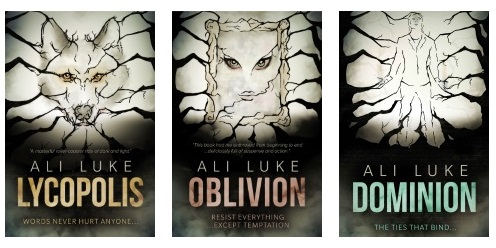
My contemporary fantasy trilogy is available from Amazon. The books follow on from one another, so read Lycopolis first.
You can buy them all from Amazon, or read them FREE in Kindle Unlimited.
0 Comments