
Plotting vs Pantsing: How Much Should You Plan and Outline Before Starting a Novel?
This post was first published in October 2012 and last updated in May 2026.
If you've got a novel idea, you might be wondering how much you need to plan and outline before you start Draft One.
Should you map everything out before you begin writing Chapter One?
Should you just jump in and see where your creativity takes you?
You might have heard writers talking about "plotting" vs "pantsing" when it comes to planning ahead. So what exactly are these approaches ... and which is right for you?
What Exactly is "Plotting" vs "Pantsing"?
Some novelists like to plan out every scene before they begin: they might spend months on this and write thousands of words on their outline as they develop their plot and characters. These are often called "plotters".
Other novelists open up a blank document, write the first line, and keep going from there. These are often called "pantsers" (seat-of-the-pants writers) or "discovery writers".
Most writers fall somewhere in between those two extremes.
And for most writers, some kind of middle ground makes sense. That could mean having a rough outline that covers some or all of the major plot points in your story, or having detailed notes on your characters. It could also mean doing some discovery writing, exploring your story, then going back to think about the plot and structure.
What Factors Affect How You Plan a Novel?
Every novelist has their own creative process, and this is primarily what decides how much (or how little!) you like to plan.
If you're a writer who likes to draft fast but who doesn't mind editing a lot, then perhaps you don't want to do too much upfront planning: you just have a rough idea of the story you want to tell, and you get started.
But if you're a writer who prefers to work more slowly and meticulously, you might map out your story in detail before writing. The first draft may take longer, but you won't have to do so much editing afterwards.
Beyond personal preference, you might be influenced by:
- The genre you're writing in. A twisty-turny detective novel may need a lot more upfront planning than a romance.
- How plot-driven vs character-driven your story is. Both need planning ... but potentially different types of planning.
- Whether you're writing a stand-alone novel or a series. If your novel is the first in a trilogy, you'll want to think through the overall story arc.
Character-Led Planning vs Plot-Led Planning
Some stories are plot-led; others are character-led – and these lend themselves not only to different types of writing, but also different types of planning.
Personally, I believe that characters come first. They’re crucial to the success of your book. Of course, a great story matters – but if your characters are poorly-drawn, readers will struggle to engage.
(When you think about some of your favourite books or even TV shows, there’s a good chance that what you love and remember most about them is the characters, rather than the plot. Think of Elizabeth and Darcy in Pride and Prejudice, for instance.)
Even if you’re writing in a very plot-driven genre, you still want intriguing characters. For a thriller, for instance, you’ll need a great villain – and a worthy hero.
Instead of planning out your plot in immense detail, you can start by getting to know your characters instead.
Of course, you may find that aspects of their personality or backstory change as you plan further, or begin drafting – but you can begin with a clear idea of who each character is and (crucially) of how they’re likely to relate to and come into conflict with one another.
Your story can then emerge from your characters' personalities and actions, rather than feeling like something imposed upon them.
Some pantsers (discovery writers) talk about feeling that their characters “take over” as they write. This may not happen to you, but you should find that you have a clear sense of what actions fit with a particular character – or not.
If part of your planned plot involves characters doing something that doesn’t fit, you’ll either want to rethink the plot, or come up with a good reason why a character acts in an unusually thoughtless / generous / idiotic way at a particular point.
Six Different Levels of Novel Planning (Plus a Wildcard)
On a scale of “total pantser” to “total planner”, what level of planning is right? Should you outline or jump straight in?
Here are some options to consider and tips for each.
Level #1: No Planning at All … Just Dive in and Write!
At this level, you grab an idea and run with it. You won’t know who your characters are – new ones may pop up throughout the story – and you’ll discover what happens as you write.
This can be a lot of fun, and I think it can work fine for flash fiction and short stories. For a novel … you’re probably going to get bogged down within the first few chapters. (Which is okay! You can come back and plan more at that point.)
Level #2: Writing Notes, Without Plotting
A stage up from no planning is having some rough notes. That probably means thinking through your characters a bit and jotting down some ideas about them. If you’re writing something under the broad umbrella of science fiction and fantasy, it also likely means doing some worldbuilding.
You may find yourself thinking of some moments in the plot as you write: if not, you’ll probably face a similar issue to Level #1 … though you might get further into the story before you stall. If you’re writing something very character-driven, this level of planning may work for you.
Level #3: Knowing the Start, the End, and a Couple of Key Moments
Once you’ve got your main character worked out, you may find that you’re ready to think through how your story begins, how it ends, and a couple of critical moments along the way. All of this is part of your protagonist’s character arc.
This can give you enough to get well into a novel, though you may find the structure goes a bit wonky without more upfront plotting. So long as you’re happy to do a lot of rewriting in Draft Two, that’s okay.
Level #4: Knowing Seven Key Points in Your Plot [The Sweet Spot!]
It’s great to have the start and end of your novel figured out – but it’s even better if you can have the key points in between. Without these, a lot of novelists end up with either a very slow start, or a sagging middle where nothing much seems to happen.
While you’ll still have a lot of flexibility along the way, having a clear idea of these plot points upfront means you always know what you’re aiming for in the next few chapters of your story.
The great thing about this structural work is that you can also come back and do it during Draft One, or even once you’re into a second draft, if you feel like your story has gone a bit wonky! It doesn’t need to take long, either: perhaps just an hour or so. I’ve got a great free worksheet to help you: just pop in your name and email address to get it.
Level #5: Planning More Detail Between Your Key Plot Points
Writers who lean towards the “planning” end of things often like to go further than just having the seven key plot points. They might add in their pinch points (moments where the antagonist flexes their muscles) or might go further into specific structural moments.
One model you can use for this is the “Save the Cat!” beat sheet, which follows the same three-act structure, but adds more, and positions and names some elements differently (e.g. “catalyst” for the “inciting event”). If this works for you, great! If you feel like it’s too complex for upfront planning, drop down a level. “Save the Cat!” is drawn from screenwriting, where structure is more rigid than in novel-writing.
Level #6: Chapter by Chapter or Scene by Scene Planning
Some novelists like to map out their whole novel in detail after getting the big plot points in place. That can mean writing a paragraph or a few bullet points – or more! – about what happens in each chapter. (An even better approach is to go scene by scene, as chapters may include multiple scenes, or only parts of scenes.)
If you like this level of planning but find yourself adjusting your ideas a lot as you begin drafting, then you might want to plan out each chapter or scene immediately before writing it, or plan a few chapters / scenes at a time.
Wildcard: Writing a Whole “Zero Draft” or “Skeleton Draft”
Want a different approach altogether? You can merge the planning stage with the drafting stage by creating a “zero draft”. (Steff Green calls this a “skeleton draft”.) This is your entire story, perhaps in bullet points or note form, or with only action / dialogue and very little description, taking you scene by scene from start to end.
You might consider this more drafting than planning, but the idea is to map out the whole story, and then rewrite completely for a much more coherent Draft One. Depending on how you view and approach the zero draft, you could see it as on the extreme end of planning (going into lots of detail on each scene) or the extreme end of pantsing (getting all your ideas down as quickly as possible).
More Planning = Less Editing
With any type of writing, there’s a correlation between planning and editing. The more planning you do before you write, the less editing you’ll need to do after you write.
When I write fiction, I like to write fast. Often, I might change my mind about the exact plot points as I write. I’ll then rewrite the whole story from start to end, even if it’s a full novel. Some scenes will stay fairly close to the original; others will get cut, added and merged.
But many other writers prefer to get things as right as possible the first time round. They plan further ahead, and have a clearer idea of how their whole novel (or short story) will be shaped. They’ll revise and edit, but they won't generally be re-writing whole scenes from scratch.
Neither approach is “correct” – they just suit different types of writer.
Start Planning ... Then Start Writing
For me, one of the most enjoyable things about writing a first draft is the sense of excitement and possibility. Once I have most of my main plot points in place, I love watching the story unfold as I write – and there are always moments when I’m surprised and delighted by a new idea, or perhaps even a whole new direction for the plot.
You might have a very different take on planning, of course! Perhaps you love plotting things out in detail, so you can write without worrying that you'll end up having to cut a big chunk of words from your finished draft. Or maybe you do less planning than me: you like to simply grab a new idea and run with it.
Don't try to force yourself into someone else's exact system of planning a novel. Instead, give yourself the space to experiment with your own creative process, planning and writing in a way that comes intuitively to you.
Whatever your method, and however much planning you do, there'll come a moment when you need to start writing for real. It can feel very daunting to type "Chapter 1" (or "Prologue") and then start putting words onto the page.
If you're struggling to figure out how to begin or if you want some ideas to inspire you, take a look at my post on eight different ways to start a novel.
And if you want a hand figuring out the big building blocks of your plot (without taking all the creativity out of the process), just pop in your name and email address to get my free Novel Structure worksheet:
About
I’m Ali Luke, and I live in Leeds in the UK with my husband and two children.
Aliventures is where I help you master the art, craft and business of writing.
Start Here
If you're new, welcome! These posts are good ones to start with:
Can You Call Yourself a “Writer” if You’re Not Currently Writing?
The Three Stages of Editing (and Nine Handy Do-it-Yourself Tips)
My Novels
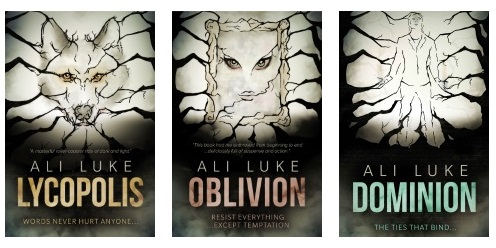
My contemporary fantasy trilogy is available from Amazon. The books follow on from one another, so read Lycopolis first.
You can buy them all from Amazon, or read them FREE in Kindle Unlimited.
37 Comments
Trackbacks/Pingbacks
- Friday Features #27 - yesenia vargas - [...] How Much Should You Plan Before Starting a Novel? By Ali Luke at Aliventures [...]


This is so helpful. Like you, I fall somewhere in between. But as a novice, I think this is the best approach for me.
“When I write fiction, I like to write fast. I want to get the story down – even though it’s imperfect and littered with tangents and plot holes. I’ll then redraft the whole story from start to end, even if it’s a full novel. Some scenes will stay fairly close to the original; others will get cut, added and merged.”
The above is how I approached my first novel and it helped a ton. I’m still re-writing and editing.
But I agree that I enjoy the excitement and possibility of a new chapter, a new character, and so on. The stories grow and in turn, so do I.
A
Adrienne Krogh’s last blog post ..New novel idea: THE MISANTHROPES
Thanks, Adrienne, really glad you found this helpful! I think a lot of writers fall somewhere in the middle like we do — just like it is so often in life, a balanced approach is often a good one here. 🙂
I try planing at least a chapter ahead, but very often end up going in a different direction when I get to the chapter. I’d be planing to let the character live and then go ahead on kill him anyway. I can’t plan characters ahead of time in great detail either. I get to know them as I write and once I’m done with the first draft, go back and add more details to each character.
Like you, Armada, I definitely find that successive drafts add more details to both my plots and my characters — though the characters don’t usually change too much from how I originally conceived them. I think you have it spot-on when you say “I get to know them as I write” — that’s definitely how it feels to me too.
This is so reassuring! I’m waist-deep in the first draft of my first novel and I can definitely relate to the idea of having planned an overall shape, but not a chapter-by-chapter plan. I think this is partly because I know where I want the novel to go overall, and sometimes a new character or subplot helps enrich my character and drive forward the plot in a way I hadn’t imagined before I began… but as I said, I am a total novice.
I’m going to do a total re-write in the second draft though, and by then I hope to have a much tighter structure. @Armada, I also plan on adding more details to characters in the redraft. It’s good to know other people do these things too.
Thank you all for posting, it was really helpful.
Thanks Anna! Really glad this was reassuring and helpful. 🙂
I think that having the sense of where you’re going overall is often all you need … a bit like having a compass pointing north. I’ve often found that new characters or subplots pop up while I’m writing, and I know they’re good choices when they just seem to fit — as though they were there all along but I couldn’t see them at first.
Hope the rest of your first draft goes brilliantly — it’s a wonderful feeling to have a finished first draft of a first novel!
My first novel was written for NaNo, and I just started at page one and ended up as surprised as my readers.
I tried that again with my newest mystery and realized that it wasn’t good enough. So I came up with a B story, looked back for a theme I could emphasize, and generally did some vague planning to fill the gaps and make it memorable (as opposed to forgettable, which it was.)
Just last week, ran into a hitch; a bit of story that needed to be more, but wasn’t making sense. Did some research, called in a friend who tore it into little tiny pieces — then changed one piece and handed it back. Now, it makes perfect sense, fits the story better, and has a fun twist I like.
Even when I’m planning, I’m winging it. I have a tendency to leap from airplanes with a silkworm instead of a parachute. So far so good.
Joel D Canfield’s last blog post ..On Reading "On Writing"
Joel, thanks for sharing your experiences! My first novel was in my mid-teens, but I remember that I did exactly what you did — started at page one and went on from there. (I think I might even have initially intended it to be a short story.)
It’s brilliant when changing one piece makes everything fall into line; sometimes I feel like the story is there but I’ve just not quite grasped it. I suspect our subconscious does more planning than we realise…
I taught a course for years at my local university (here in Las Vegas) called HOW TO PLOT (NOVELS, SCREENPLAYS AND PLAYS) after being a full-time Hollywood TV and screenwriter for 25 years. (QUANTUM LEAP, L.A.LAW, where I won an Emmy, QUIGLEY DOWN UNDER, etc.) So I have a lot of experience in every aspect of plotting, and now, how to plot is a big part of my present classes, HOW TO WRITE A NOVEL, and HOW TO WRITE A SCREENPLAY. My experience and beliefs lead me to be much more of a “planner” than a “pantser” (writing by the seat of one’s pants, no clear outline or plan.) The reason is, unless you’re a very experienced professional writer, most novels or script never get finished by newer writers because, lacking a scene by scene outline, the novice runs out of steam months later on p. 82 or page 167, isn’t sure what to write next, and it becomes another unfinished symphony. I have known hundreds (God help me, maybe thousands) of new writers in the last 40 years and this is what I’ve learned from them: start with a clear outline and definitely know your ending in detail — or the project ends up the Donner Party instead of the wagon train reaching Oregon. It is sometimes not a lot of fun to try to work out too many details and scenes ahead of time – when you’re not in the creative zone – but then you have a clear map, on your lost, confused writing days or days without energy — just write yourself into new good energy. But one can overplan it, and thus, leave your fight in the gym too. It is about balance – but I would stress, opt for a full good outline before starting, if you’re new at this. Otherwise, you’re assuming your first peak of excitement and clarity of vision will last the same each day over the many months of writing, which is not real; the honeymoon phase fades on anything. Get a full plan before writing and stick to it. Lastly, a commercial reason not to wander off into side roads or change your plot. “We come for the plot, but stay for the character.” True! But back on “we come for the plot”? Agents and publishers initially judge, in a letter of query’s paragraph or two, if they want to even read the full manuscript by the plot summary. Potential book buyers read the plot blurb. So come up with a very commercial plot – and stick to it, to increase your chances of selling it as well. John Hill Hillwithit@aol.com
John, thanks so much for stopping by to comment and share your wealth of experience! 🙂
Great point that agents, publishers and readers will initially pick up a book based on an intriguing plot rather than a compelling character … and I certainly didn’t mean to suggest that plot isn’t important.
I’ve never attempted a screenplay, but I’ve been to the occasional class, and read a couple of books, on writing them, and my impression has been that screenplays do tend to need to be more tightly plotted than other forms of fiction — partly because they’re quite a condensed form (usually 2 hours or less). I’m sure that if I ever do try one, I’ll probably be moving more towards the plotter than pantser end of the spectrum!
Ali – thanks for the good words. And as for screenplays being more plot-oriented? Yes. (But no extremes here – ALL good novels or good screenplays obviously have to always have great characters AND a strong good plot, there’s no all-or-nothing involved.) And as for you ever trying to write a screenplay, and how you would then move more to planner than pantser? Ali, I say, you do anything you want to with your pants.
I do appreciate your noticing and agreeing with my point about how we’re not writing & planning these in the abstract (even though some newer writers do!) In fact, there’s always the letter of query looming eventually, which busy agents and publishers scan for the quick plot summary & genre that GRABS them commercially – and they discard some letters of query immediately because the plot & genre combo did NOT grab them. So if one writes much more of a CHARACTER-oriented novel (or theme-driven), that’s a much tougher opening paragraph story-summary to excite agents about in a letter. (This means, essentially, following the logic I’m offering: if TO KILL A MOCKINGBIRD (published 50 years ago this year, in a very different culture, economy & publishing world) was summarized in a letter or query to agents in 2012 in a paragraph? Sadly, tragically really, it might not be published today. But “DNA-engineered dinosaurs brought back to life on an island park, get loose, eat people” would be a very commercial plot to offer up in a letter , even from a novice (easy for Michael Crichton to have made that sale, or any sale) but I submit, had any of us had that VERY plot-oriented first paragraph in our letter of query to agents? It would get immediate commercial attention. (The actual novel, JURASSIC PARK, had no special characters in it either!) Bottom line, to me, in terms of big plot vs. character-oriented novels and real world letters of query? Imagine Atticus Finch being ripped apart by raptors. Back on the almost elusive balance of how much planning vs. creative freedom as we write/plan a novel? There’s a catch phrase that speaks to me, your mileage may vary, which is: structure + creativity + fun. To me that means have a very thorough, sufficiently detailed outline so you’ll always know what comes next, but NOT so detailed that you aren’t curious each day you write HOW it will happen exactly. So knowing enough to be confident, but not knowing it all so there’s still the act of curioiuosity & discovery = fun. And you have to keep writing a novel fun or you won’t finish it. So find your own balance/ratio of planning vs. whoopee; overplanning OR underplanning, either one, can equally cause many a writer to never type THE END. The end.
Getting to “the end” is definitely an achievement! I’ve only ever abandoned one novel half-way, though I went through multiple drafts of another two before deciding they just weren’t yet there.
Gosh, Jurassic Park takes me back … I watched it with friends at my 10th birthday party! I agree it’s a wonderfully commercial, gripping story — though I remember being particularly taken with the character of Lex. Your image of Atticus Finch being ripped apart by raptors made me laugh (I’m a horrible person! ;-))
It’s interesting that you bring up To Kill a Mockingbird … that’s one of the books I always think of when I’m considering character and plot. I believe Harper Lee began it as a set of short stories, and I certainly remember that when I first read it, I felt that it had an unusually episodic plot, in parts, for a novel.
I think we’re both firmly agreed that balance is the key — and I hope all the writers reading will be able to find a good balance and get all the way to “the end”. 🙂
I love knowing what’s going to happen in my story overall but each scene can get me there in ways I’ve never expected. I give each scene a “goal” but I don’t plan ahead on how the goal of the scene will be achieved. That’s where my creative side steps in.
I love how you embrace characters taking the lead of the story but they should have a general direction or “road” to travel on in the story.
Thanks for sharing, Ali
Shaquanda Dalton’s last blog post ..Should “Slang” Be In Your Novel?
Having a goal for each scene sounds like a brilliant way to plan, Shaquanda; I have to confess that sometimes I’ve struggled with or abandoned a scene because I didn’t have a clear enough idea of what was actually going to happen in it!
Ah, the novel. I wanna write a novel but I start and stop and start and stop. I need to put a flexible plan into place and have an idea of where I am going or else I will keep starting and stopping. But what do you do when you do not know where you are going? Fiction writing for me is much more of a write and see type of attitude. I may need to visit my non fiction techniques to succeed. I just have to begin, maybe as you suggest I could start with the characters.
Carole Lyden’s last blog post ..Grow your business blog and community with stories
Carole, I’ve certainly had novels that stopped and started a lot (and probably stopped more than they started, if you see what I mean…) Maybe by getting the characters clear, and having a very rough plot outline, you’ll find that you get a good sense of where you’re going?
Best of luck!
First, quick shout outs to previous posters.
@Joel – “I have a tendency to leap from airplanes with a silkworm instead of a parachute.” HAHA, that is a great way of putting that! Hope the silkworm works fast enough for you! XD
@John – Being someone who wants to break in to “the industry” I found your comments very informative. Having “failed” Script Frenzy two Aprils in a row (i.e. – not hitting that 100pgs in 30days goal) I have to agree about that Honeymoon Phase dying off right around the mid-point of the script if you don’t have everything properly planned out. And although I completely get what you’re trying to stress about plot being an incredibly important selling point, I do also completely agree with Ali that the CHARACTERS are what keep people going. Even when I watch an incredibly cheesy movie/show, I will go “OK, the plot sucks” and yet still watch because the CHARACTERS are so friggen lovable. So there is definitely a balance there too. You have to have a basic plot that is compelling enough that someone will want to buy your story, but the characters have to be believable and lovable enough to prove the purchase was worth while. Either that, or the plot itself better be damn compelling that the reader/viewer doesn’t care about the characters, just the world/plot presented.
Finally, back to Ali:
As soon as I saw Holly Lisle’s name in your post I KNEW I knew that name somehow. After a search through my “research” writing folder I discovered that I have a PDF of her Create Your Professional Plot Outline Mini-Course. http://hollylisle.com/pdf/Lisle-Plot-Outline.pdf
I also have the Character Building Checklist and Writing Checklist Larry Brooks talks about on Storyfix.com (Which I believe I discovered thanks to you, Ali.)
Another thing I tend to do while character building – to help get the character’s voice in my head – is to sit down and interview the character. My one D&D character has a 13page dialogue back and forth between me and her. The whole “interview your characters” trick seems to be working WORLDS better for my one friend I’m beta-reading for, but she’s the type of writer who has her characters “living” in her head and just pop up and talk to her whenever – even if she’s not actively thinking about her story.
As for planning out the actual plot… I’m a TOTAL planner/plotter! I have a notebook specifically assigned to each story I write. The first pages are broad strokes about the main cast of characters. Then there is a page or two where I give a sentence synopsis of each chapter, and then I have each chapter plotted out in detail. If my characters take me on a different journey as I write I don’t move on to the next chapter until I go back to that notebook and plot out the rest of the story based on where the characters take me. I’ve added three new chapters to my one story by doing this… It’s an annoying way to write, but I always need a map before writing. I need to know where I’m going, how I’m getting there, and how to get back on to the “main road” when my characters detour me. I can’t be the type of writer who is “surprised” by the ending. I need to know the ending before I even start writing the first page. Which makes NaNo very interesting since I’m totally “Pantsing” it next month! XD
I’m definitely the type of writer who likes to “get things right” during the first draft. It may be my stumbling block when it comes to my writing rhythm, but even in school I would rarely write more than one draft of anything and I nearly always got an “A” on my work. That’s not to say I will NEVER do revisions when I attempt to “go pro”. I know that my novels will go through 20 revisions. However, I tend to research and plan so intricately that there ARE NO PLOT HOLES as I write. I instantly find something and figure out how to dig myself out of the hole I put myself in. My own beta-reader can tell you that I spent nearly a month struggling with how to fix a plot hole I created when I “wrote from the hip” my first chapter…The story was originally going to be a one-shot fanfic, but I loved it so much I went all Memento on it and started writing follow-up chapters that walked the reader backwards to see how the characters got from Point A to Point B. However, since I didn’t anticipate doing so when I wrote the first chapter – and since I already posted the chapter online and couldn’t go back and edit the plot hole creating elements of the first chapter – I had to work HARD to figure out how to fill said holes!!!! But I did it! 😀
This, and my ability to pick up on continuity errors, might be great assets when I eventually break in to film… ^_^
LycoRogue’s last blog post ..TEMPORARY POST
Thanks for sharing your planning method! And I think that just goes to show that a good first draft requires careful planning. (I’ve decided I prefer the pain of a really shoddy draft to the pain — for me — of trying and failing to stick to a detailed plan… but this is one where we all find a different happy medium as writers!)
The “interview your character” method has never quite worked for me — but I can certainly see the value of it for writers (and perhaps characters) who it suits. I know it’s a technique that Holly Lisle has mentioned.
Best of luck for NaNo!
Great article, Ali. I also believe characters should drive the story–your characters should be what the story is about. They help you deepen your plot and conflict as they grow along with the story.
Deep into my third novel, I find most success by writing from scene to scene. Scenes–sometimes merely a snippit of dialogue between characters–come to me at odd hours. My notes are full of scenes and character moments…sometimes just a few lines of dialogue between them. Sometimes the dialogue is a pivotal communication, other times just offering levity.
These scenes have a place in the story, but sometimes they lie far down the road. I use the scenes as milestones, or way stops, helping me anchor the story as I then head out toward the next one. I recently wrote a scene at the end of my second book in the series, which I envisioned over four years ago.
It’s been a very successful approach and seems to fit with the advice you’ve given above.
Melissa McPhail’s last blog post ..This is the space, this is the place
Thanks, Melissa. I think planning individual scenes (even if the connections between them need some time to emerge) works for a lot of writers. I’m not sure if you’ve come across it, but Scrivener is quite a nice piece of writing software if you like to work that way — it lets you create index cards for each scene and juggle them around, which I’ve found helpful.
Best of luck finishing the third novel!
This is a wonderful reminder. Not everything has to be planned. Like you, whenever I’ve tried to plan out a novel, it’s gone wildly different from that plan. That’s because the characters tell you what they will do and if you allow them to go where they want and do what they want, you will have a different product than you first envisioned. Of course, planning helps when I ghostwrite nonfiction for clients, but when I am writing my own fiction — novels — it’s a totally different experience.
Planning works for some authors. I know authors who do detailed outlines for their novels. It just doesn’t work as well for me. So I guess it depends on the author’s temperament and writing style.
Monica Carter Tagore’s last blog post ..7 Secrets to Breaking Into Ghostwriting
Thanks Monica! I agree that temperament and writing style has a lot to do with it — and also, I think, the genre that you’re writing in. I’d probably plan an awful lot more if I wrote heavily plot-focused books!
Carole – you said: <<>> Look, the best writing style for each of us is whatever gets us, individually, to THE END with a novel we really like. But if your ‘write and see’ approach isn’t getting your novels finished, so consider trying this: fill out this ‘pre-flight checklist’ before you start writing – it’s not even a chapter-by-chapter outline, not very detailed, but does offer a good general plan.
<<<>>>
Maybe if more newer novelists, who have trouble finishing, at least had answers to all the above questions, there may be a better chance of completing their novels since they would have a clearer overview, and would know whether they are generally going, and how it ends. I also know even this (small amount) of general planning is more than many novelists may want to do in advance, and how they get their novels written works better for them with their own style. I personally want to have a road map with me for a car trip, even if I do occasionally stop at a reptile jungle, but I want to pace myself and know where I’m going. For those who can’t get to their destination by wandering there? Maybe try first making a plan/map. Or try writing one novel in a looser, feel-your-way manner, then another with a detailed plot outline. And see which novel gets the first draft finished, which one was the most fun to write, which you’re happier with, and which style gets you published. John Hill Hillwithit@aol.com
This is what was, for some reason, cut out of the middle of my above email — the actual ‘pre-flight check list’ I was offering:
FINAL (“Pre-flight”) CHECKLIST Before Writing A NOVEL by John Hill
© 2011 JOHN HILL
1A. Is your novel either a genre novel – where you’ve studied the genre requirements, limits and expectations carefully and matched them with your novel? (Note: a proposed SERIES of novels is more attractive to publishes than a single stand-alone.)
OR
1B. Is, instead, the plot HIGH CONCEPT? (“A “high concept” idea for a mainstream studio feature film can be expressed in (literally!) 25 words or less and sound FANTASTICALLY COMPELLING and MUST-SEE to its target audience and implicitly acknowledges and solves the publisher’s marketing and advertising challenges.) That is, is the story in one sentence BIG, IMAGINATIVE but SIMPLE? (And notice this is the FIRST question, the first hurdle, because, yes, no matter how you rationalize it, THIS WILL BE the first key question or issue agents, editors/publishers will care about.
What agents, producers and studio folk want from novels (first seen in the query letter paragraph plots summaries) are the “book jacket plot blurb” or how the title, some graphic and the 25 words or less plot will look on the paperback cover. What’s the plot in one sentence, and does it blow my socks off? INDECENT PROPOSAL: “A multi-millionaire offers a broke yuppie couple $1 million if they agree for the wife to spend the night with him?” “12-year-old girl is possessed by the Devil; mother tries everything medically then gets:” THE EXORCIST.)
2. Is the tone-GENRE of this story currently $ucce$$ful? (Paddy Chevefsky offered these next 3 as the basics we all need to know:)
3. Who is your HERO? ___________________________.
4. What is his GOAL? ___________________________.
5. Who or what is PREVENTING him from REACHING THAT GOAL? ___________?
6. What is the THEME (i.e., “character arc,” or universal life lesson” or “moral of the story?”) Do you know what you’re trying to “say” as a writer through this story?
_______________________________________________?
7. What gives this story HEART? _________________ ? (What is supposed to touch us emotionally? And since anything creative that is good must be self-revealing, is: what is there of YOU, emotionally, you’re going to honestly put into this novel?)
8. Can you justify your novel’s COMMERCIALITY by naming SIMILAR PROFITABLE PRECEDENTS in the last 3-5 years? (1) ___________ (2) _______________.
9. Have you BRAINSTORMED all possible scenes. ideas and (main) character reveals for this story? ___________ Do this by wildly scribbling down all possible ideas without judging them — the rule is “no negatives” during this creative phase — then switch and use your “critical judgment” to pick the good ones to use, link them up, and choose the BEST scenes for the opening, the ACT BREAKS, and the big finish.
10. Have you written the best possible GRABBER of a first sentence? Then the first paragraph? Then the first page? Then the first scene? Then the first chapter? And in the first chapter, the first 10-20 pages, does it include the following: (a) establish the hero as such? (b) why do we start to LIKE them? (c) establish the genre clearly, the tonal universe the story is set in, and (d) the high concept/big plot hook of main story — or a strong hint of it as the hero’s problem — for the whole rest of the novel? ________________.
11. What is your END OF ACT ONE MAJOR NEW PLOT POINT? (an event that elevates in a BIG way the level of difficulty the protagonist will have solving this overall plot problem of the story? (This should happen around p. 120 of a 360 page novel, or around 30,000 words of a 90,000 word novel?)
____________________________________________.
12. What is your MID-POINT (newly elevated) PROBLEM? (on p. 180 or so) _________.
13. What is your END OF ACT TWO (huge reversal!) MAJOR NEW POINT? (p. 270 or so?) _______________________________________________.
14. What is your BIG FINISH (p. 340-360) where the story builds to a big WIN-LOSE
moment? _____________________________________________. — John Hill © 2011 JOHN HILL
John, thanks so much for your generosity in sharing your checklist here — I think these are wonderful points to keep in mind while planning and writing. I particularly like the question about “heart”, which I think is something that authors don’t always consider — but a great novel really does need to be emotionally involving.
what a coincidence that you posted on this topic, Ali!
I was just struggling with this question recently as I have a few ideas for novels that I haven’t started yet because I’m stumped on how to start.
Outlines, drafts, mind-maps, etc…I was getting confused. I even bought a book on how popular authors write novels, and from what I’ve read many just jump right into it and see what happens. Since I’m a planner I think, I’ll do a bit of everything, a loose outline, some character profiles, a good story, and plot twists, and then see where it goes.
Thanks!
Zac, that sounds like a great plan for your plan. 😉
I find that it’s very easy to get caught up in writing advice — and something I’ve learnt over the years is that, with fiction in particular, there are tons of helpful tips and hints you can take from others, but ultimately you need to find your own comfortable way of working.
Best of luck with the novel when you do get going! And if you need a kick-start, don’t forget NaNoWriMo begins in less than two weeks… 🙂
What a great thread of comments! I am excited to be doing my first NaNo this year, after a rough completion of my first novel (took a meandering 18 months), so this will be #2! There are a lot of helpful comments here, and Ali, your emphasis on the key points of planning is helpful too. The first novel was a start-with-a-line-that-won’t-leave-my-head type of NON-planning, so any of the above will be a step in the Planner/Plotter direction! 🙂
Margaret’s last blog post ..A Message from Future Margaret
Yes, I’ve been delighted that this post brought in so many great comments! Margaret, congratulations on starting your first NaNo — hope it goes brilliantly. And 18 months frankly sounds pretty fast for completing a first novel..! 🙂
My “day job” is attorney. I write a lot of contracts. I find that I write my fiction like I write contracts. Much as you mentioned, I get what I want down and then go back and edit to make a first draft. However, I may drastically change aspects of my middle grade novel. In that case, I find myself leaning toward an outline so I can grasp more fully what I want from the story and for my MC. It will be interesting to see if I do create an outline, will I end up following it or going back to my usual way of drafting/writing. Thanks for sharing.
Crazy Travel Adventures By Debra’s last blog post ..Luang Prabang, Laos: Rise Early to Feed the Monks (and Bowl at Night. Really)
Good luck, whichever way you go! I think that for many of us writers, planning isn’t just a one-time process at the start of a new project — it’s more iterative than that — so perhaps you’ll find that you do some outlining, some drafting/writing, then some more outlining!
that’s interesting
just last night i was wondering what it would be like if i wrote a novel, its not that i have any plans yet but i just day dreamed about the idea
very nice one Ali
farouk’s last blog post ..Why do good women fall for bad men
Thanks Farouk! Have you come across NaNoWriMo? (see my latest post!) It’s a great way to get into novel-writing — though I imagine you’ve got more than enough projects going on right now. 🙂
Ali, great post, you’ve definitely hit on a topic that’s got people talking and sharing their knowledge, I’m glad to have *bumped* into this after many comments.
As for me, I’m not even a fledgling, let alone novice. Three nano drafts, two done with little or no planning, that’s probably why they’re still drafts, I’m finding editing them very tough. With this years nano, I did some planning, because it had a more complicated plot.
I seem to write the end of the last chapter a few chapters in, then write towards that. In one of the drafts, I had two versions of the end which gave me more options earlier on.
I’m writing to see if I can, to help with my work/life balance and no, I’m not writing with query letter in mind. When people expect me to have a title for my drafts let alone a sentence I struggle.
Once I started writing, I realised that it’s about how I write, not how others do. I’ve also, finally, worked out how I edit, which is a huge bonus!
Welcome, Lynne! Hope NaNo is treating you well. 🙂
I think working towards a pre-written or pre-planned ending is a great way to go — and it sounds like it’s working well for you, and you’re getting a great handle on your process of planning, writing and editing.
Whether or not you write with query letters in mind depends very much on your own goals, and on what stage you’re at as a writer. I think some new authors stress too much about publication — and it’s often better to just enjoy the writing process. Sounds like you have absolutely the right attitude to it all. 🙂
I have been planning my story for around 6 months and feel I am still not ready to start writing. I cannot come up with in depth character profiles and this is stopping me progressing. I know what I want to write but the more I try to create a characters the more inspiration I find in creating my worlds. Is this procrastination. I love my story and I want it to jump off the page and for people to see my different worlds clearly, but the characters seem to disappear. Please help, Thank you.
Nathalie, definitely start writing! I find it very hard to create detailed characters until I’m actually writing about them interacting with one another. It’s great that you have a vivid world for them to inhabit … and I’m sure the rest will come once you start writing. Take a deep breath and dive in! 🙂