
What is a Scene? Understanding and Using the Basic Unit of Story Structure
This post was first published in March 2016 and last revised/updated in October 2026.
A scene is an individual unit of story.
You might think of a scene as a building block within your novel. Some are longer than others, some are more critical than others, but they all build on one another as they work towards the ending.
What is a Scene in a Short Story or Novel? (Scene Definition)
Most writers have a good grasp of what a scene is (and we might describe a favourite part of a book we’ve read as “the scene where…”)
Here’s how I’d define a scene, very briefly: A scene is a sequence of events, taking place continuously, in which something changes in a meaningful way for the story.
Here are a few other explanations: as you’ll see, they all pick up similar points about the action being fairly continuous and a change in the story being important.
A scene is a sequence where a character or characters engage in some sort of action and/or dialogue. Scenes should have a beginning, middle, and end (a mini-story arc), and should focus around a definite point of tension that moves the story forward.
Teach Yourself How to Write a Blockbuster, by Lee Weatherly and Helen Corner (pg 40, 2006 edition)
By “scene” we mean here all that is included in an unbroken flow of action from one incident in time to another [...] The action within a scene is ‘unbroken’ in the sense that it does not include a major time lapse or a leap from one setting to another – though the characters may, of course, walk or ride from one place to another without breaking the scene, the camera, so to speak, dollying after them.
The Art of Fiction: Notes on Craft for Young Writers, John Gardner (pg 59, 1991 edition)
For me, a scene is a unit of story in which something changes. It has a beginning, a middle, and an end, and at the end something is different than it was at the beginning. It may be a character or a situation, or just our understanding of a character or a situation, but whatever it is, it's changed when the scene is over.
What’s a Scene (And What’s A Chapter?), Timothy Hallinan, TimothyHallinan.com
Some writers think of scenes as chapters, starting a new chapter for each new scene.
That can work, but you may well have times when you want to have multiple scenes per chapter, or split a scene across two chapters. (If you want more help with this, take a look at What is a Scene vs a Chapter?)
The Ingredients of a Scene
Normally, scenes will include the following elements:
- At least one character, taking action (even if that action is primarily internal – e.g. making a decision).
- If more than one character, dialogue between them. This dialogue should either advance the action or reveal character – ideally, both.
- A description of the characters’ surroundings. Where are they – and how does their environment affect the action and/or dialogue taking place? (An argument in the kitchen at home is going to be different from an argument in a crowded, noisy pub.)
- Conflict or complications, leading to the “point of tension” that Lee Weatherly and Helen Corner refer to in the quote above. Conflict doesn’t have to mean an argument or physical fight: it could be more subtle (a passive-aggressive comment) or conflict with something inanimate (a machine going wrong; terrible weather). It could also be internal conflict (fears; self-doubt).
- Rising emotion or tension. Don’t start with a high point and then let your scene become less interesting from there! The action doesn’t have to get physically more intense, though: you might, for instance, have a physical struggle followed by a high-stakes argument. K.M. Weiland has some great, in-depth thoughts about the emotional arc of scenes here.
- A strong ending: don’t let the scene peter out. (I am indebted to Lorna Fergusson here for her advice to “get in late, get out early” with scenes.) If you’re revising an already-written scene, you might want to try cutting the last paragraph or the last couple of lines of dialogue.
- Some kind of link to the next scene: whether direct (your protagonist decides to stand up to their nasty boss, and the next scene shows this confrontation) or indirect (one scene ends with a character hungry; the next starts with a different character feasting).
By the end of the scene, something should be different from at the start – even if this is only in a small way. Having scenes where nothing changes will slow the pace and leave the reader wondering when you’re going to get on with the story.
So, how do you put together a good scene?
A Quick Note on the “Scene and Sequel” Story Writing Technique
There’s a particular story-writing technique where you produce “scenes” followed by “sequels”. The terminology gets a bit confusing here, as most people would call both types “scenes” and some people consider them to be two halves of a scene (essentially, action and reaction).
This technique originated with Dwight Swain, and you can find plenty of articles explaining it online, like this one from Advanced Fiction Writing.
It’s not how I pattern my scenes personally, though I think it includes helpful elements. If it’s a technique you want to explore, K.M. Weiland has a handy series of articles about scene structure here.
Planning and Structuring Your Novel’s Scenes
You’ve probably read fiction – whether published or in a writers’ workshop – with a scene that:
- Started off well but then dragged on way too long – you started skipping pages to get to the next interesting bit.
- Confused the heck out of you – it took ages to figure out what was going on (and there was no good reason for the author to leave you puzzling).
- Took ages to get into the actual action, with a lot of tedious thinking and soul-searching from characters before they did anything.
All these problems are best solved by having a clear idea of the next big plot point you’re working towards.
When I’m writing without a plan, I’m tempted to carry on with “what logically happens next” or to visit a character we’ve not heard from recently – regardless of whether “what happens next” actually forms a scene, or whether that character has anything interesting to do or say.
When you evaluate the scenes that you’ve planned (or the ones you’ve already draft), ask yourself:
#1: What changes during this scene?
If you cut the scene entirely, would the story still work fine? If so, it probably shouldn’t exist. (Sorry!)
#2: How can you do more with this scene?
Perhaps your scene feels a bit lacking. Can you bring in an extra complication, create a particular mood, work in some necessary backstory, or put a character under greater emotional or physical strain?
#3: How does this scene link to the one before and/or the one after?
For instance, does it set up the inciting event (inciting incident) that’s about to happen in the next scene? Is it building towards the climax? Are you going for a particular resonance or a note of irony by juxtaposing one character’s actions, speech, or thoughts with another’s?
#4: Could this scene be placed earlier or later in the novel?
Should it be? What else would change? Keep in mind this may involve a change in location as well as having the scene positioned at a different stage of your protagonist’s character arc.
#5: Is this scene too repetitive?
Have you got an earlier passage that does something similar? This happens all too easily if you’re writing over an extended period of time, and it can make your story feel a bit bogged down.
#6: Have you chosen the best location for the scene?
If a scene is flat or dull in its current setting, relocating it could add extra drama and tension. For instance, two characters arguing at home might peter out too fast with one storming off; two characters arguing on a long, crowded bus journey have fewer options.
#7: Does the scene start too early?
If you have a lot of internal thought or chit-chat dialogue at the start, get into the scene later: at the point at which the rising action begins.
#8: Does the scene end too late?
This can be a temptation if you’re using a scene-and-sequel structure. Unless you’re writing in a genre where readers like this, avoid having a long drawn-out section of your character angsting over what to do next. End the scene and move forward.
#9: Is the action over too quickly?
It’s tricky to judge the pace of a scene while you’re writing, because writing out the words takes so much longer than reading them. But even if you’re writing an action scene, readers won’t want it to rush by too fast: they want to enjoy all the excitement.
#10: Does the action drag on too long?
Watch out for scenes that meander back and forth without really progressing, or scenes that involve lots of thinking and not much doing. And finally, a bonus one:
#11: Does the scene involve a chat over tea/coffee?
Any scene I’ve ever attempted to set in a coffee shop has ended up being cut (or swiftly relocated). Yes, it might be realistic for your characters to sit down and have a civilised conversation over a nice cuppa ... but unless you’re writing in a particularly cosy genre, you might need to choose a slightly more exciting setting.
This isn’t an exhaustive list, but it's a great place to start. To go even further, check out my piece on writing stronger scenes by adding depth and detail. For help editing scenes you’ve already written, take a look at Editing Essentials ($10) or pop your email address below for the quick reference guide.
Planning and Writing Your Next Scene
When you next sit down to work on a scene, write down three to seven bullet points that describe what’s going to happen. This is a good tool for (a) figuring out if you’re going to have too little or too much going on within the scene and (b) keeping you on track as you write it.
Editing Guide, Scene-by-Scene Spreadsheet, and More
Want more help with your scenes? Pop in your email address to get access to all my free resources, including:
- The Quick Reference Guide from Editing Essentials: goes through 20 common mistakes (with dialogue, narrative, and more) so you can hone your scenes.
- My personal Scene-by-Scene Spreadsheet: this lets you keep track of your scenes as you draft/redraft a novel, with space for crucial details like time, location, and POV.
You'll get access to other free resources (my “Make Time to Write” workbook, writing prompts, Novel Structure worksheet and more). You’ll also receive my email newsletters and blog posts. Unsubscribe at any time.
About

I’m Ali Luke, and I live in Leeds in the UK with my husband and two children.
Aliventures is where I help you master the art, craft and business of writing.
Start Here
If you're new, welcome! These posts are good ones to start with:
Can You Call Yourself a “Writer” if You’re Not Currently Writing?
The Three Stages of Editing (and Nine Handy Do-it-Yourself Tips)
My Novels
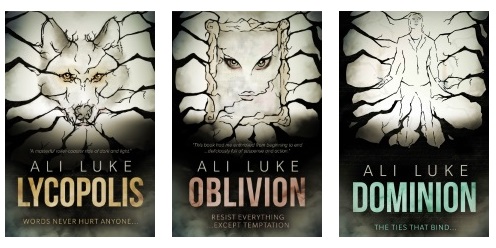
My contemporary fantasy trilogy is available from Amazon. The books follow on from one another, so read Lycopolis first.
You can buy them all from Amazon, or read them FREE in Kindle Unlimited.
A teacher suggested your website and more specifically this page about scenes.
Scenes are much more complex than I ever imagined.
I’ve learned quite a bit from your page. And have quite a lot to think about.
Thank you for all the effort that you put into this in order to help others.
It’s not important that you respond. Your valuable time should be directed to your website.