
How to Finish a Novel: Key Sticking Points and Crucial Tips for Completing a Full Novel Draft
Starting a novel can feel really daunting … but finishing one is a whole lot harder still. There’s an awful lot of ground to cover between writing “Chapter One” and writing “The End”.
Since you’re reading a blog post on how to finish a novel, I’m going to assume that:
- You’ve got a novel idea (that you like!)
- You’ve made a start on Draft One
(If you’re not at that stage yet, try my post on developing a strong novel idea.)
Most writers, when they start their novel, are intending to finish it. I’ve never met a writer who only wanted to write two chapters of a novel, then abandon it.
In fact, quite the opposite. Writers who are starting off might feel daunted by the scale of the task ahead – but they’re also excited about finishing, and they’re usually expecting to complete a first draft within a year, maybe even in 3–6 months.
That’s often not quite how it pans out.
Many first-time novelists spend multiple years on Draft One, often with long gaps (months or even years) when they’re not working on it. If that’s you, please know this is very normal.
So what gets in the way? For most writers, it’s a combination of busyness or disruption in their life, plus getting stuck in the story itself.
In my work as a writing coach, in my Writers’ Cafe group, and in my own experience, these are the four big things I see coming up the most:
- Demands: Everything on your to-do list! Whether it’s a paid job, household chores, volunteering, or anything else, it takes up time.
- Distractions: Not little ones, like scrolling social media – but the big things that take up a lot of headspace, like world events, a loved one’s illness, parenting, and much more.
- Disorientation: Feeling lost in your story – not knowing what should happen next (or even how far through the story you are).
- Doubt: A lack of self-confidence; worrying that the writing – or the story itself – just isn’t good enough or isn’t worth finishing.
Want to dig deeper into all of these and come out with a clear plan to tackle whichever one is most prominent for you? Come to my free workshop “Four Roadblocks Holding You Back from Finishing Your Novel” on Monday 12th October. It’s suitable for writers at any stage of a novel, even if you haven’t started drafting. Just click that link for details and to book your free spot.
Where Novelists Typically Get Stuck on Their Way to the Finish Line
Before we take a look at practical tips for getting all the way to “The End” of your novel, I want to run through the stages where I commonly see writers getting bogged down in a first or second draft.
The First One to Three Chapters
It’s very common to get around 1–3 chapters into a novel and then stall at that point. I’ve seen writers go through this with multiple novels in a row: starting off with an idea they’re excited about, diving into the draft, then stopping within the first three or so chapters.
So why does this happen? Often, because the start of your novel is (relatively) clear in your mind before you begin. You know you need to hook the reader in with something interesting – perhaps an unanswered question, an unusual character voice, or a shocking event. And you know you need to introduce your protagonist plus key supporting characters early on.
But after that … it may not be clear what happens next. This is probably because you don’t have a clear inciting event: the catalyst for your story, traditionally around the 10–12% mark (though it can come a bit earlier).
If you’re stuck in the first three chapters, ask yourself what kicks off the story. What shatters the status quo – the protagonist’s day-to-day life at the start of the book – and introduces the world of the story?
The 20,000 Word Mark
Another really common sticking point is around 20,000 words into a novel (so much so that I ran a whole workshop for Writers’ Cafe on the “20,000 Word Danger Zone”).
An average-length novel is around 80,000 words – meaning that 20,000 words is about a quarter of the way into your novel. If you take a look at my seven-point novel structure chart here, you’ll see this is the end of Act One and the start of Act Two – the first “plot point” in your novel.
At this plot point, something changes for your protagonist, irrevocably. The inciting event broke the status quo: this plot point draws them firmly into the world of the story – pushing your protagonist into reaction mode up until the midpoint.
If you’re stuck around 20,000 words, ask yourself what needs to happen to your protagonist here. It might be a “point of no return” for them, where they now can’t turn their back on the story.
The Messy Middle
The middle of a novel can feel like a long, confusing slog. Perhaps you have a bunch of scenes but you’re not sure exactly where they should go, or maybe you’ve been writing material that’s more like connective summaries between scenes (or characters’ musings).
Again, this is generally a structural issue. The middle of your story (Act Two) needs specific plot points. The biggest of these are the first plot point right at the start of Act Two, the midpoint (also called the second plot point) in the centre – around the 50% mark of your novel – and the third plot point at the 75% mark.
If your middle sags, it’s often because you’ve got a missing or delayed midpoint. This is such a vital part of your story, where something happens to jolt your protagonist from reaction into action. It’s when they take charge of their own fate.
The Ending
If you make it past the messy middle to the 75% mark of the story, you’re almost certainly going to finish it. I don’t think I’ve ever heard from a writer who got that far and didn’t finish the draft!
Around the 75% mark, your protagonist is going to have their darkest hour: something will happen where we think all hope is gone. But one way or another, they’ll battle forward, the tension rising inexorably until the climax of the story (some kind of showdown between the protagonist and antagonist), before everything gets wrapped up in the resolution.
If you get stuck here, remember, this is just a draft. Your climax is one of the two scenes of your novel that will likely need the most rewriting. Write it however it comes out, and you can layer in more complexity, drama, and tension in subsequent drafts.
How to Finish Your Novel This Time: Three Keys
Those are a lot of potential sticking points! So if you’re going to finish a novel without it taking years and years, you need these three things in place:
#1: A Writing Routine
Sure, you might eventually finish your novel if you write when the whim strikes and when a spare hour miraculously appears in your day … but if that’s not been working for you so far, there’s probably no reason to assume it’s going to start working in the future!
I always find it interesting to read about other writers’ daily routines – Writing Magazine tends to feature a different writer’s routine each month – but often, their lives don’t bear a lot of resemblance to mine! Your routine needs to work for you: your commitments, your energy levels, your day job’s requirements, and your own creative process.
When you sign up for the Roadblocks workshop, I’ll also send you a free one-page plan that lets you map out your writing for the next three months.
#2: A Rough Structure for Your Novel
I know not all writers like planning – and I’m definitely more on the pantser/discovery writer end of the spectrum myself – but it really is tricky to finish a novel if you have no clue what’s going to happen next.
Having a rough, high-level story structure, with a few crucial plot points in mind, will make it so much easier to actually finish it.
I’ve developed a simple seven-point plan for this, letting you map out the biggest plot points without getting bogged down in coming up with lots of details that you might later adjust.
You don’t have to stick to your plan, especially if your writing process is one of discovering the story as you go. It’s there to give you direction – and you can change your mind at any time. (You can make as many copies of the worksheet as you like, if you want a few versions of your plan.) But having the plan in the first place makes it a lot easier to write towards the next plot point.
#3: A Plan to Get Past Likely Roadblocks
Often, it seems like we just can’t get on a good roll with novel writing: something always crops up and gets in the way.
But these roadblocks are – generally – far from unimaginable. They might be unpredictable, especially in terms of their exact timing, but they can probably be foreseen to some degree.
The things that were getting in the way of your writing a month ago will probably continue getting in the way of your writing next month. The stuff that came up when you tried writing your last novel will likely come up again this time around.
In the Roadblocks workshop, I go through the four most common roadblocks that I mentioned earlier – demands, distractions, disorientation, and doubt. We take some time to dig into these and to figure out ways to get around them.
Finishing a novel is a massive achievement … but it’s also one that’s well within your reach. An 80,000 word novel might sound enormous, but if you wrote an average of 220 words/day, you’d finish a full draft after a year. A small daily word count really does add up.
Keep writing, get help and support if you get stuck, and you will make it to The End.
About

I’m Ali Luke, and I live in Leeds in the UK with my husband and two children.
Aliventures is where I help you master the art, craft and business of writing.
Start Here
If you're new, welcome! These posts are good ones to start with:
Can You Call Yourself a “Writer” if You’re Not Currently Writing?
The Three Stages of Editing (and Nine Handy Do-it-Yourself Tips)
My Novels
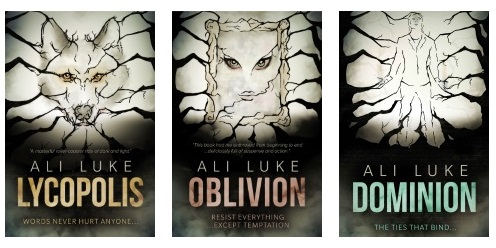
My contemporary fantasy trilogy is available from Amazon. The books follow on from one another, so read Lycopolis first.
You can buy them all from Amazon, or read them FREE in Kindle Unlimited.
0 Comments