
Idea to Novel: How Can You Start Developing a Strong Novel Idea?
You’ve got a novel idea … but where do you even start with turning it into a novel?
That idea could be an image in your mind, a compelling character, or a “what if” question.
So many writers carry a novel idea for years, even decades, before they start writing their first draft. (The record I’ve heard from writers I work with, so far, is 40 years.)
If your novel idea has been waiting – and waiting – then you’re far from alone.
And in fact, if that idea has persisted across weeks, months, or years, then that’s a great sign. The idea won’t quite leave you alone: it’s something you keep being drawn back to.
But taking that idea and exploring it can be daunting. You might not know where to even begin.
Let’s start with a worry that a lot of writers have: is this the “right” idea to tackle? Then, we’ll dig into some potential angles that help you begin exploring your idea, before looking at a range of practical ways to develop your idea (without taking the fun out of it).
Is Your Idea the Right One for You?
Writing a novel is a major undertaking. Working steadily, you could finish a first draft in six months, but many first-time novelists spend a couple of years on their first draft. And then there’s all the rewriting and editing after that.
So you want an idea that you genuinely love! Don’t come up with a whole list of story ideas that seem “good enough” or write a book solely to fit with whatever genre seems hot right now.
Don’t tell yourself that your best idea needs to wait until you’re “ready”. Until you’ve written some other novel first, or studied more. If you have more than one idea, pick the one that’s most exciting to you.
Write the story that you would love to read.
Four Places to Begin Developing a Strong Story Idea
Some writers believe that ideas will simply develop on their own. And there’s nothing wrong with mulling over an idea, or giving yourself some time to think about whether it’s the right option … but it’s very easy to stall here.
If you’ve had your idea bobbing around in your mind for more than a month, it’s definitely ready to grow! You don’t have to wait. Yes, your subconscious may be at work on the idea … but you’ll give your subconscious a lot more to work with if you also do some deliberate, conscious thinking about the idea.
Here are some ways to begin developing a strong story idea:
Option #1: Begin with a Character
I love characters. One of the things I enjoy most about coaching writers is getting to know their characters – and finding out what happens to them!
So when I’m developing a novel idea, this is often where I start. Who’s the main character? What sort of person are they? What kind of journey do I want to take them on during the novel?
Your idea itself might be your central character: if so, then you might start by exploring who they are: thinking about their background, their strengths, a key weakness that’s holding them back, and what they’re like as a person.
If your idea is more like an image or concept, you might start to explore what characters could belong in your story. Who might fit your chosen genre? Who might be a bit different from the norm – in a refreshing way?
Option #2: Begin with a Goal
Another good place to begin is with a goal. This may come before you have much of an idea of your main character: for instance, you might know that the goal of your protagonist will be to defeat the evil supervillain, but you’re not yet sure who your protagonist actually is. Or maybe the goal is to catch a murderer, but you haven’t figured out much about your main character other than “she’s a police officer”.
The goal is what drives your story. It naturally brings about conflict, forces the main character to grow, and raises a major question to keep the reader turning the pages: will your character(s) succeed in achieving that goal?
Option #3: Begin with a Conflict
In some stories, your idea might primarily be a conflict between two characters. If you’re writing romantic comedy, for instance, maybe you’ve come up with a scenario where your heroine and hero are both vying for the same lucrative contract with a notoriously difficult client. The conflict is baked into your story idea.
Conflict raises the stakes and makes your story interesting. For it to work, you will need to move on to developing a character with a clear goal – so you can start with the core conflict, then begin to explore those other dimensions of your story. (If the conflict is winning the contract, for instance, maybe one character has a goal of earning enough money to finally start up the business they’ve been dreaming about.)
While conflict will often involve an antagonist, it doesn’t have to. Your main character might be struggling against other sources of external conflict, like rogue technology, society as a whole, or a harsh environment.
Option #4: Begin with a Setting
With some stories, your initial idea might not be about characters at all … but about the when and where of a story. Perhaps, for instance, you’re drawn to writing about a particular moment in history, like the Great Fire of London, or a specific time period and place, like Regency England, or Europe during the Second World War.
If you’re writing fantasy or science fiction, your idea might be primarily related to setting. Perhaps you’ve got a dystopian future Earth in mind, or a trading port deep into outer space. Maybe you’re picturing a huge castle or a cramped spaceship.
While setting isn’t a crucial factor in some stories, for others, it affects everything. By beginning with setting, you may find that characters – and their goals and the conflicts they face – naturally emerge.
Eight Different Ways to Develop Your Idea
You could take one of the four options above, spend a few minutes thinking about it, then jump straight from idea to writing the first line of Chapter One.
There’s nothing wrong with this approach, if it suits your personal writing process … but it often leads to novels that get abandoned within the first three chapters. By all means, do some discovery writing at this stage and explore your characters on the page, but be willing to come back and work on developing your idea further if you’re starting to get stuck.
Developing an idea doesn’t have to mean following some rigid structural process where you follow a detailed beat sheet (e.g. Save the Cat) or work up from a one-sentence summary to a paragraph to a detailed synopsis to a spreadsheet with every scene listed (e.g. The Snowflake Method). Absolutely use those types of tools if they’re helpful to you … but it’s also fine to explore in less structured ways.
Here are some of the ones that are popular with a wide range of writers. Pick one or more to have fun with!
#1: Brainstorming in a Blank Notebook (or Document)
This is one of my favourites! While I usually keep my notes electronically now, I used to start every novel by getting a nice new notebook and jotting down my initial ideas, questions, and thoughts.
As you start writing things down, you’ll often find that one thought prompts another. Maybe you write that your main character is grumpy and misanthropic … and that makes you wonder why. What in his past made him that way?
#2: Answering Questions or Prompts
There are lots of writing prompts and questions out there you can use at the idea development stage. Character questionnaires, for instance, are very popular – though personally I’m not a big fan.
If you’re okay with using AI as part of your idea development process, this is a great place to lean on ChatGPT/Claude/etc. You could use this prompt:
Here’s my initial idea for a story: [summarise your idea]. Give me 20 short open-ended questions to explore this idea further. Don't make them overly specific.
#3: Mindmapping
Mindmapping can be a great way to see connections between different aspects of your idea, and to dig deeper into individual parts of it.
You can create a mindmap for your story as a whole or for aspects of it (e.g. if you’re creating a science-fiction world, you might have a mindmap to start exploring your ideas about the setting). I used a mindmap before I started drafting Lycopolis (my first book in an eventual trilogy) to map out the connections between my main cast of characters.
#4: Drawing a Map, Floor Plan, Etc
Depending on your setting, you might want to map out the physical world of your characters. That could be on almost any scale: a whole galaxy or planet, or just a single home or even one room.
You don’t need any artistic talent for this! It can be a great way to think about anything that might be missing from your setting (e.g. perhaps you’ve drawn a street map of your character’s town and you realise you’ve not thought through where the shops would be).
#5: Finding (or Generating) Images That Look Like Your Characters
Some writers love to have a photo or sketch of their characters at this ideas stage. You might like to try:
- Stock photos
- Actors (either in character or just the actors themselves)
- Online libraries of images, like Flickr
- Your own sketches or drawings
- AI-generated images (if you’re OK with using AI to create images/art)
#6: Talking Through Your Idea With Another Writer
Some writers prefer not to talk about their ideas, because they feel it can dilute their own excitement about writing them. But if you feel comfortable sharing your idea, then a great way to dig deeper into it is to talk to someone about it.
I sometimes do this in my writing coaching, and it’s always so fun to hear about people’s ideas, but also to probe a bit. That couple splits up – why? What happens that persuades her to leave, after a lifetime? Your sci-fi world is very deliberately built – what’s the purpose behind it? Getting an outside perspective can help shed light on aspects of your idea that you’d not really considered.
#7: Freewriting About Your Novel Idea
If you really want to get straight into writing … then you can! One approach is freewriting, where you just open up a document and write whatever comes to mind. That could be a stream-of-consciousness about your idea, a snippet of dialogue, worries you have about writing a novel … whatever emerges.
Alternatively, you can take a “discovery writing” approach (which is another term for “pantsing” your novel). Just pick a scene or moment that you’re imagining in your novel and write about it. This can be a great way to see if your characters work on the page, and to figure out where you might want to flesh out your idea further.
#8: Conduct Character Interviews
Similar to freewriting or discovery writing, and great for writers who love dialogue, is the character interview. You, as the author, ask questions, and your character answers (in their own voice and manner … e.g. if they’re belligerent, that’s how they’ll answer the questions).
You can approach this like a journalist, with a set list of questions, or you can just start with a general question (“what’s your biggest problem right now?” or “what’s your main goal in life?”) then build on the answer in your next question. You might want to create full character profiles based on the interview, or just use it as a fun brainstorming technique.
How Do You Know When You’re Ready to Start Writing Draft One?
Digging into an idea is a lot of fun, and hopefully you’ll really enjoy this stage of exploration and possibilities. Absolutely nothing is fixed! I write a lot of “maybe…” notes when I’m developing ideas, so that I don’t feel tied to any particular direction too soon.
Before you start Draft One, you’ll want to feel reasonably clear about the four major aspects of your idea: your protagonist (main character), their goal, the conflict they face, and the setting your story takes place within.
For help with all four of those, come to my workshop – details below!
It’s also a good idea to start pinning down key plot points in your story. Often, you’ll already have a sense of how it begins, when you develop your idea – and you may also know how it ends and a few big moments along the way. Some writers will want to go further and create a full outline.
Ultimately, you probably won’t ever feel 100% ready ... and that’s okay! Set a date to begin Draft One, and make a start. You can always come back and tweak your idea, protagonist, goal, conflict, and setting if you need to.
About

I’m Ali Luke, and I live in Leeds in the UK with my husband and two children.
Aliventures is where I help you master the art, craft and business of writing.
Start Here
If you're new, welcome! These posts are good ones to start with:
Can You Call Yourself a “Writer” if You’re Not Currently Writing?
The Three Stages of Editing (and Nine Handy Do-it-Yourself Tips)
My Novels
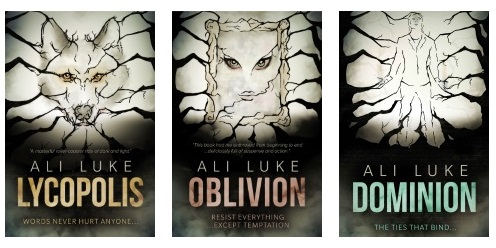
My contemporary fantasy trilogy is available from Amazon. The books follow on from one another, so read Lycopolis first.
You can buy them all from Amazon, or read them FREE in Kindle Unlimited.
0 Comments