
What is Writer’s Block and How Can You Beat It? Seven Crucial Things to Try
This post was first published in November 2024 and last updated in April 2026.
You’re staring at the screen. The minutes tick by. Not a single word comes to you.
Or perhaps it’s even worse than that.
You can’t even face opening up the document. And every day, you feel guilty that you’re not writing.
This is what’s often called “Writer’s Block”. It’s not that you don’t want to write, exactly. It’s that you can’t seem to write.
Some people are a bit scornful about writer’s block and say it doesn’t really exist. We’ll tackle that along the way … but let me say upfront that I think writer’s block is (a) real and (b) possible to overcome.
What is Writer’s Block?
Writer’s block is a (non-medical) condition where a writer is unable to produce new material. It might show up as being unable to start something new, or it can begin partway through a project. It can feel like a sense of dread when you think about writing, or even a panicky feeling. Some writers describe it as a sense of being lost in fog.
Writer’s block is more than just being stuck – though it can often begin with feeling stuck on a particular project. It’s also more than feeling “not in the mood” to write on a particular day. It’s as if all your enthusiasm for writing has gone, and nothing seems to be helping you move forward.
Hold Up … Is Writer’s Block Real?
Some writers are quite scathing about the idea of writer’s block, thinking it’s just a type of laziness or procrastination, where you’d rather be staring at a blank page than writing. They’ll tell you that “plumbers don’t get plumber’s block”, after all.
This isn’t a terribly helpful analogy. Plumbers aren’t working for fun, but for money—and while plumbing requires a whole lot of skill, it’s not really a creative endeavour like writing.
Other writers accept that sometimes you might not feel like writing, but they think you should just push on forward, regardless. Here’s how Sarah Kennedy puts it:
Recently, I’ve come to think that writer’s block is more appropriately called lazy writer syndrome. If you call yourself a writer, you had better write. Otherwise, you’re a wanna-be writer, a has-been writer, a pretend writer, or no writer at all.
(Personally, I think you’re absolutely still a writer when you’re not currently writing. None of us are writing all the time!)
And here’s what Belinda Weaver says:
The truth is that writer’s block is just an excuse to get out of work.
There, I’ve said it. Saying you can’t write because you’ve got writer’s block is the equivalent of saying, “But miss, I’m sick miss * cough cough *”.
This approach might work for Sarah and Belinda. And if you’re being paid to write, you probably do need to push on forward and get the work done at times when you’re not feeling at all inspired.
But writers do get writer’s block. We wouldn’t have a name for it, otherwise! And you can find writers all over the internet talking about being blocked and struggling to write, often for long periods of time.
These aren’t just beginner writers, either. Long-established author K.M. Weiland has been very open about her own experience of writer’s block:
For four years, starting in the fall of 2018, I lived with significant writer’s block. It was my first such experience, and I felt bewildered by it, frightened, and often ashamed. After all, I was an established, published writer, who made her living not just writing novels, but teaching others how to do so. How could I possibly have writer’s block?
In K.M.’s case, the writer’s block didn’t affect all her writing. She kept up with her excellent blog for writers, Helping Writers Become Authors. But she ground to a halt with her fiction writing, eventually taking a deliberate sabbatical from her fiction.
You might experience something similar. Perhaps you’re managing your professional writing or academic writing, but you haven’t written a word of fiction in months. Or maybe you’re not writing for your own blog at all – but you’re hitting all your freelancing deadlines.
Are You Blocked with One Project or In General?
If you’ve ground to a halt in the middle of writing a novel, please know that this is very normal! Most writers get stuck at some point within the first couple of drafts. It can be frustrating and discouraging, but it’s helpful to pinpoint that the main block is within the project itself (what K.M. calls “plot block”).
But if you’re struggling to write anything creative, then it’s a more general block: K.M. calls this a “life block”. This might be from a sense of overwhelm or burnout, health difficulties, a lot of responsibilities, significant life changes, a stressful job, a difficult break-up, grieving, or anything else that’s making life harder than usual. It’s really hard to have the creative energy and desire to write when other things are weighing heavily on you.
How to Beat Writer’s Block: Seven Things to Try (and Why They Work)
If there was an instant, easy solution to writer’s block, you’d have probably found it by now!
However, there are plenty of helpful things you can try. Even if none of these work straight away, they can help you overcome that block as time goes by.
#1: Tackle the Cause (Where Possible)
Try to pinpoint what’s causing your writer’s block. If you could wave a magic wand and fix the problem, what would that look like?
If you’re struggling to figure out the cause, you might think back to a time when you weren’t blocked. What’s changed?
In a lot of cases, you might not be able to fully solve the problem. Perhaps you feel blocked because everything is so overwhelming for you right now. Probably, if you could instantly make things less overwhelming, you would … but that’s not how life works!
Hopefully, though, you can find something you can do to move a little closer to a solution. Perhaps doing a brain dump list of everything on your mind would help a little. Or maybe there’s a particular task you could hand over to someone else.
If the cause of your writer’s block is the project yourself, you might want to think about:
- Is there an angle of the plot (for fiction) that you’re missing?
- Would you prefer to hit “pause” on this project for a while and move on to something new?
- What excited you most about this project when you began? How could you tap into that again?
#2: Write for 5 Minutes to See if That Helps
For some writers, what feels like a block is just the (very normal) inertia we all feel when we think about getting started on writing.
If you can, try writing for a few minutes to see if that helps. If the writing doesn’t feel any easier after five minutes, feel free to stop! But you may find that just getting started helps resistance to vanish.
Can’t face “real” writing? A great way to get past a blockage to do some freewriting: just jotting down everything that’s on your mind. You could also try brainstorming, spending 5 minutes noting anything that comes to you about your project. You may even want to make this a regular habit: some writers find it a really helpful way to clear out the “junk” that’s getting in the way of their creative flow.
#3: Take a Guilt-Free Break from Writing (or Everything!)
Tried writing and it didn’t help? Then you probably need a proper, guilt-free break from your writing. (Not the kind of break where you scroll social media in the middle of a writing session and then feel guilty about it!)
Can you put aside your novel, deliberately, for a week or more? Could you even take a break from some of the other responsibilities going on in your life? It might not be possible to take a full weekend away (or even a day off from work), but maybe you could spend an hour or two reading a favourite book in a coffee shop.
#4: Figure Out What Happens Next in Your Story
Writer’s block can begin when you’re not really sure what to write next. I see this come up a lot in the “messy middle” of novels: even if you know how it’s all going to end, it can be tricky to figure out what’s supposed to happen during all the chapters up until then.
If you’re feeling a bit foggy on the details of your plot, grab a free copy of my novel structure worksheet:
You can use this at any stage (whether you’re planning, drafting, or editing) and it’s also suitable for short stories and novellas.
#5: Get Away from Your Usual Writing Space
Where do you normally write? For a lot of writers, it’s the kitchen table, the sofa, maybe a desk in a corner of their bedroom. There might be a lot of distractions (the TV is on, the laundry needs folding, etc) or interruptions (your kids/partner/roommate wants to chat).
Just getting away and writing somewhere else can make a surprising difference. Take an hour to go to a coffee shop and write, or try a local library. Having the time set aside, and being somewhere new, can help your creativity flow again.
#6: Read (or Re-Read) Books That You Love
Many of us become writers because we’ve enjoyed reading books so much. And that love of reading can be wonderful fuel for your creativity.
Read a book from an author who you’re already familiar with, or in a genre that you can’t get enough of. If you like, choose an old favourite and re-read it. Just immersing yourself in words can be enough to help you start overcoming writer’s block.
(And don’t fall into the trap of feeling dismayed by their talent: “I could never write like that”. You’re comparing your draft material with someone else’s carefully revised and edited words. Plus, you’ll have your own unique writing voice … none of us can ever write exactly like someone else.)
#7: Get Support from Other Writers
When you’re struggling to write, it can be hard to reach out to other people. Non-writers might not “get” it … but you may not want to admit to writing friends that you’re struggling.
The thing is, we all have times when we’re blocked or stuck. There are so many people out there who’d love to support you in your creative process.
In Writer’s Cafe, I always encourage people to “check in” with the group each week even if – especially if! – they’re having a hard time writing.
Getting one-to-one support can also be a great way to beat writer’s block. People who come to me for writing coaching are usually feeling stuck in some way. When they talk through their writing goals and share their writing with me, we work together to get them moving again.
There’s no magic fix for writer’s block, but if you’re struggling with it right now, please know it’s normal. A lot of writers go through it. If you take just one idea from the list above, give yourself a guilt-free break from writing. Just having some time away from your work-in-progress can help you come back to it feeling refreshed.
About

I’m Ali Luke, and I live in Leeds in the UK with my husband and two children.
Aliventures is where I help you master the art, craft and business of writing.
Start Here
If you're new, welcome! These posts are good ones to start with:
Can You Call Yourself a “Writer” if You’re Not Currently Writing?
The Three Stages of Editing (and Nine Handy Do-it-Yourself Tips)
My Novels
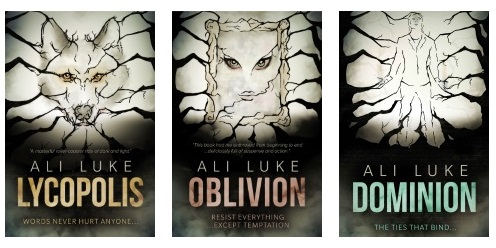
My contemporary fantasy trilogy is available from Amazon. The books follow on from one another, so read Lycopolis first.
You can buy them all from Amazon, or read them FREE in Kindle Unlimited.
Its wonderful way of coping up the block writer, I have been gone through this sort of this and left many unfinished products but from now onward I will make them finish.
I have writer’s block when I am feeling overwhelmed. I have had a busy year trying to juggle blog posts, novel edits, LinkedIn and marketing! These writing projects are exhausting me, especially as I am a newbie to being published! So, today I left my desk — even though my inner critic was shouting, ‘hey, you’ve got sooooo much to do,’ and I decided to do some batch cooking and make some comforting homemade soup instead. This felt like a welcome relief as I have been having many sleepless nights with an overactive brain. Tomorrow, I intend to read for a change, and … I am giving myself permission to do so. It is the weekend after all!