
Nine Things that Are Totally Normal (and Expected!) When You’re Writing a Novel
If you’re writing a novel, you might have moments – or even months – where you’re tempted to give up. Perhaps something about the process makes you feel like you’re doing it all wrong, or you’re never going to finish, or you’re just not cut out to be a writer.
Whether you’re one chapter in or wading through the messy middle, there’ll be times when your confidence is at a low – and resistance is at a high.
Today, I wanted to share some really common situations (and emotions) that come up when writing a novel. These happen to me, they happen to the writers I work with as a coach, and they happen to writers in Writers’ Cafe. In short … they’re normal. They’re even to be expected.
So if any of these sounds familiar right now, then please know that you’re not doing anything wrong. You will make it to the end. And you absolutely are a writer.
These are all normal parts of writing a novel (I’ll list them here, then go through each one below):
#1: Getting Stuck on What Happens in the Story
#2: Having Scenes That Go Nowhere
#3: Needing a Break from Writing
#4: Losing Momentum After a Break
#5: Changing Your Mind About How to Tell the Story
#6: Feeling Uncertain About the Genre
#7: Pausing When Life Happens
#8: Discovering Even Better Ideas Along the Way
#9: Wanting Other People to “Get It”
#1: Getting Stuck on What Happens in the Story
I don’t think I’ve ever met a writer who sailed through from Page One to The End without at least some moments of “what on earth happens next?!” Even if you have your key plot points mapped out, there’s still a lot of story that needs to happen in between those.
When I get stuck, my instinct is often to just write anyway: to throw words down on the page, hoping they’ll coalesce into a scene. After a lot of half-baked, reworked drafts, I’ve realised that taking a step back is often more productive … even if it means missing a word count goal.
#2: Having Scenes That Go Nowhere
Related to #1 … most novelists, at some point in the drafting process, end up writing scenes that don’t really go anywhere. Perhaps it’s a scene where characters sit around thinking, or do a bunch of chores, or have a nice chat over coffee – without any real purpose to it.
While these scenes can be very realistic (quite a lot of “scenes” in my life involve chores!), they may eventually need to be cut from the story, or given a greater point. And if that’s the case – don’t worry. It’s completely normal to have some passages like that in your draft.
#3: Needing a Break from Writing
During the long process of writing a novel, you’re going to need a break. You might feel burnt out, after tens of thousands of words, or you might feel fed up of your story, characters, or the writing life in general.
It’s absolutely fine to take a break from writing (and very normal to need one). Wanting some time away from your story doesn’t mean you’re a bad writer or that your story isn’t compelling enough. It just makes you human!
#4: Losing Momentum After a Break
Another common experience is coming back from a break, expecting to feel refreshed and enthused … only to feel a lot of resistance about starting back up again. Maybe before you had some time off (whether deliberate or unplanned), you were on a roll. Now, it seems like you’ve lost all that momentum.
Something I find helpful after a break is to pick a time for getting back into my writing: often, I do this during one of the Writers’ Cafe writing hours. Even if I feel a distinct lack of motivation, just having the time set aside (and the accountability to others) makes it a whole lot easier to get going again.
#5: Changing Your Mind About How to Tell the Story
Whether you plan your novel or just dive into Chapter One, you’ll be making decisions very early on about how to tell the story. First person or third person? Past or present tense? Who should be your narrators?
You might well change your mind on the telling of the story as you write it … and that’s a very normal part of the process. Maybe a story that started out in the past tense just doesn’t feel right after the first chapter, so you switch to present tense – or perhaps a story with multiple third-person POV characters suddenly comes into focus when you switch to having a single first-person narrator. Both those situations happened for me with novels I’ve been working on recently.
#6: Feeling Uncertain About the Genre
While some authors have a very clear genre in mind right from the start of their first draft, many don’t. Most of the authors I work with have a story idea first and foremost, and it can take quite a bit of writing to be sure what genre it best fits into.
It’s fine if you start writing without knowing exactly where your book would appear on the shelves. As you develop your story, it’ll become clearer. Maybe the novel you thought was a rom-com is more of a contemporary fantasy, or the historical novel you started becomes an alternative history. Give yourself space to explore your idea without worrying too much about the exact genre at the beginning.
#7: Pausing When Life Happens
During the writing of a novel, everyday life will carry on … and sometimes, things will happen that throw your writing completely off-course. This might be illness (yours or a loved one’s), an injury, a house move, a busy spell at work, a domestic disaster of some kind, or perhaps something lovely, like a new baby in the family.
I don’t think I’ve ever spoken to a writer who didn’t have some kind of pause during their novel – sometimes for weeks or months – due to life throwing up something unexpected. This kind of pause is almost inevitable, and when it happens, don’t feel bad about putting your novel on hold for a bit.
#8: Discovering Even Better Ideas Along the Way
As you write your novel, however much you’ve planned or thought ahead, you’ll probably find yourself surprised. Maybe you’re five chapters in when you realise that your novel would work so much better if the antagonist was your main character’s brother, not a colleague. Or perhaps you’ve written two drafts before figuring out a way to force your romantic leads closer together right from the start.
It can be amazing when this happens – and also frustrating! You might feel like if only you’d planned more, or thought more deeply, you’d have had the idea sooner and not “wasted time” writing your story in a slightly different way. But I firmly believe that nothing you write is ever wasted. You may have needed to work through that material in order for the idea to come to you.
#9 Wanting Other People to “Get It”
This is such a very normal and understandable thing: to wish that the people around you would “get” wanting to write a novel. In my experience, even people who are kind and supportive will sometimes be a bit baffled by why you’d want to put 80,000-ish words down onto paper (then rework them multiple times).
One of the things I love about Writers’ Cafe is that the writers in there are surrounded by people who “get it” … people who can celebrate all their triumphs, sympathise with their struggles, and deeply understand the desire to write a novel.
What about you? Does one of these strike a chord … or are you going through something else which makes you wonder “is this normal?” Pop a comment below!
A quick heads-up: Writers’ Cafewill be reopening for new members on Monday 14th September. To get in sooner (at no extra cost), drop me an email (ali@aliventures.com) and I’ll put you on the waiting list, who’ll get early access. 🙂
About
I’m Ali Luke, and I live in Leeds in the UK with my husband and two children.
Aliventures is where I help you master the art, craft and business of writing.
Start Here
If you're new, welcome! These posts are good ones to start with:
Can You Call Yourself a “Writer” if You’re Not Currently Writing?
The Three Stages of Editing (and Nine Handy Do-it-Yourself Tips)
My Novels
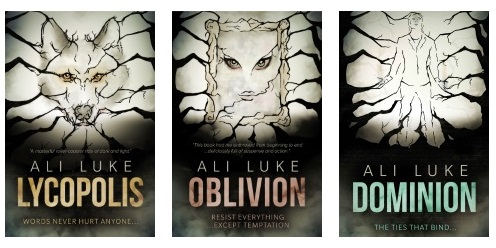
My contemporary fantasy trilogy is available from Amazon. The books follow on from one another, so read Lycopolis first.
You can buy them all from Amazon, or read them FREE in Kindle Unlimited.
0 Comments