
What is a Scene vs a Chapter – and How Should You Structure Each?
Are you writing in scenes or in chapters?
That might sound like a weird question. Maybe you feel like it doesn’t matter, or that they’re basically the same thing, or that it doesn’t matter either way.
But whether you think in scenes or chapters can make a big difference to how well your story works.
Let’s start with a couple of definitions.
What is a Scene?
A scene is a unit of story. Normally, it includes at least one character, taking action, an element of conflict, and some kind of change (however small) by the end of the scene. (You can read a bunch of other definitions of scenes here.) It’s a continuous passage of time and generally takes place in one location.
What is a Chapter?
A chapter is a way of dividing up a book. It might be a full scene, a partial scene, or several scenes. It may well end halfway through a scene, perhaps on a cliffhanger. It could cover a few minutes or many years; it could take place in one location or many.
Many writers – including me! – have been taught to think in chapters, because chapters are a convenient marker for writers as well as readers. We discuss “the next chapter” or “finishing a chapter” of our book. We might write a “chapter by chapter” outline.
But for the sake of a strong story, it’s more helpful to work in scenes, at every stage of the writing process.
How Scenes vs Chapters Work at Different Stages of the Writing Process
Whether you’re just starting a novel or you’re on draft five, it’s worth thinking about how you approach it in terms of both scenes and chapters.
#1: The Idea Stage
When you’re coming up with and developing an idea, you might already have some ideas for key events (scenes!) within your story.
Depending on your genre and the type of book you’re writing, it can also be helpful to think about how you want to use chapters.
For instance, if you’re using two first-person narrators, then you’ll almost certainly want to only switch at the end of a chapter. (You might decide to alternate chapters between the two viewpoint characters.)
This may have implications for how you put together the story – e.g. if the characters aren’t in the same place for the whole story, you want them both to have something interesting going on! – so it’s useful to consider it right from the start.
You’ll also want to think this through if you’re writing a story that switches between the past and the present (B.A. Paris’s Behind Closed Doors is a good example).
If you’re using third-person narrators, or just one first-person narrator, and your story mainly takes place in the “present” of the narrative … then you’re unlikely to have much to decide on here.
#2: The Outlining Stage
Depending on how much outlining you like to do, you might want to plan out specific scenes here.
Even if you’re a “pantser” or discovery writer, you might well have key scenes in mind for your story … and in some genres, specific scenes are pretty much a given. (Think the “meet cute” and the “grand gesture” in a romance novel, for instance.)
It’s fine to create a chapter-by-chapter outline if you want to, but make sure you’re also thinking in terms of specific scenes.
A chapter where “Jane finds out about Tom’s secret bank account” will be more interesting if the bulk of this happens in a single, emotionally-charged scene … not in a step by step account of actions that Jane takes across the course of a whole day.
If you’re a bit stuck on where to start with outlining, take a look at my guide to three act story structure and the seven key plot points your novel needs – it takes you through a process for creating a big-picture overview of your story.
If you enjoy digging into the details and having much more of a map for your story, Savannah Gilbo strongly recommends scene-by-scene planning: she explains “I love breaking down my story this way before I start writing a single word. I like knowing roughly how many scenes I have to work with both in total and in each act – that way it’s super clear to me if my story is going off track at any point.”
#3: The Drafting Stage
Writing an initial rough draft is often a process of telling yourself the story, especially if you’re a pantser. It’s fine (and very normal) for your first draft to have some meandering bits, scenes that don’t fit, snippets and summaries that aren’t even scenes, and so on.
If you want a cleaner first draft (or if you’re getting bogged down), then thinking in scenes can be really helpful. Otherwise, it’s very easy to ask yourself “what should go in my next chapter?” and end up with a sequence of events that kill your pacing.
April Davila calls this “connective tissue writing”, defining that as “those in-between paragraphs where your character ties her shoes, walks down the hall, drinks her coffee, and arrives at the next meaningful moment.”
Even if what’s happening is meaningful, it can still get a bit lost if you’re dragging it out over multiple little bitty scenes … so if you’re stuck on what to write next, ask yourself how you could create an interesting scene that moves the story forward, with characters in a single location, at a single time.
#4: Rewriting Stage
Most of the writers I work with as a novel coach have finished a full rough draft and are now facing the (quite daunting!) task of shaping that material into a strong, coherent story.
This is where it makes a ton of sense to focus on scenes.
If you just look at each chapter, it can be hard to spot places where your story’s meandering a bit: where nothing really happens in a scene, or where you’ve not got scenes so much as little snippets of a few lines of dialogue here, then a lot of summarised action, then another few lines of dialogue, and so on.
As you rewrite, you might want to construct a scene-by-scene map of your story. That way, you have an overview of the whole thing (that doesn’t require reading 70,000+ words repeatedly).
Some people put each scene on a row of a spreadsheet, others use virtual cards (Scrivener is good for this), and others use physical cards or post-it notes to map out the whole story, one scene at a time.
As you do this, you might spot scenes that could be cut or merged, scenes that need heavy rewriting, or missing scenes where you’ve skipped or skimmed over something that’s important to your plot, and scenes that essentially repeat themselves.
#5: Editing Stage
When you come to edit on a detailed level, your focus is going to be sentence by sentence, not scene by scene … but it’s still helpful to have both scenes and chapters in mind.
At this stage of editing, you want to make sure chapters start and end strong – and that scenes do as well. (That could mean, for instance, ending a chapter partway through a scene so that you have a cliffhanger to keep the reader turning the pages.)
Hopefully, you’ll have settled on all your scenes at this stage, and you won’t be adding substantial new material – but it’s still helpful to look at things like whether each scene has a clear setting, whether the scene would be stronger if you cut the first few lines, and so on.
How to Structure Your Scenes vs Chapters
Structuring Scenes
Scenes are a unit of story. In fact, you might even think of a scene as a mini story, with a beginning, middle, and end giving it its structure.
Your character will have some kind of goal in the scene – however small – and this should be either achieved or thwarted by the end of the scene.
Sometimes, you’ll stop one scene and immediately start the next, leaving the reader to pick up on any change in time and location.
But it’s also fine to include a transition – just keep it fairly short. For instance, you might finish a scene, then start the next one with something like:
The next day…
Hours had gone past by the time that…
When they finally reached London…
This helps make it clear to the reader that time has passed.
What you don’t want is to write a meandering kind of scene that drifts through events … e.g. your character wakes up and finds a package on their doorstep, ponders about it, gets on the bus, pops into Starbucks, arrives at work, greets coworkers, then starts their workday by opening their emails.
Sure, this is realistic … but we don’t want blow-by-blow realism in a novel! We just want to see the things that actually matter. For instance, the important scenes here are:
- Your character finding an unexpected package on their doorstep, before they’ve even had their morning coffee.
- Your character opening their work emails to discover a strange email.
The rest can be summarised briefly between scene 1 and scene 2:
While Felicity gulped down her triple shot latte and waited for her ancient computer to finally load her emails, she couldn’t shake a sense of unease. Why would someone leave a book on her doorstep? And why that book, one she’d tried not to think about since college?
Structuring Chapters
Chapters can be structured in all kinds of ways. To some extent, this will depend on genre – but you can also establish conventions early on in your own book.
Perhaps:
- You frequently end a chapter mid-scene, perhaps on a minor (or major!) cliffhanger.
- You have very short chapters … or very long chapters.
- All your chapters have names, potentially following the same naming convention each time.
- You only switch POV between chapters.
- You have a POV that only comes in as an intermission or interlude between normal chapters. (E.g. a villain speaking directly to “you”, the detective or protagonist, in a thriller/crime novel.)
- You alternate the viewpoint, chapter by chapter.
There are no rules at all on how you should do chapters. What matters is what works for your story (and what fits at least roughly with genre expectations).
The chapters are for the convenience – and enjoyment! – of your reader. Some writers call them “arbitrary divisions”, but they should be carefully chosen to make your reader’s experience of your book easier, more enjoyable, or both.
Thinking about your story in terms of scenes, not chapters, can help you dramatically improve the structure and the pacing. Whether you’re just starting a first draft or reworking your rough draft into something much more polished, getting your head around scenes (not just chapters) is key.
Free Roadmap Calls Available
If you’d like some help with reworking your novel, book a free Roadmap call with me.
We can talk about where you’re currently at with your story, explore anything that’s getting in your way, and come up with a plan for you to move forward. I’ll be happy to also take you through ways to work with me … but there’s absolutely no obligation to book coaching or buy anything from me as a result of the Roadmap call.
About

I’m Ali Luke, and I live in Leeds in the UK with my husband and two children.
Aliventures is where I help you master the art, craft and business of writing.
Start Here
If you're new, welcome! These posts are good ones to start with:
Can You Call Yourself a “Writer” if You’re Not Currently Writing?
The Three Stages of Editing (and Nine Handy Do-it-Yourself Tips)
My Novels
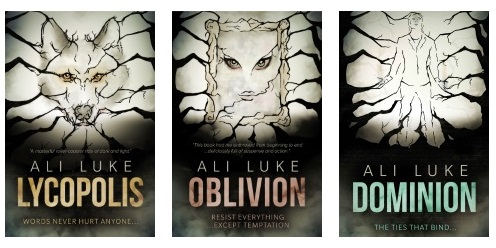
My contemporary fantasy trilogy is available from Amazon. The books follow on from one another, so read Lycopolis first.
You can buy them all from Amazon, or read them FREE in Kindle Unlimited.
0 Comments