
Developmental Editing, Copy Editing and Proofreading: What’s the Difference?
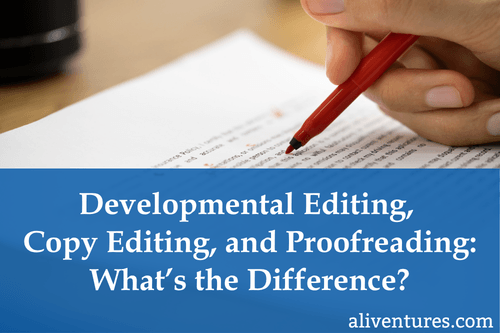
You’ve been working hard on your novel and you’ve got a good second (or even third) draft … but what should you do next?
This is the stage where a lot of novelists, particularly those considering self-publishing, think about getting an editor.
Once you start looking at what editors offer, you’ll see things like:
- Developmental editing
- Line editing
- Copy editing
… and even if they explain what they mean by those, it may not be clear what your story actually needs.
Let’s go through the different types of editing, so you know what each one generally means, before digging into how to figure out what’s right for your novel.
Understanding Developmental Editing vs Copy Editing vs Proofreading (Quick Definitions)
Developmental editing is a big-picture review of your novel, focusing on things like the plot, characters, pacing, setting, and so on. This is the type of editing you probably did when going from Draft One to Draft Two (or even from Draft Two to Draft Three if, like me, you tend to write quite fast, rough first drafts).
The editor will pay close attention to your words, and will point out areas that need work (e.g. a slow opening to a scene; inconsistent characterisation) but they won’t generally be making line-by-line edits … unless you’ve also paid for that!
You can expect to receive a detailed written report, probably split into sections (e.g. “Plot”, “Characters”, “Setting”) that takes a full look at your story and potentially makes recommendations for fairly significant changes.
You might also hear this level called a “structural edit” or “substantive edit”.
Copy editing is often used synonymously with line editing, though some editors make a distinction between these and see copy editing as a process closer to proofreading. Usually, however, both authors and editors use copy editing to mean a close line-by-line edit of the story.
This level of editing will usually involve fact-checking (e.g. pointing out historical inconsistencies) … though you shouldn’t expect an editor to be an expert in your subject matter. The editor will query inconsistencies, like a character’s hair changing colour, and make on-the-page edits to sentences that are clunky, awkward, or repetitive. They’ll correct spelling mistakes, typos, and grammatical errors.
Copy editors may also pick up on broader issues (e.g. a scene where nothing really happens, a character who drops out of the story partway) but they’re not primarily looking at the bigger picture.
Proofreading isn’t editing, though some authors really mean something closer to “copy editing” when they ask for proofreading: they want the proofreader to look out for repeated words, ambiguous phrasing, and so on.
Instead, proofreading is simply about looking for typographical errors. Spelling mistakes, misplaced punctuation, and incorrect capitalisation will all be spotted and corrected (or queried, if there’s ambiguity). If the book is already laid out for publication, e.g. as an ebook or print book, then the proofreader will also look for formatting issues.
You shouldn’t, however, expect a proofreader to improve your actual writing! They won’t question your use of “exclaimed” when “said” would have done perfectly well, or point out that you used the word “tree” four times in a paragraph.
Editors (and writers!) sometimes use these terms a little differently, so if you’re at all unsure, ask an editor exactly what they’ll provide in (say) a developmental edit.
Which Type of Editing Does Your Story Need?
Before we go further, I want to say something really important: do not spend money on getting a rough first draft edited.
As a writer, you want to get your story as far as you can before paying an editor. That means self-editing: going through first the big picture, then the details of your story.
You don’t want to pay someone to point out all the things you could have easily fixed on your own.
(Plus, if you need to make really massive changes as a result of an edit, then you’ll probably need to pay to get your novel edited all over again…)
If you’re not sure where to begin with editing, that’s completely normal! Often writers get to the end of a first draft and don’t know where to go next. It’s helpful to have an understanding of the three stages of editing your writing, so you can get your novel into good shape.
Psst … this is something I can help with, in multiple (affordable!) ways. If you’d like to figure out your next steps after finishing a first draft, request a free Roadmap call with me and we’ll chat it through.
Assuming that you have got a draft you’re broadly happy with – where you feel like you’ve gone as far as you can on your own – then here’s what I recommend.
Pay for a Developmental Edit if…
A developmental edit is a great fit if:
- This is your first novel. Writing a novel is tough! You learn a lot along the way (and during the rewriting process), but there may be places where you’ve struggled to get the hang of, say, building in conflict and tension. A developmental editor will give you the guidance you need to shape your novel further.
- You’ve not had any (or much) feedback on your writing. If you’ve never shown your writing to anyone, it’s hard to know your own strengths! A good editor will point out all the things that are good as well as the things that may need changes.
- You feel like your story isn’t quite “working”. As a writer, you may have a sense that something’s off, but you’re not sure why or how to fix it. An editor may be able to spot that missing piece for you. (My own editor, Lorna Fergusson, is fantastic at this.)
Pay for a Line Edit if…
A line edit is a great fit if:
- You’ve already had a developmental edit (and implemented the changes you want to make as a result of that). If your story had some issues with things like the plot and characterisation, but you’ve now fixed those, then you’re ready for this more detailed level of editing.
- You’re confident in the big picture of your story. Perhaps this is your second (or third, fourth, etc) novel, and you’re happy with the broad shape of it. Or maybe you’ve been writing it with the help of a coach, workshopping it with a writers’ group, or had feedback from a writer friend.
- You’re self-publishing your novel. If you’re going for a traditional publishing deal, you may still want to pay for a line edit before submitting to agents/editors … but your publishing house won’t put your book out there without editing it themselves. If you’re self-publishing, having your book professionally edited is a huge help it making sure it comes across as professionally as possible.
Pay for a Proofreader if…
A proofreader is a great fit if:
- Your book is already edited. If your book is basically ready to go, then a proofreader is the final pair of eyes on your manuscript. (Don’t expect them to copy edit – some proofreaders will point out stylistic issues, but most will be focused purely on spelling, grammar, punctuation, and formatting.)
- You’re self-publishing your novel. You don’t need a proofreader if you’re submitting to agents/editors. Obviously, it’s best to avoid glaring spelling mistakes in your first few pages, but an occasional grammatical slip or misplaced comma in your novel as a whole isn’t going to ruin your chances!
How to Hire a Professional Editor for Your Novel
There are lots of different editors out there who you can pay to edit your novel.
Some potential good places to start finding them are through:
- Word of mouth: ask around among authors you know. Can they recommend an editor? (Or can they warn you of editors to avoid?!) They may also be willing to share examples of the edits/feedback they received.
- Social media: if you’re already following any editors on LinkedIn, Instagram, etc, you’ll have a sense of their personality and whether they’re likely to be a good fit for you and your book.
- Established agencies: many editors are solo freelancers, but others work as part of an agency, e.g. the editors at The Literary Consultancy. This can be helpful in terms of consistency and getting your edit back relatively quickly (some freelance editors will be booked up months ahead).
You can expect a full novel edit to cost, very roughly, somewhere in the region of $1,500–$3,000. If it’s significantly less, you may want to (a) double-check what’s included (e.g. a manuscript assessment or appraisal will be cheaper than an edit, but won’t typically be as thorough as a developmental edit) and (b) make sure you’re happy with your editor’s expertise. If it’s significantly more, that may well reflect the editor’s expertise and how in demand they are, and you’ll need to consider what works for your budget.
Generally, I wouldn’t recommend going for the cheapest editor you can find – better to pay a bit more for a higher quality edit. Poor editing is going to be a waste of your time as well as your money.
It can be hard to know how good an editor is: look at reviews/testimonials from past clients, or any examples they give of previous edits. You could also read novels that their clients have published, though keep in mind that these may not always fully reflect the editor’s abilities: the author has the final say over what changes they make!
In most cases, an editor who’s new to your work will want to do a sample edit first, usually of the first chapter or first few pages. (They may offer this for free, or there may be a small fee.) This lets you and the editor figure out if you’re a good fit.
Don’t be offended – or surprised – if an editor declines your novel. It may simply be a genre they don’t feel confident working with (or subject matter they’re uncomfortable with), rather than anything to do with your writing ability. Try someone else instead, and hopefully you’ll find an editor who’s a good fit for your book and for you.
Can You Use a Beta Reader Instead of a Developmental Editor?
If you’re self-publishing, it’s a great idea to get a paid edit if you can afford it.
But good-quality editing isn’t cheap (largely because it takes a lot of time and expertise) … so what if it’s just not in your budget?
Beta readers aren’t a replacement for an editor – they won’t generally have the same level of expertise, and you certainly can’t expect them to spend the same amount of time on your manuscript. However, their feedback can still be really useful, especially when you’re looking at the bigger-picture things – like whether characters are coming across well, whether the story is gripping, and so on.
Ideally, you’ll want more than one beta reader; this helps you look for points of consensus. (For instance, if three people all say your main character is coming across as annoying and whiny, then you probably want to address that.)
Generally, beta readers won’t be making line-by-line editing recommendations – though you may well come across someone who’s happy to provide detailed feedback, or you might get this kind of support through a critique group, where you’re sharing a scene or chapter at a time.
Where Next?
If you’re self-editing your novel, or about to start doing so, take a look at Editing Essentials. It takes an in-depth look at the 20 most common mistakes I see in short stories and novels, covering dialogue, action, and narrative.
If you’d like feedback on a draft in progress, then take a look at my Coaching services (where I support you in completing a draft you’re happy with) and my Writers’ Cafe group (where you can get feedback from me and from fellow members on any scene you’re working on). I’d love to be able to help you get to “the end” of your novel.
About
I’m Ali Luke, and I live in Leeds in the UK with my husband and two children.
Aliventures is where I help you master the art, craft and business of writing.
Start Here
If you're new, welcome! These posts are good ones to start with:
Can You Call Yourself a “Writer” if You’re Not Currently Writing?
The Three Stages of Editing (and Nine Handy Do-it-Yourself Tips)
My Novels
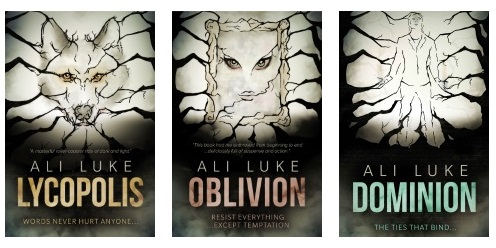
My contemporary fantasy trilogy is available from Amazon. The books follow on from one another, so read Lycopolis first.
You can buy them all from Amazon, or read them FREE in Kindle Unlimited.
Excellent explanation! Many writers mistakenly think editing and proofreading are the same, but each stage serves a unique purpose. Developmental editing focuses on structure and content, copy editing improves clarity and consistency, and proofreading catches final errors before publication. Understanding these differences can significantly improve the quality of any written work. Thanks for breaking it down so clearly!
Thanks William, glad you found this helpful!