
Write Fast and Rewrite a Lot … or Take Your Time Drafting and Edit Lightly?
Should you get your first draft down as fast as possible … or take more time over it?
My own writing process has always been to draft fast (I can easily hit 1,000 words in an hour, often in 45 minutes) and then to restart with a blank document for Draft Two … but increasingly, I feel this isn’t serving me so well!
If like me, you’re finding yourself getting bogged down at points in your first draft, or writing scenes for the sake of writing, without really knowing how it’s all going to fit together, then you might want to do more structuring upfront and potentially even write more slowly as you draft.
I was really interested to hear Savannah Gilbo talking about this in episode 224 of her podcast, The Truth About Writing Faster: It’s Not What You Think. In particular, she mentioned that a number of writers she’s worked with have slowed down their writing pace, but finished novels more quickly … because they’re not getting stuck and they’re doing much less editing.
Should You Write Fast or Slow?
What matters is that you write, you enjoy the process, and you finish something! You can go as fast or as slow as you like.
It doesn’t really matter if you like to type at a breakneck pace (then edit a lot) or thoughtfully consider each sentence as you write (then do minimal editing). So long as you’re having fun and you’re getting your novel closer to “the end”, that’s great.
But if you feel like your current process isn’t quite working, then here’s how to experiment with changing things.
How to Speed Up if You’re Writing Slowly (But Overthinking Everything)
If you feel like your writing is too slow, it could be because of one of these very common issues during the planning, drafting, or editing stages:
- You’re spending months on research, reading book after book, article after article, making notes, taking virtual walks on Google Maps … but not getting any closer to actually starting writing your novel.
- You’re meticulously working out all the details of your story before you begin writing … but as soon as you start drafting, you realise that you want to change your plan. Or, you don’t start at all because you’re feeling bored of your story already.
- You’re getting stuck writing and rewriting the first three chapters, because you don’t know what happens next.
The solution for each of these is different. Let’s take a look at each in turn.
#1: Spending Forever Researching
If you’re stuck in research mode, give yourself a firm deadline to stop researching. Then, come up with a high-level outline for your novel, if you don’t already have one, and start on the drafting.
There might be times when you realise you need to know something critical for a scene. If it only affects one scene, I’d put in a “note to self” (as a comment, in square brackets, or in yellow highlighter) and come back to it at the editing stage. If this detail is going to have a knock-on effect on other scenes, that’s when it’s worth pausing and going a bit of extra research.
#2: Getting Stuck on Outlining
Some novelists like to do a ton of planning upfront, and that can make a lot of sense if you’re in a genre with twisty turny plots (like murder mysteries, for instance). But many writers feel that if they do too much planning, it takes away some of the enjoyment of writing. Doing very detailed outlines can also be unhelpful if you begin drafting then realise that what you’ve planned doesn’t fit your characters at all.
As with researching, I’d have a deadline for the outline. I’d also keep it fairly high-level for the most part: know your key plot points, but don’t feel that you need to plan out what happens in every single chapter right up to the end of the book. (It’s usually helpful to plan at least the first 5–7 chapters, then you can keep pausing and planning the next few chapters as you draft.)
#3: Endlessly Rewriting the First Three Chapters
This is probably the biggest issue I see keeping writers stuck! You keep reworking the first three chapters (or maybe even just the first chapter) because (a) you want to get it right and/or (b) you don’t know what happens next.
It’s hard, but the best thing you can do here is simply move on! Write notes to yourself about what you want to change in Chapters One, Two, and Three when you come back to them. Spend some time outlining the broad strokes of the rest of the book, so you know what you’re heading towards.
How to Slow Down if You’re Writing Fast (But Editing a Lot)
Maybe you’ve got the opposite problem. You’re writing fast – maybe thousands of words a week – but then you’re ending up with problems like:
- You’re writing at breakneck speed for a week or two … then you’re hitting a wall. You feel like you’ve run out of inspiration. It might be weeks or even months before you pick up your novel and start working on it again.
- You’re finding yourself with a much longer first draft than you want. Perhaps you have 150,000 words when 80,000 is normal for your genre. It’s not just that you need to cut out some big chunks … every single scene feels too wordy.
- You’re cutting out huge chunks of your first draft as you revise. Whole chapters that go nowhere, characters who don’t fit, meandering passages where your scenes are sagging … there’s just so much that needs to go.
If you’re running into problems because you’re going too fast, that’s usually because of one key problem: you don’t really know what’s happening in your plot.
You might have started off your novel with a clear picture of your main character, the situation that draws them into the story (the inciting event), and where it’s all going to end up (the climax/resolution) … but there’s an awful lot of “middle” that feels vague and fuzzy!
It can be fun to just write and see where the story takes you, but that can easily lead to the problems above: you lose momentum, you write far too much, and you have lots of bits of the first draft that need to go completely.
If you’re happy with that process – that’s fine! You can write a fast, scrappy first draft and completely start over from scratch, once you’ve figured out the story through writing it.
But if you feel that this process isn’t working well for you, then you might want to try one or more of these:
#1: Spend More Time Outlining Before You Write
Taking just a few days or a week to outline your novel before you start writing could make a massive difference to the quality of your first draft. You might spot issues (or clever connections!) at the outlining stage that wouldn’t have been obvious until you were a long way into a draft.
Pop your email address in below to get a free copy of my “Novel Structure” template, which helps you create a simple, high-level outline that covers all seven of your crucial plot points:
You can also read my post on Three Act Story Structure which goes along with the worksheet.
#2: Don’t Write Just for the Sake of Writing
I know how easy it is to want to write something on your novel – and again, this is fine if it works for you. But personally, I’ve found that when I’m chasing a daily word count goal, it’s all too easy to end up writing a scene that doesn’t really go anywhere, or doesn’t necessarily fit in with the broader plot of my novel.
Try to avoid writing just because you feel you should get some words down. Instead, think about what scenes are going to build naturally towards your next plot point. If you don’t know what the next plot point is, take a step back from writing and do some more planning.
#3: Consider Slowing Down Your Actual Writing
I’m a fast typer and I like to get sentences down quickly. But when I did my Masters degree in creative writing, I had a number of classmates who took a very different approach – they took care over each sentence, writing a lot more slowly, but also doing a lot less redrafting and editing than I did!
There are also writers who go a lot faster than me by using dictation software, but I’ve heard them say that this super-fast drafting does end up requiring more editing afterwards.
It’s hard to get an inside look at other writers’ creative process – the actual mechanics of how they draft and edit – without being in some sort of feedback group, but you can absolutely experiment with your own writing. Try deliberately slowing down, and see whether you’re happier (or not!) with the results.
Whatever stage you’re at with your writing, and whether you’re a naturally fast or slow writer, I hope that you can have lots of fun along the way. Next time you sit down to write, try tweaking your process just a little: maybe spend a few minutes doing some upfront planning of your scene, or write a paragraph or two much more slowly than usual.
Free Novel Structure Worksheet
Don’t forget to grab your free copy of the Novel Structure worksheet. This helps you map out all seven of your key plot points on one page, with guidance on what needs to happen at each one. Just pop your email address in below:
About
I’m Ali Luke, and I live in Leeds in the UK with my husband and two children.
Aliventures is where I help you master the art, craft and business of writing.
Start Here
If you're new, welcome! These posts are good ones to start with:
Can You Call Yourself a “Writer” if You’re Not Currently Writing?
The Three Stages of Editing (and Nine Handy Do-it-Yourself Tips)
My Novels
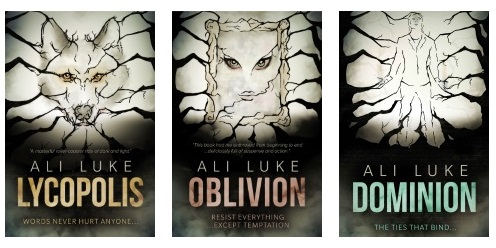
My contemporary fantasy trilogy is available from Amazon. The books follow on from one another, so read Lycopolis first.
You can buy them all from Amazon, or read them FREE in Kindle Unlimited.
hi please can you send me the structure worksheet
Of course! I’ve just sent it to you. 🙂
Really insightful discussion on different writing approaches. I like how the article respects both fast drafting with heavy revision and slow, careful writing with minimal edits. It highlights that productivity depends on personal workflow and goals. The balanced perspective helps writers feel less pressured to follow one method and instead experiment to find what truly works best.