
Eight Secrets Which Writers Won’t Tell You
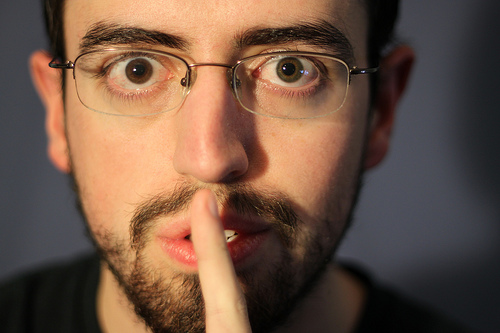 Image from Flickr by Lazurite
This is not particularly relevant to the post, but I’m getting an awful lot of comments telling me, often a little snarkily, “it’s ‘THAT’ not ‘WHICH'”.
The “don’t use which for restrictive clauses” rule comes (as far as I can tell) from Strunk and White. Plenty of authors, including Austen, have used “which” exactly as I use it in the title. It’s very commonly used like this here in England, so I’m guessing my comments are coming from US readers.
There was never a period in the history of English when “which” at the beginning of a restrictive relative clause was an error.
(From 50 Years of Stupid Grammar, The Chronicle)
I thought about putting “that” in the title – but I like the sound of “which” between “secrets” and “writers”.
And with that out of the way, enjoy the post! 🙂
A few years ago, I’d look at published writers and think that they were somehow different from me. After all, their books were gripping and fluent – unlike my stumbling attempts at first drafts. Their blogs had hundreds or thousands of readers.
They were real writers. And, deep down, I was afraid that I could never really become one of them.
But as I’ve taken more and more steps into the writing world, I’ve realised that my perception just doesn’t match up to the reality. Writers – at all levels – have just the same struggles as you and me.
I’m going to go through eight secrets. Eight things which all writers know – but which you might never hear them admit.
Secret #1: Writing is Hard
Writing is easy: All you do is sit staring at a blank sheet of paper until drops of blood form on your forehead. (Gene Fowler)
There’s a myth – not just in the writing world – that if you’re good at something, it’ll be easy. And established writers, me included, do have writing sessions where the words flow smoothly.
The truth is, though, that writing is hard. Some types of writing are tougher than others – I’ve written before about Why Fiction is So Hard to Write. But almost any type of writing will cause some sort of resistance – getting started is never easy. And very few writers, however experienced, can turn out a great draft first time.
Use It: Getting started is nearly always tough. There’s nothing wrong with you if you find it hard to sit down and write. But like exercise, once you get going, it gets easier.
Secret #2: We All Struggle With Procrastination
There’s only one person who needs a glass of water oftener than a small child tucked in for the night, and that’s a writer sitting down to write. (Mignon McLaughlin, The Second Neurotic’s Notebook)
I’ve seen a few writers talk about this, often in a jokey way: we procrastinate. This isn’t just the case for beginners. Writing Magazine columnist Jane Wenham-Jones, for instance, writes quite openly about her struggles to just get on with writing. (And she’s had several novels and non-fiction books published – plus many short stories and articles.)
Procrastination can come in a couple of different forms:
- You do the dishes, weed the garden, tidy your desk, sharpen your pencils … anything but sit down and put words on a page.
- You write, regularly – perhaps blog posts or journal entries – but you never get round to starting that novel or memoir or other big, meaningful project.
This form is, I think, fairly harmless; it’s easy to spot yourself doing it, and there are easy tricks for “just getting on with it”. The second type is more insidious – it’s easy to kid yourself that you’re just not ready to tackle something longer or more complex, even when you’ve been putting off that project for years.
Use It: Take a good hard look at your own writing. Are you procrastinating on something? What would it take for you to get moving on it?
Secret #3: We Put Ourselves Into Our Work
Every author in some way portrays himself in his works, even if it be against his will. (Goethe)
Anything and everything you write says something about you as a person, whether you want it to or not. Even your choice of what to write about – the decision that something is worth putting down in words – is significant.
It doesn’t end there. Writers (particularly good ones) deliberately draw on their own lives. If you know enough about a novelist, you can almost always spot some autobiographical element in their work. If you knew someone closely enough, you’d see that they pour in their childhood memories (the good and the bad), life experiences, hurts and dreams.
Use It: Dig incidences out of your past – they can be tiny things, so long as they have emotional power. Put them into your writing. There’s a truth in these which can bring your work to life.
Secret #4: First Drafts are Always Crap
The only way I can get anything written at all is to write really, really shitty first drafts. The first draft is the child’s draft, where you let it all pour out and then let it romp all over the place, knowing that no one is going to see it and that you can shape it later. (Anne Lamott, Bird by Bird – you can read an extract from this section here)
Short, straightforward pieces may come out just-about-right the first time round. Most authors, though, will have first drafts which look vastly different from the finished product. I remember reading J.K. Rowling’s description of how she cut a whole character (sadly no longer on her website, but it’s mentioned in an interview here) from one of the Harry Potter books.
As a reader, you only get to see the finished product. You don’t have access to the fumbling, faltering first draft, which every author has to go through in order to get to the polished finished piece. But those drafts exist – buried or even burnt, their clumsy sentences and over-indulgent passages concealed from the world.
Use It: Don’t ever worry if a first draft doesn’t seem very good – especially if you’re writing fiction. If you can, take a look at a published author’s first draft and compare it with the finished work. Here’s an example, bravely posted by Diane Chamberlain: Finished! (And a First and Fifth Draft Comparison)
Secret #5: Each Piece Exists in a State of Flux – and it’s Never “Finished”
Art is never finished, only abandoned. (Leonardo da Vinci)
When you read a book or article or blog post, it feels fixed. You can’t really imagine it being any other way.
That’s not any writer’s experience of their work, though. Chances are, the piece began as a patchwork of ideas. Whole chunks – chapters, scenes, paragraphs – will have been moved around, cut, added, expanded. There’ll have been plenty of times when the writer had a coin-toss decision between taking one direction and another.
Because of this, the work never feels finished to its own author: there’s always the potential for some more tweaking. At some point, though, every writer has to let their work go.
Use It: Aim for completion, rather than perfection. You’re never going to feel like a piece of writing is quite as finished as it could be. Send it out into the world – it will only truly be complete once it has readers.
Secret #6: We Do it Because We’re Obsessed
An incurable itch for scribbling takes possession of many, and grows inveterate in their insane breasts. (Juvenal, Satires, around 100 AD)
Normal people aren’t writers. Most people (much to my horror) dislike writing. They might only read one or two books every year. They certainly don’t see any reason to put their thoughts down in writing, whether that’s as a blog, a journal or a story.
If you’re writing, you’ve got a certain obsession. Some writers talk about their need to write – and even believe that they couldn’t live without it. I certainly find it very hard to imagine a life where I didn’t write at all.
Use It: Accept that you’re a bit weird – and revel in it! Make time for your writing – sure, the rest of the world might not understand, but they’re not writers.
Secret #7: Money Does Matter
Nobody but a blockhead ever wrote except for money. (Samuel Johnson)
While many writers carry on because they’re a bit obsessed, there are very few who don’t have some ideas about making money from it. After all, if you can make a living from your writing, you get to spend your work day with words – not just your evenings and weekends.
Writers don’t necessarily love or even agree with everything they write. I’ve written on topics like Australian college football, not because I had any particular interest in it, but because I was being paid.
There’s no shame in making money from creative work – whatever the beret-wearing, garrett-dwelling types would have you believe.
Use It: If you want to make money as a writer, start paying attention to the market. Some sorts of writing (e.g. web copy, specialised non-fiction) are a lot more lucrative than other types (e.g. poetry). Don’t be afraid to try something new: you might enjoy it more than you think, and it might be the first step to turning your writing into an actual career.
Secret #8: We All Struggle With Self-Doubt
This is what I’ve been thinking lately: I’m getting worse. My writing just isn’t as good as it used to be. With every new story I write I believe I’ve lost something—the spark, the raw energy, the ability to see the scene, to tell the truth, to imagine. I look at my stories and feel like they could be so much better. (Jessie Morrison, MFA Confidential blog for Writer’s Digest)
You’ll come across the occasional supremely confident writer. In my experience, those people tend not to be very successful. Good writers are often riddled with self-doubt – and as they get better and better, they’re also more and more able to spot the flaws in their own work.
Self-doubt can be very destructive, and can cripple your ability to write. It’s something to stand firm against – but it’s important to remember that you’re not the only writer who goes through it. There’s nothing wrong with you if you have a little voice in your head saying “Who’d want to read THAT?”
Use It: Next time you doubt yourself, keep going anyway. Put doubts about your work aside when you’re drafting – save them for when you need to edit.
If you liked this post, I’d be thrilled if you’d share it with any friends who might find it useful. You can tweet it by clicking the green button below, or you can share it on Facebook or by email by copying this link: https://www.aliventures.com/8-writing-secrets [topsy_retweet_big]
About
I’m Ali Luke, and I live in Leeds in the UK with my husband and two children.
Aliventures is where I help you master the art, craft and business of writing.
Start Here
If you're new, welcome! These posts are good ones to start with:
Can You Call Yourself a “Writer” if You’re Not Currently Writing?
The Three Stages of Editing (and Nine Handy Do-it-Yourself Tips)
My Novels
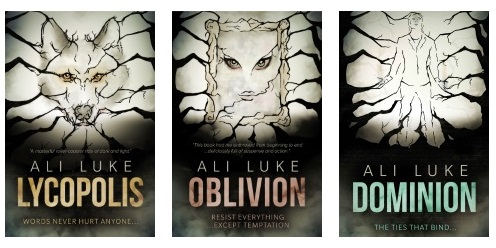
My contemporary fantasy trilogy is available from Amazon. The books follow on from one another, so read Lycopolis first.
You can buy them all from Amazon, or read them FREE in Kindle Unlimited.
208 Comments
Trackbacks/Pingbacks
- Secrets With Comments — About Freelance Writing - [...] If you like the articles here about freelance writing you may want to subscribe to my RSS feed. Thanks…
- Copywriting linky na víkend — Slovotepec - [...] Eight Secrets Which Writers Won’t Tell You [...]
- Writing Tips Collection | Goldin++ - [...] Eight Secrets Which Writers Won’t Tell You [...]
- Roving Robin Report – Fabulousity for the Fifth Week in April - [...] Ali Luke of “Aliventures” blows the whistle on “Eight Secrets Which Writers Won’t Tell You” [...]
- Eight Secrets Writer’s Wont Tell You « Guerrilla Ontology - [...] Eight Secrets Writer’s Wont Tell You Posted: May 6, 2011 by joelnickel in Novels, Philosophy, Prose Tags: Authors, Novels, Procrastination,…
- Small Thoughts - Eight Secrets Which Writers Won’t Tell You — Aliventures... Eight Secrets Which Writers Won’t Tell You — Aliventures: A few…
- Creating the Perfect Underachiever (pt1) « Eden's Garden of Delights - [...] and ire (”Oh, great, I HAVE to deal with this now before s/he gets the idea that crap like…
- Pebbles and Buttons · Having trouble writing? Keep things in perspective - [...] typical fashion of my online procrastination habits, I stumbled on a blog post called “Eight Secrets Which Writers Won’t…
- How to Write Thousands of Words Every Single Week — Aliventures - [...] writers feel a bit reluctant to get started (though many will keep this a secret). This reluctance to create…
- 8 Secrets Most Writers Won’t Tell You | BookBaby Blog - [...] Chris Robley on September 2, 2011 in Writing Tips Aliventures.com posted a great article about common struggles even professional…
- 25 Inspiration Sources for the Discouraged Writer - Cheryl Reif Writes - [...] I’ve got good news for you: you aren’t alone. And I don’t know about you, but I find that…
- Friday Features #22 - Yesenia Vargas - [...] 8 Writing Secrets Which Writers Won’t Tell You by Ali Luke at Aliventures [...]
- Eight Secrets Which Writers Won’t Tell You — Aliventures | The Write Side of My Brain - [...] Eight Secrets Which Writers Won’t Tell You — Aliventures. Share and [...]
- How to build your blog content successfully? - [...] Eight secrets which writers won’t tell you [...]
- Blogging Cheat Sheet and more tweets - […] 8 secrets that writers won’t tell you. http://ow.ly/803Km […]
- 作家不会告诉你的八个秘密 | 不给力网址导航bugeili.com - […] 原文来源:aliventures.com […]
- Roving Robin Report – Fabulousity for the Fifth Week in April « Birds on the Blog - […] Ali Luke of “Aliventures” blows the whistle on “Eight Secrets Which Writers Won’t Tell You” […]
- Roving Robin Report – Fabulousity for the Fifth Week in April « Birds on the Blog - […] Ali Luke of “Aliventures” blows the whistle on “Eight Secrets Which Writers Won’t Tell You” […]
I couldn’t agree with you more! Especially about the first drafts, and writing to get it completed rather than finished. Sometimes it just feels too hard to commit and type “The End”.
Icy Sedgwick’s last blog post ..Spotlight Amnar – I J Black
I find it really tough to let things go … they never feel as perfect as I want them to be! On the other hand, I don’t believe any work is finished until it has at least one reader…
I’m with Icy, but for me it’s self doubt I’m suffering badly with at the moment. I seem to be flip-flopping between who’d want to read the rubbish (I think. I am told otherwise) I write, and whether I shouldn’t just give the whole thing up and try something else. And then this morning inspiration strikes and I have another 2.5k word story on my hands. I am nothing if not confused.
Sam Adamson’s last blog post ..Emma Newman on Tour
Ack, I feel for you, Sam! I think we all have days like that (I sometimes look at my novel and think “is it ever going to interest anyone other than *me*?”) — and I guess being a writer just means carrying on and eventually letting the readers be the judge of its worth.
I wading through many blogs related to personality development have landed here from a link in one of the blogs that I was raeding. And teh result is god. Finding so amny informative articles taht might help me a lot.
I too aspire to become a writer in the future, though I am just 17 years old. I agree that writing is difficult and one needs to put in it a lot of hard work.
the following line that you mentioned is what happens with me:
You write, regularly – perhaps blog posts or journal entries – but you never get round to starting that novel or memoir or other big, meaningful project.
Writing an article or a two of some 500-600 words is quite an easy task. But when it comes to stating a novel or a similar things, it comes out to be very difficult. Continuity of thoughts and style is important, that is hard to maintained.
Good work, keep it up.
– Ranjith
Ranjith’s last blog post ..Reflection in the mirror-In search of what constitutes my life
Thanks Ranjith, glad you’re finding this helpful!
I agree that short pieces of writing are relatively easy to do well — but sustaining an idea through a whole book is surprisingly hard. My feeling is that as the piece gets longer, the writer has more and more to juggle — e.g. in a short story, the plot can be pretty basic (or almost non-existent) but in a novel, plot and pace are crucial.
Spot on. I went 8 for 8 with these.
Tony Noland’s last blog post ..Writing for love What love
Fab! 🙂 Thanks, Tony.
I agree. I would say this is also true with highly technical content and books. I’m at a spot where I’m self-publishing a book on Robotics Programming, and there’s so many decisions you make about how to best market this book, if you’re being too technical or not enough, is the book too short or just right, etc.
I think though there’s a certain amount of “Resistance” as Steven Pressfield puts it, we all feel and it’s just a matter of ignoring the lizard brain enough to create and ship. That ability to ignore… Is the difference maker…
Scott Preston’s last blog post ..The Perfect Programmer or Remarkable
Thanks Scott, great to have a different writing perspective! I think there’s a tendency to assume that technical writing should be easy since it’s so factual — but you’re right that there are a lot of decisions to make (back when I had a day job, I wrote a few software user guides … and it was hard to know how much to spell out!)
I absolutely agree with you about resistance — and that at some point, we need to let our work go!
#4 is so true – only during the past year did I really *get* it and I really started doing it. Before that I used to agonize over so many little things (should I use this word, or that word? does this sound right? does it make sense? and so on! I can have endless discussions with myself inside my head about the smallest details). I am truly what you call a perfectionist. I really do strive towards perfection – the things I do must be really really good. I can’t help it and that is just the way I think. I do try to stop myself though from being too perfectionist about writing. So whenever I am writing something (fiction, non-fiction, essays for uni) and I detect that I am doing too much *thinking* instead of really *writing*, I tell myself: “stop thinking! just write! it doesn’t matter what you write down, just make sure there are words on this page”. It makes writing for me so much easier, but it is really something that I have to keep telling myself over and over again.
I think a little bit of perfectionism is a good thing — slap-dash writing rarely works! But you’re absolutely right that the *writing* needs to happen — not just endless thinking. I actually find that my thoughts get clearer when I write, too…
What a great post! Thank you. I’ve been having such a hard time getting started with my new project. I definitely see myself in some of these…Now to deal with #1 and 2. *cracks knuckles*
Thanks Rachel! And good luck with the new project! 🙂
Ali, you’re going to be one of the authors who make it. You have the talent, the drive and are now building your audience/brand with articles like this.
Mary E. Ulrich’s last blog post ..Test Questions Segregation or Inclusion
Aww, Mary, thank you! I think I’m getting better at coming up with popular ideas… 🙂
All my writing is for clients or for my business, so I thought for a long time that I didn’t put myself into my pieces. This year I realized that I do. Everything I write has me in it – so then it became a matter of making my job easier by finding people who’s work I was passionate about so the writing came easier. It has been a bumpy road but purging out clients who don’t have their customer’s best interests in mind or who aren’t helping the world in some way has made me a much happier writer!
Great article! I am forwarding to my husband who writes fiction. 🙂
Courtney Ramirez’s last blog post ..5 Ways to Pump Up Your Email Marketing With Content
Yay for you! I find exactly the same thing — it’s really tough to write on a topic I just don’t care about, and like you, I try to only take on jobs which fit with my values. As a writer, you can never totally divorce yourself from what you write.
Good luck to your husband … and thanks for forwarding this on!
What a wonderful post! I agree with all of these secrets, particularly the self doubt one. I love the ‘do it anyway’ advice – the only way you’ll improve is to keep trying and learning. Thanks for your sincerity. 🙂
Thanks Cally! I figured it was time SOMEONE let everyone in on the secrets… 😉
point number 4 is so true, it made me laugh 🙂
number 7 is so true too 🙂
thank you Ali
Any time! 🙂
OMG, these are great! Especially the self-doubt part. Oh, and the crappy first draft part.
Julie Musil’s last blog post ..Dialogue-Make it Matter
Cheers Julie!
Oh I agree with that obsession thing. It’s 1 am here in Manila but I just cant sleep because I’m so obsessed writing my new blog post.
That said, I’m pragmatic about my writing. I love it, i live with it, but I know that some writing sells, some wont. Since I don’t want to stress myself out worrying how thin the market is for travel writers (and frankly, I’m not too thrilled with the low wages), I decided to just have a dual writing career: I earn money as a business journalist, but I devote all my passion to my travel blogging.
BTW, I just signed up with the On Track -Alumni. Hoping to keep my travel writing On Track!
I think pragmatism is really important … I’ve seen writers have really unrealistic expectations of what’s possible. Having a dual career makes lots of sense — I do something similar with novel-writing and blogging (I love both, but if I was making tons of money from fiction, I’d spend more time on that!)
Welcome back to On Track! 😉
Being a blogger myself, I could so – so identify with all the points especially – the self doubt, first draft, putting ourselves into our work, and procrastination. 🙂
Interesting that you actually thought about these points…. 🙂 I am definitely feeling more self-assured and relaxed about myself after reading your post,
Meghashyam Chirravoori’s last blog post ..Feb 12- How I Used Some Law of Attraction Help in Getting an Internship!
Thanks Meghashyam — glad this post helped you! I love blogging, but I think it comes with its own set of stresses … like the pressure to keep producing, or the desire to keep on tweaking posts!
You hit the nail on the head on all eight points Ali, I’ve heard all these things before…I’m sure you could come up with ten more.
The writing life is crazy…
Reading these eight points definitely confirm one thing to me…yep, I’m a writer…or am I? I don’t know…writing this response is harder than I thought, maybe I should start over…LOL
Zac’s last blog post ..Instant Confidence in 10 minutes for under 5
Maybe I’ll do a follow up post… 😉
Personally, I think that anyone who writes regularly (and not because they absolutely *have* to) can call themselves a writer. 🙂
You’ve done it again, Ali! I don’t think there’s a single thing here we can’t all relate too (but procrastination is my Biggest Bad!) x
Thanks Lorna! 🙂 I’m starting to feel that *some* level of procrastination is just part of the creative process… or maybe I’m making excuses!
Ugh, so true. I can even add to #8: success doesn’t make you more confident, it makes you more neurotic. Imposter Syndrome, thy name is writer.
I think there’s a real pressure to keep living up to your success … I’ve seen a lot of excellent debut authors write about their struggles with producing Book 2.
Thanks, Ali, for taking the time to offer these helpful suggestions.
You know what my biggest problem is? The Big Sleepy. Whenever I sit down to write, I almost always feel this terrible drowse come over me. Any suggestions for dealing with The Big Sleepy?
Caffeine? 😉 A cup of tea usually gets me in the writing mood!
Awesome insight. Thanks.
“Money matters” is important. We have talent and have honed skills that not everyone else does, AND we love what we do. We shouldn’t be punished for it by no pay or low pay. Too many people hate their jobs, and they resent the fact we not only LOVE our jobs, but we’re good at them. Therefore, they try to punish us, either psychologically (“anyone can write”, “I always wanted to write, but I don’t have time”, “you’re so lucky not to have a REAL job”) or financially (‘you’ll get exposure”, “you should be happy someone wants to publish you”).
Another point to add to the list, making it nine, is that there will never BE time to write. You have to MAKE it. STEAL it, WRESTLE it, COAX it.
Devon Ellington’s last blog post ..Friday- April 15- 2011
Great points, Devon. I don’t think most people mean to be unkind when they say things like that, but it is rather galling when they don’t realise that writing is (a) hard work and (b) just as “real” as any other job!
Ever since I discovered the hundreds of blogs on writing thanks to @elizabethscraig, I’ve found a great community where my thoughts seem to be not only confirmed but vindicated. This blog post is a look into the writer’s study which makes me feel less lonely in my writing endeavors. Thanks so much for sharing!
Thanks Elisa, really glad you enjoyed it! I know the writing life can be a lonely one at times … but it’s definitely encouraging to know that other writers face the same struggles.
I think I need to read this post at least once daily. Thank you, thank you, thank you.
jeri’s last blog post ..Working mom vs stay-at-home-mom continued
You’re welcome! Glad it helped!
Ali,
Thanks for writing this post–much needed. Engaging. I think your community will stand to benefit from it.
Anybody who wants to be a writer can learn from your own experiences–thanks for sharing. Your honesty shines out. Your voice is authentic about the trials and tribulations of a writer’s life. I think many writers are eccentric and perhaps neuroticism runs in their DNA. A lot of artists have had trouble with their relationships: the obsession with their art can interfere with their normal life. You would be surprised at the legion of artists who have suffered on account of the muses visiting them. The artistic life is not for everybody and many artists have fallen prey to substance abuse or worse. Many of the greatest literary masterpieces were created at great personal cost.
Cheers.
Thanks Archan, this seems to have been a popular post!
I think so many writers (and other artists) do struggle, like you say. I suspect that the creative impulse comes from a sense of dissatisfaction with the world — a desire to recreate it, to put it right in the imagination at least. Perhaps I should write something about self-care for writers…
Fanwritingtastic – I needed to hear those pearls of wisdom!
Ya know I’ve been writing since I was 10 years old. I’ve always loved to write, been good at it, gotten kudus for it, made money at it, been cretive with it an yet never understood it. I never understood how come if I loved to write as much as I love to eat chocolate (and I do) why I squirm, resist and fuss so much before sitting down and putting pen to paper. Why, (even with one of my spirit guides being Anaiis Nin – found this out in a ‘reading’ many moons ago:) have Inever fully felt ‘supported’ in constructing my craft? Here’s my theory. . . .lack of trust in the process.
Your post gave me the ‘ah ha’ I needed – thanks for that!
Alison Elliot’s last blog post ..Are You Applying Quantum Awareness To Your Area Of Ignorance
Glad to help! I think it’s definitely important to trust the process — and also to recognise that resistance is *part* of that process. Perhaps not a very desirable part, but it might just be intrinsic to the creative act…
So since you told us the secrets, does that mean you are not a writer?
Yeah, the other writers are going to kick me out now. 😉
“Eight Secrets: ‘which’ writers won’t tell you?” or “Eight Secrets That Writers Won’t Tell You.”
(Alternatively, for brevity and to exclude the confusion in the first place: “Eight Secrets Writers Won’t Tell You.”)
According to Strunk and White: “That is the defining, or restrictive pronoun. Which is the defining, or nonrestrictive. ‘The lawn mower that is broken is in the garage.’ VS ‘The lawn mower, which is broken, is in the garage.’ ”
The clause “writers won’t tell you” is restrictive to the “eight secrets.” It is essential for the reader to understand of what secrets you speak. In this case, “that” should take the place of “which.” This also applies to the sentence: “Eight things which all writers know – but which you might never hear them admit” should have been “I’m going to list eight secrets all writers know that you’ll never hear them admit.” I stopped reading after that.
Here are two more secrets: 9) The majority of the writing process is editing. 10) Writers get schooled, too.
Thanks Marie. This is one of those grammar issues where there’s some debate: here in the UK, I have *never* been taught this “rule” and this BBC World Service article does a pretty good job of explaining the way “that” and “which” are used over here (in a nutshell, interchangeably for restrictive clauses) – http://www.bbc.co.uk/worldservice/learningenglish/grammar/learnit/learnitv313.shtml
I make no apologies for writing in UK English, or for flouting some “rules” of grammar (I’ll start sentences with “and”, I’ll split infinitives, I’ll end sentences with prepositions). This is a blog post, not an academic essay. I’m sorry it put you off reading, though.
Very good jab back at me with that English grammar lesson, though I’d like to point out it was an English friend who crafted the “Eight Secrets: ‘which’ writers won’t tell you?” joke, which I found too funny to pass up. (Preposition, what a hypocrite!)
I do take issue with the fact that you make a distinction between blog posts and academic papers. Though they are different, I like to think that self-avowed writers would use proper writing and high standards in whatever medium they use, especially if the blog post is about writing.
Cheers! (Did I use that properly?)
I agree that blog posts about writing are inevitably held to a higher standard than blog posts in general, which I guess is fair enough 😉
I didn’t make my point terribly well — I meant that there are some “rules” which I’d follow in writing an essay which I wouldn’t consider necessary in a blog post. I wouldn’t start sentences with “and” or “but” in an essay, for instance, and I probably wouldn’t use contractions. That’s not because I think those things are wrong but they’re characteristic of an informal rather than an academic style.
Learning the difference between “that” and “which” helps too.
See my reply above to Marie.
Awesome post. Really.
When I started socializing a bit — reading blogs and etc — what bothered me the most was this perpective that writing is like magic flowing through your veins, and you are always inspired. Worst, that you need to be inspired to write.
The problem with those fake concepts is that they make you self-doubt yourself. Well, it is not so natural and breeze to me; maybe I’m not good material for this writing business. When it is the other way around: if you keep writing despite your doubts you got exactly what it takes.
I think your post empower new writers. And that is great, cheers to you 🙂
Natalie Fay’s last blog post ..Smash-Up- We Writers are All the Same
Thanks Natalie! I find that occasionally I’m inspired and write almost without noticing the words — but far more often it’s a struggle. It’s a rather frustrating myth that writing *should* always be effortless. The vast majority of writers who I’ve heard from, published and unpublished, seem to agree that it’s hard (though rewarding) work.
“Writers don’t necessarily love or even agree with everything they write. I’ve written on topics like Australian college football, not because I had any particular interest in it, but because I was being paid.”
There actually is shame in writing about something you don’t care about or making art you don’t care about just for money. Art should never be about money. Putting yourself for sale to the highest bidder is still called whoring, no matter what field you think you’re in.
Andrea Niceschwander’s last blog post ..the hour of worship
I’m afraid I don’t share your opinion.
I would never write about something I actively disagreed with. I wouldn’t write for a political party that I opposed, for instance. But occasionally write about something that I’m not terribly interested in? If that’s the price of making a living doing what I love, I’ll gladly pay it.
Most of the time, I’m fortunate enough to write on topics which inspire me. But I learn an awful lot from the less inspiring ones too.
Thanks for publishing this article, it has really given me some hope that I might just finish my novel one day after all. I’m relatively young (18) but I’ve always been a writer, from the second I learned how to. I couldn’t imagine a life without writing & reading.
I love to write fiction and I’ve been dreaming of writing a novel once since I was little. I tried twice, but those “novels” have both been dumped after about 250 pages each, because they haven’t been very good, though that was mainly because I was about 15 and knew that my writing couldn’t be much good at that age.
Then I discovered fanfiction for me and now I’m afraid I’ll never get to write a novel, because I just can’t seem to sit down and start properly! I got an idea, now for a while already, and I know it’s good, you know, I just know it in my gut, but I can’t seem to really write all those thoughts out. My fanfiction stories just are so much easier to write, I sit down and the writing just flows.
As an additional problem, I’m actually german, so english isn’t my first language, but I’ve been reading and writing mostly in english for the last three years and now I find it hard writing in german again because I THINK and DREAM in english. But then again, I can hardly write a book in a language that’s not my mother tongue! I mean, everybody knows that it could never be as good as if I had written it in german…
Anyways, thanks for posting this article, it’s nice to know that the published writers struggle too! 🙂
Kathy, I felt just the same way — I started telling stories before I could even write, and writing stories from childhood. Once I hit my teens, I couldn’t really imagine a life in which I didn’t write.
I wrote my first novel when I was 14-16. It wasn’t very good (I read it a couple of years ago and it was worse than I remembered!) but I made it through two drafts and I learnt a huge amount. I wrote another novel when I was 19-21 and it was better. Not great, but competent. And I learnt a huge amount. And now I’ve written another novel, aged 23-26 and it’s the best thing I’ve ever written, and I think it’s just about good enough to inflict on the world 😉
I can’t imagine writing fiction in German (I studied German at school but I’ve forgotten most of what I know). But I suspect that by writing in English, your book won’t be *worse* — it’ll just be *different*.
I love fanfiction, and read a lot of it in my teens. 🙂 Can you figure out why it’s easier? Is it because you’ve already got the characters to work with? Maybe you could write a story which starts with characters similar to some in a fandom that you like (though change the names and the setting) and see how it develops…
Great list. But I do take issue with #4. First drafts are never perfect, but with the right planning, they don’t have to be total crap. Pantsers, that’s another story.
They don’t have to be total crap by any means (and perhaps I should have reflected that a bit better in the subheader). I do think it’s pretty rare that a first draft is anything like *publishable* though. For a short piece, yes, but not for a whole book…
THANK YOU! I’m writing a Ph.D thesis and killing myself over points you just confirmed. This is Catharsis, really. I’m going to circulate it around with other unaware victims of writing.
Thanks Janvi, glad to help! By all means share this far and wide… 🙂
What a timely post for me. It is helpful to read about accomplished authors having doubts, thinking their work is rubbish, have terrible first drafts.
I just recently wrote a little bit about what makes for good writing: http://jenniferbeving.blogspot.com/2011/05/begin-at-beginning-right.html
Jennifer Beving’s last blog post ..On Mothers
Thanks Jennifer, glad it helped! And congrats on the launch of your new blog, hope it goes well 🙂
This was a great post, thank you! Comes at a time when I was about to give up writing (again) because I felt it just wasn’t good enough. The part about drafts especially helped me feel better. Thank you!
Thanks Lana, really glad it helped! Please don’t give up … I’m sure you’re better than you think 🙂
This is one I wish I’d written myself – you got in ahead of me. All the points are me all over. I have even put some of them in my blogs. And yes, I’ve given up being a writer a few dozen times too. Even with nine books out and selling, I frequently wonder whether they are any good.
Rosanne Dingli’s last blog post ..Forgotten feeling- Winning a poetry contest
Thanks Rosanne! And sheesh — nine books that’re selling? Trust your readers; you’re good! 🙂
I definitely identified with these thoughts Ali – especially as I’m in the middle of writing a piece for an art gallery and am struggling with pretty much every one of the negatives. Good to remember that we all have to get over the same “mental illnesses” (Lamott) every day.
Becky – Visual Artist, Freelance Writer’s last blog post ..almostunplugged
Eight Secrets THAT Writers Won’t Tell You, not “which.”
Since I began writing at 12, and at 23 years old now, I’ve learned all of this through trial and error, although I never stopped to consider the crappy first draft, because as a perfectionist I always was critiquing my own work and taking out stuff that sucked, but it still was choppy and shoddy. I think I’ll STOP taking out stuff until AFTER I finish the entire thing.
Good post, and so true.
Thanks Beth! I learnt all this through trial and error too (and through getting to know lots of other writers).
I find that it helps to just plough on forwards with the first draft — anything and everything can be fixed later, and you’ll sometimes change your mind on what’s worth keeping!
Thank you, Ali. I am a songwriter and can totally empathise with all 8 of these. I do additionally have the melodic lines to think of, and have often to fit the words to that – whilst still conveying meaning. However, musical listeners (my readers) join the dots, so descriptive phrasing can be a little less intense than for straight writing….and emotional performances help to. I so admire writers who give melody and power within just their words – that truly is a gift. Great article
Thanks Richard! Fitting words to music must be a tough challenge indeed — but very much worth pursuing.
A secret that writers will tell you though is that in the title, “which” should be “that,” for pretty straightforward grammatical reasons. The rest of the article was very interesting though, I’m just also a fan of irony…
Sigh! I’m going to have to write a whole post on that vs which this, aren’t I…
I guess it’s people like that who preserve our language.
Striking a lots of chords with me, great article!
Thanks! 🙂
There are so many ‘truths’ in this piece. Nice to know that others too work ‘in a state of flux’ —I’m an incurable perfectionist :-). And it’s also very nice to know that I’m not the only one with (a lot of) self-doubt. And I confess: I do write really shitty-shitty first drafts. But then there’s that high I get, when in the end everything comes together.
This is a very illuminating piece. Thanks for writing it. 🙂
Greetings, Evita
Evita Martina’s last blog post ..Learning is like a game of chess
Cheers Evita! Glad this one was helpful — and no, you’re not the only one, on any of those counts…
Ali
I love it. 🙂
Both “which” and “that” could be deleted entirely, yes?
Great post.
They could indeed, though I personally still prefer it with “which” — to me, “Eight Secrets Writers Won’t Tell You” sounds a bit abrupt. I guess this is where grammar shades into opinion and style…
Also, the word “You” is starting to irritate me…
I kid. In this time of shortened attention spans I fear we will see the day when Twitter is upended by “Tw” where you will have no more than five words to express yourself. Sentiments like “Me no like tax proposals” may become frighteningly prevalent. The rich/poor divide may be rivaled by the il/literate divide.
Whoa, wake up call. Thank you so much for these, I needed them so badly.
Do you see that guys eyes! One is brown and one is green! That is beast.
does it really matter though, depends on your writing. i freely write whatever…it s my style.
Hi! I don’t know where to begin with this. I stumbled upon this article (literally; your article popped up in stumbleupon.com) and I couldn’t stop from nodding when reading it. I like to write, but I have a problem with calling myself a writer (that’s where self-doubt comes in) and I relate to everything you said. I often feel like a freak of nature due to my affinity to putting my thoughts down on paper, but your article assured me that it’s okay to feel like that. I’ll stop now, but not before I thank you for posting this. A reply will be greatly appreciated.
Hi Vanessa,
It’s okay to feel a bit “weird” about writing … it’s also okay to be excited about words, or to have a love-hate relationship with your writing! I’m glad you enjoyed this post, and hope it helps you to gradually become more confident about calling yourself a writer. 🙂
I appreciate this. I’ve always like to write you know just put my thoughts on paper or microsoft word, but this really helps me out as a young writer who does struggle with your list
Great advice, I’m glad that I read this.
All of this is true, even if you write non-fiction or technical oriented material. It’s just plain hard work.
Neil van Niekerk’s last blog post ..posing normal- everyday people for portraits
Great post!
This is so true and accurate , I also write and everything stated here is TRUE!!!
well now my doubts have been cleared
shwetal’s last blog post ..LETS CONQUER THE WORLD
Well i write a small blog on gaming amongst other things, and it was really funny to see i do go through most of this points u mentioned. quiet an insight.
May be this will help me work a bit harder as i am lazy !!
Thanks Ali !!
Thank you so much for this great post! cleared a lot of doubts and misconceptions I had all along. Now clear-headed am really motivated to write more & make sure I get better with every post! Great work, once again Thank you! 🙂
This is a very good post and I am very happy that I found it. I felt that the point number 2 ‘We procrastinate’ and the explanation about kidding yourself that you write because you write a few blogposts apply to me to the ‘T’.
Thanks for sharing this.
Regards
Ram
my first draft is a crap always …..there is something as a writer we all need to know .Writing comes within us , our heart sometimes your hand held with a pen just starts moving on the paper .and one more thing as said “there is no shame in making money with creative work”
Thanks a million. With yr post U have cleared d mind of many would be writers, myself included.
Now I understand that why I feel that my stories r ne’er finished ! I could never have guessed that they ought be lik that !!
Haha, this made me feel a little better. I’m definitely a little neurotic about my writing, and while I can post blog articles without too much issue, the two books that I’m working on have barely come along at all because they have to be PERFECT. It’s probably because I look at my blog as my thoughts, so it’s okay for it to be a little bit all over the place, but my books are more an extention of me, so I want them to be as good as possible.
And uh… speaking of procrastination, here I am, posting on an article I found on StumbleUpon while taking a “break” from working on my novel. 😉
My blog, in case anyone wants a peek: http://www.thecrazyleft.com/
Hahaha I love it, I am taking a break from writing poetry and assignments, and I found this page on StumbleUpon too. Must be addicting 😀
I couldn’t agree more: the first draft is crap but without it you can’t ever write something good. Getting your ideas on “paper” is only the first step in the process.
Exactly, and not understanding that is one of the biggest reasons people get writers block. If you expect your first draft to look like the final draft of your favorite novel you’re never going to get anything on paper.
I definitely agree that the first draft will always be crap, that’s something I have to get over. I feel like I always need to make everything I write just ‘right’, you know? And I do agree that there’s nothing absolutely wrong with wanting to make money with your creativity, food just doesn’t magically appear on the table.
I thought all the points made were very valid.I wanted to comment especially about #4 ‘First Drafts are Always Crap’. I kind of figured that out for myself recently when for the first time I actually sat at a short piece that I had written, and kept at it over a few days till I felt reasonably satisfied. The piece then looked quite good to me. But only I knew how much of effort had gone into it. That’s when it struck me that that was probably the process that all writers, big or small go through. And it was erroneous on our part to imagine otherwise.
Also you didn’t mention the problem with being published. About being rejected again and again but not giving up. Is this because with opportunities on the internet, it is now possible to be discovered through a blog, for instance?
I didn’t mention “it’s hard to get published” because I didn’t think that was much of a secret … 😉
I think it’s now harder than ever to get a traditional print book deal from a mainstream publisher. On the other hand, there’s a much lower entry-barrier for self-publishing (blogs, ebooks, print on demand, etc).
A comforting read, Ali, and gives me confidence as a writer.
English, grammar and writing has never come easy to me but I love it. I have to write.
Recently read Bird by Bird too – Anne Lamott and that was helpful too. A great book on life and writing.
Thanks Ali,
Rob
Bird by Bird is one of the (many, many!) books on my “things to read” list… I’ll bump it up a notch! 😉
Ali
Bump it up two (that’s the coach in me) 😉
Rob
Rob’s last blog post ..Music Success in Nine Weeks – Book Review and Case Study
Amen! I hired an artist to paint two phrases from Bird by Bird on the wall above my writing desk—
“Shitty first drafts and short assignments”—–the longer chapter it comes from is hilarious—especially the part about the only writer she knows who writes great first drafts—Lamott says, “We do not like her very much. We do not think she has a rich inner life or that God likes her or can even stand her . . ” Now that’s inspiring 🙂
I’m a writer and I don’t have some of this crap. Some of my first drafts are good. If I finish something, IT’S FINISHED. I’ve never finished something and come back later and hated it.
Lucky you!
It’s about style. Most of the writers I know who have first drafts that are good get those because they edit while they write the first draft. If you can do that all the more power to you, but for me if I worry about the quality on the first draft I tend to lose the flow.
As for never hating anything that you wrote I’m generally the same except when I’m trying something new. Whether it is using an unusual perspective in a piece of fiction or writing a new style of article I always end up wanting to go back and rework them once I know more about how they should be written.
Elton’s last blog post ..Hugo Book Review: Foundation’s Edge
I’ve been putting off commenting for a long time. Now I’m going to get to work.
Very nice…and so true! I’ve been writing quite a while now, and these misconceptions are out there and flowing around like nobodies business. You’re correct in assuming ‘writers’ will find them validating and comforting. It’s nice to know there are other like-minded people going through similar experiences and we are not alone.
Thank you for sharing this – great stuff.
Thanks Susan! There are so many misconceptions, partly because we often see the end product without getting any idea of the process that went on behind the scenes.
Dear Ali:
This is a great article! I am posting links to it in two Linkedin writer’s groups that I manage, “Freelance Writers Working for Internet Content Mills,” and the “Spirituality Writers Network.”
Cordially,
Robin Elizabeth Margolis
Thank you, Robin! I really appreciate you sharing the article. 🙂
Awesome and amen.
Jeff Goins’s last blog post ..Interview with Aaron Goldfarb, Author of How to Fail
I think it’s a narrow language barrier and I wouldn’t take it as being too literal! I am from the U.S. and it makes sense to me. Dave
David’s last blog post ..On 9/11 Was Building 7 an Inside Job?
How do I get my books edited?
8 Secrets Writers Won’t Tell You
— No need for which or that?
That’s been suggested … but I still prefer the cadence of my version..!
What about George Orwell’s third rule of writing?:
“If it is possible to cut a word out, always cut it out.”
To me, the clunky sound of juxtaposing “secrets” and “writers” comes close to barbarous (see Orwell’s sixth rule). 😉
I do appreciate your suggestion, but I’m happy with my title, thanks 🙂
The most important part of truly understanding any writers ‘rule’ is understanding it so well that you know when it needs to be broken.
Elton’s last blog post ..Hugo Book Review: Foundation’s Edge
I feel like I’m breathing a sigh of relief after this article. I’ve always considered myself not a writer but this makes think again. Thank you.
Amy Lynn Andrews’s last blog post ..6 Ways to Recycle Your Old Content
Amy, so glad to help! And in my book, if you’re a blogger, you’re a writer… 🙂
It’s true. If you can blog then you can write. In fact, anyone can write. Why? Because we all have a story to tell.
Every point so well taken! I know these things, but it’s always good to be reminded.
Oh, and yes, the that/which complainers will all be from the US, where the distinction has the force of a rule, and our ears have been trained differently to hear “what sounds right”. Your title definitely sounds funny to me, but I can live with it . Generous of me, isn’t it 🙂
Thanks, Maggie! 🙂
It’s something I’ll be wary of in future — I obviously don’t want my American readers stumbling over my writing. (I’m sure my references to “holidays” instead of “vacations” and so on are causing enough problems ;-))
The one thing I never want to see is all the variants of English completely merge. How boring would that be! What I do hate, in fact, is when American editors suppose that their audience can’t handle adapting to British idiom, and bring in someone to “translate” so that Harry Potter’s trainers become tennis shoes, and the Philosopher’s Stone turns into a Sorcerer’s Stone, and so on. (After that, I bought all my HP books from amazon.uk). I value the differences. They make the similarities much more interesting!
Maggie Secara’s last blog post ..October Giveaway: Molly September
I would like to add a ninth secret.
Most writers suck.
They are no good. So don’t feel bad if your work isn’t on par with, let’s say, Jane Austin, or Margret Atwood. For every great writer there are innumerable clusters of crap hacks on the other end of the spectrum, and a whole gang of mediocre thugs rounding out the middle. Most best sellers are honestly sub-par and without a decent ‘proofer’, editor and publishing house wouldn’t make it out the door; the author wouldn’t receive a B minus on an introductory course at the university level.
We read classics when educated about the arts because the market is saturated with the same sort of half assed efforts we see in other popular mediums. A blockbuster can prove to be worthwhile, but more often than not it caters to the lowest common denominator and carries no significance.
If you are rejected it may mean you fall between markets, one microscopic market populated by geniuses whereupon very few works are selected for print (and even less read afterward), and one monstrous market of genre fiction which rounds out ninety nine perfect of the field.
Almost everything in print today cannot fall within the definition of literature. To publish an actual novel is the most difficult of tasks. The market cannot bare them. Our societal shift from analogue to digital doesn’t help the struggling industry, and neither does the steady increase in our population coupled with a loss in interest due to more accessible mediums.
So if you feel that you aren’t up to snuff, don’t worry, you are with the majority. Knowing this may help you focus on getting better. If you think your work is fantastic and still cannot find a publisher (after actually trying) then you need to re-read the preceding sentence. It is too good to be crap, and not good enough to be great.
It is indeed a tough market for writers, and I agree with you that most published writing today is *not* literature.
However, I’m not sure I see that as a bad thing! I’m absolutely a fan of great literature (there’s a reason I took a literature degree ;-)) but there’s a lot of very good genre fiction out there. Yes, it might not get highly-graded in an academic environment … but for most writers, that’s not a huge consideration.
You make a great point about the need for editors, proof-readers and publishers, though: very very few books are completed in isolation, and every writer can benefit from feedback.
Of course there are a lot of bad writers, but we have to be very careful not to discourage people, especially kids, from reading because what their reading isn’t ‘good.” After all reading a bad book is generally better for you than the best movie or TV show and avid readers are going to find the better works eventually.
Elton’s last blog post ..Hugo Book Review: Foundation’s Edge
Tennis shoes are called trainers over there? Interesting. And neither is quite right. Sneakers is even worse. We must put a committee on this.
I can relate to each and every one of these.. which is a first for me! I’ve always felt like the oddball out in the writing department.
Thanks Ali, very nice site with good information. I am working on a course titled “You Can Write Your Own E book”. Coming soon! I know that most writers probably already know how, but maybe it could help some struggling authors. Expected launch…11/01/2011 Sign up for my mailing list for updates on price, and timeline.
Thanks,
Carey
“That which doesn’t kill us….” You know where I’m headed, right?
In uni, I was told “that” was an unnecessary word in many instances, and so leave it out whenever it didn’t add to the meaning of a sentence. So I’d have titled this piece, “Eight Secrets Writers Won’t Tell You.” After uni, the editor of my first published work put back all the “that’s” I’d left out, so I came to realize some grammar is negotiable depending on the ivory tower or the publishing house involved. Everybody and their cat has an opinion. The internet has only made those opinions more strident.
The only writing I’ve ever really been able to relax and have fun with is technical editing because the original writer does all the sweating, and I get to make simple sense out of his or her chaos. It’s been a true refuge at times from the nitpicking fiction-writing/editing nazis and helped me realize [that] everything you wrote above is true. No one’s an expect. Everyone is forever an apprentice writer. Trouble is, nobody wants to admit it. 🙂
Thanks, Wraith! The word “that” can often be cut, without any loss of meaning — but sometimes this damages the flow of a sentence. It is often a matter of personal style (or house style if something’s being published). I prefer my title my way — I like the sound of it — but I certainly accept there are plenty of possible tweaks and variations! 🙂
The hardest part of writing is getting started. A writing teacher once told me that the way to get started is to write ‘THE’ then keep on going. It works for me quite often. Revise it later if you don’t like what you write–but you have STARTED.
i love this advice– a lot.
BlogandWrite’s last blog post ..How to Start Out in Freelance Writing
Thanks, your information is educational. I tried to start writing on the blog. It’s very easy and free expression. Do not be afraid to start is at the heart of the secret recipe writing 🙂
agung’s last blog post ..Thalassaemia Disease
Except for us Christians. We don’t write for money. *Cough Cough*
Jeremy Myers’s last blog post ..I Have a Dream
Very incite-full post! I especially liked: “Normal people aren’t writers. Most people (much to my horror) dislike writing. They might only read one or two books every year… Use It: Accept that you’re a bit weird – and revel in it!” LOL very true!
Felicia Stevenson’s last blog post ..Amazing Art You Can Create With Your iPhone or iPad
Ali,
I have enjoyed writing (outside of an academic setting) for several years now. Just about every word in your post hit me like a smack to the face! I don’t know why I didn’t stop to think that the problems I have been dealing with are actually commonplace among other writers. I definitely agree that I am obsessed with writing. If I wasn’t, the frustration would have forced me to quit writing a long time ago! Anywho, I thought I would leave this comment to let you know that your post has reinforced my love affair with writing and encouraged me to continually get better. Thank you so much!
Hurrah! Thanks Justin, it was great to read that … I’m really glad this post helped. (I wasn’t quite going for “smack in the face”, but hey, if it worked..!) Seriously, EVERYONE has these problems. And, on the bright side, everyone can get better — however good or bad they currently are at writing.
Self doubt can be very destructive, and I battle with this often. Sometimes daily. This can be fueled by friends and family that, feeling that they are helping, share with you there doubts that you can make a ‘real’ living through writing. If this were the case, no one would ever write. Some jobs are more difficult to get employment in than others, it just means you have to work that much harder. Hard work never ruined anyone.
Great post again Ali.
Yeah, the whole “you can’t make money from writing” thing is a total myth! Some forms of writing are easier, career-wise, than others (e.g. copywriting or technical writing rather than novel writing) — but writers can and do make money in all sorts of ways.
Oh Ali! Another great post. I find myself so inspired by you and others that I’ve discovered out there in www. land that to say “You’ve inspired me” sounds a bit glib. But I’ll say it anyway ‘Cos-It’s-True … “You’ve inspired me.”
I wish someone could have told me first drafts are always crap when I first started to write many years ago. I used to read my writing back soon after writing it and think “God, this is rubbish!” and toss it away. It put me off writing anything for some time.
Thanks for introducing me to “Bird by Bird”, sounds like a good and useful read.
Procrastination is an interesting point for writers. I think procrastination is what writers really suffer from and only call it “Writer’s Block” because it sounds more arty.
My own cure for writer’s block and procrastination (if I don’t put it off) is to begin to write out the first chapter of someone else’s novel in long hand. Works like a dream. Something magical happens when pen meets paper and the uber-consciousness of Writers starts to work itself.
As for having to be educated in order to write something of value, I don’t think so. Of course, it doesn’t always go that Education needs to be school/college based. Often the best education is Life itself and a bit of Imagination.
Cheers! 🙂
Aw, cheers Tom. 🙂
I’ve never had “Writers’ Block” (“Writer’s Laziness” yeah…) though I do think it’s a reality for some people, perhaps caused by difficult life events.
And I agree with you that life’s a great education. Everything you do/see/hear/etc is potential novelistic material!
Marvelous. I intend to share this with my Creative Writing students. Thanks so much!
Yay, hope your students find it useful! 🙂
Great article — I had to laugh out loud at some of it. I especially like the last one: money DOES matter. I’ve personally never written much of anything except a few blog posts without being paid to do it. Got spoiled when my first story sold before I finished 4th grade, and I got my first paying writing job at 14. I see a lot of writers out there who wish and hope and pray that they’ll somehow monetize a blog or find someone who will buy their work…but they keep churning it out for free anyway. I know this was published awhile back, but I just saw a link to it on Twitter, and greatly enjoyed it, so I had to comment. Thanks for sharing!
Deb McAlister’s last blog post ..5 Social Media Mistakes to Avoid in 2012
Thanks Deb! (And hey, I appreciate comments whenever they come in… :-))
That’s an impressive writing history — I think the first time I made money from anything I’d written, I was in my 20s. I agree with you that there’s a danger in writing and writing and hoping you’ll eventually become a best-selling author or have a huge blog … making money writing means treating it like a business.
Hope this isn’t too much of a plug, Ali, however anyone interested in treating their writing as a business will most likely benefit from Ali’s fantastic Blogger’s guide to Freelancing which I’m just working my way through –>
https://www.aliventures.com/shop/
Rob’s last blog post ..The Ultimate Guide to Getting a Job & Getting Promoted
I never object to people plugging my stuff … 😉 Thanks, Rob, glad you’re enjoying the Guide!
For myself, number five spoke the greatest truth. Nothing ever feels finished, but alas it must be at some point. Very helpful tips. Thank you for sharing.
Kurt’s last blog post ..Onward Ho! Why I’m Breaking up with Croatia.
Thanks, Kurt, glad this was helpful! 🙂
Thank you! Your post and JKRowling’s official site are now part of my Favorites ;).
Wow, thanks Eva … I think that’s the first time I’ve ever been mentioned in the same breath as JK Rowling…!
“You write, regularly – perhaps blog posts or journal entries – but you never get round to starting that novel or memoir or other big, meaningful project.”
Oh god. Are you talking DIRECTLY to me??? Have you no decorum?! 🙂
Nora – The Professional Hobo’s last blog post ..A Week-In-The-Life of Dorothy: Volunteering in the Cook Islands
None at all! 😉 And I hope 2012 is the year you DO get round to it… 🙂
This actually makes me feel a bit better that I’m still on chapter 3 of a book I’ve been writing since 05. It also helps understanding that I’m not the only one obsessed with it hahaha.
This continues to be one of the my favourite articles on the subject!
Even if I can’t type!
Valerie Tanswell’s last blog post ..Top 3 Reasons You NEED a Blog on Your Website
Alright, I guess I get to be the one who decides to comment and say that in my opinion, these rules are elementary and pedantic, if not blatantly incorrect assumptions based solely on personal experience that are not clearly labeled as such.
As I writer, I resent the “writing is hard” secret. If writing is hard, you might be in the wrong line of work. Granted, we all have our moments but if you’re truly engaged in your life’s passion, it shouldn’t be that hard. If it is (or if you have to come up with lists about how hard it is), maybe you are in the wrong line of work.
First drafts are crap? Who says? You? Using words like “never” and “always” and “all” kind of shows your tendency to lean on the predictable, which is not a trait a true writer would ever use as a crutch when trying to come up with his next big blockbuster post.
So… everyone else might be busy rubbing you raw over how great this post was but I have to break it to you that it was a generalization based solely on personal experience that you ignorantly applied to ALL writers and left me feeling disappointed (not that my expectations were that high to begin with). As one such writer, I’m sort of irked.
But hey, keep writing, you’ll get better.
Her observations were spot on for the most part. You sound incredibly arrogant and sure of your own greatness, tbh. I’d love to see your work. I’m betting it’s crap.
Jr — it’s a shame this post didn’t work for you! The vast majority of comments have been positive (as you’ve noted) and it may be that you’re simply at a different stage along the writing path from my target audience. I’m glad you don’t find writing hard; I’m afraid the vast majority of writers I talk to do find it tough at times, just like almost any worthwhile endeavour.
Hemingway famously said “The first draft of anything is shit” so I think I’m in good company on that particular observation…!
Agree with everything except seven. I’ve always written purely for personal satisfaction. I’ve never published a thing, and doubt I ever will. I write for the love of writing. Introducing money into the proposition would ruin it entirely. When it becomes business, the passion disappears.
Thanks Rhyan. And I certainly didn’t mean to imply that writing just for yourself and your own satisfaction isn’t valid (personally, the money/business side doesn’t kill my passion, though I can absolutely see that it would for some writers).
This was inspirational. A retired doc, I have long nurtured the notion that one day I might write something. I have not yet been able to begin. Now I see that I may be normal! Self doubt and, yes, laziness seem to be my bug bears. This blog, though, seems to be adding lift. Thank you.
this is a great post and it really help a lot…words don’t come easy and i realized that it is
true not only to me but with others…thanks
Neither english nor us(based, born or otherwise) here but–can try ‘of which’ maybe as a possible compromise? (..or maybe it just doesn’t make sense..nvm then..)
Perhaps “…those of which…”
Eight Secrets, Those of Which Writers Wont Tell You…..About
Okay never mind, it’s a little wordy.
More importantly, Great Post! Enjoyed it, very encouraging and refreshing.
All excellent points
Will Dee’s last blog post ..Sweet Enemy
#6 surprised me. I don’t really know why, except that it seems strange to dislike writing. I completely concur with #1, that writing is difficult, nevertheless I often feel compelled to engage in this intriguing craft. Writing for me is a concrete distillation of thoughts that help bring clarity and voice to an emotion or thought process. Words are like the colors on a painter’s palette, each beautiful and unique and when brought together can create powerful statements, persuasion, emotional response in the reader, whimsey, education or simply the poetry of sound and meaning combined for a lasting impression.
Love your description, seems you engage in poetry-the soul’s life-line. I also agree that writing is difficult-it takes lot of mental work to accomplish a great write up especially when English is a second language
Peter’s last blog post ..2013:How Freelancers can Survive Recession in their Business-5 Ways
Thank you so much for this! Seeing myself described here gave me a big laugh and was quite validating. Hey, I really am a writer!
Sorry, great article, kinda stuck on the title. Which IS correct, don’t listen to what anybody wants to tell you, in this particular case, and the meaning you are conveying, “which” is correct, “that” would be incorrect, or at least convey a completely different meaning. It may not fit some perfect rule book, but why are we writing if we are sticking to every little rule in the rule book, the grammatical rule book has about 1 million different rules! English is a weird, but often, forgiving language. We are told as writers to be creative and different, to go outside the scope. Read some poetry, that has some weird grammar, but in that instance, it’s ok. Everything has a context, and that is what you should base the language use by. Also, grammar as a whole, is a way of understanding language, a guide to help us convey meaning, not something to beat over somebody else’s head.
Yes, I am sure I have broken a million rules in this one comment, but that is my writing style, and I am proud to own it.
Have a great day, keep up the good work 😀
Thanks BekJoy … and yeah, I’m not sweating the title too much. This post gets a ton of hits by people new to my site, and I guess some of them just aren’t used to my style (and my Britishness!)
Welcome to Aliventures. 🙂
Great article. I don’t think I’m obsessed, but I definitely struggle with self-doubt and procrastination at times.
Beth Parker’s last blog post ..How to Write an Article for SEO
I greatly enjoy the ‘Normal people arent writers’ comment because its true. Just like artists and singers our creative outlet makes us different from regular people. We are very odd in our own little ways. Some of us are grammar Nazi’s and other are eccentric ramblers. But we are all amazing and I wouldn’t change my desire and love for writing if you paid me…..well it depends on how much, cause I’m broke!
I don’t think I could ever stop writing either… it’s part of who I am, and I’d be miserable without it. Good point that as well as the things writers have in common, we have plenty of differences too — and the world of words is all the richer for that. 🙂
I just adored this post! I know whenever I write, I hardly ever consider it finished. I always have to ask input on where to stop, hah!
Aidy’s last blog post ..GRIMM ‘Leave It to Beavers’ – Review
Hi Ali,
I think you could short-circuit the discussion of you title by using “Eight Secrets What Writers Won’t Tell You”. Excellent post. I just found your site today via StumbleUpon and I look forward to reading more.
Mark
Haha, I love it, Mark, but I think it would take more guts than I have… 😉
I’ve recently started a blog, and although love reading, and do read a lot, I don’t feel that it necessarily makes me a good writer. I often get the “Who would want to read this” feeling but am trying to get to grips with it. Thanks for your site.
As I’ve started to take my writing more and more seriously, I have discovered a lot of these things to be true. I’m glad I’m not alone in this and it feels great to know that I am not the only one struggling with self doubt and disgust at what he writes.
All of this is true, I am 17 and just now looking into making at least a little money on the side from writing articles.(I always wonder if what I write is good enough) I’m currently writing a short story for a contest and it took me two days to even figure out what the hell I was going to write the story on…. I also completely agree with never being finished, I watch so many shows and when they end I want them to continue forever. Same goes for my writing, I’ll finish say a short story and then immediately go and continue writing it past it’s ending. I wouldn’t say rough drafts are always crap and that is the only thing I don’t agree with.
Love this post! Glad to know I’m not the only weird, obsessive, self doubting writer out there. 🙂
Not a secret anymore. You put it out there plain and simple like. And every one is true.
Great post. But now that you’ve told the world our little secrets, there is nowhere to hide. Dang!
Writer Chick 🙂
writer chick’s last blog post ..Today is September 11th
Why didn’t anyone recommend taking the word out completely and calling it “Eight Secrets Writers Won’t Tell You” ?! It’s a blog headline, after all, it doesn’t need to read like a sentence. Why must we argue so much about the title?
Anyhow, I enjoyed this post too. I haven’t written much in the last few years, though writing a book has always been a dream of mine. I have decided to try and push fears aside and take it seriously this time, and my friends were getting tired of me asking them if I should bother. I needed a little reassurance and this post has helped.
Thanks for your posts, I am learning… and you are giving the right stuff.
Rene’s last blog post ..Blog(ging) experts that can help you
You don’t need “that” or “which”.
Simply: Eight Secrets Writers Won’t Tell You
is perfect.
Rather, shouldn’t it be “8 Secrets Wizard and Which Writers Won’t Tell You?” Such as,
1. Platform 9 3/4.
2. There a tavern next to that bookstore.
3. A tripple decker bus almost hit you.
4. Use a quick quills pen for your next novel.
5. That wasn’t a tornado, it was a Common Welsh Green.
6. We could easily fix all your health problems 1, 2, 3 with no side effects.
7. Probably the same for most of the other serious problems in the world.
8. This was the really interesting answer but I just obliviated it out of your mind.
Wow! I do have self doubt. Something which i do fight with positive thoughts. Great laying out in the open, as it gives us the impetus to strive to become better, as we get to know that even those who’ve been so successful still have some difficulties. Great article.
Peter’s last blog post ..2013:How Freelancers can Survive Recession in their Business-5 Ways
Hi Ali, I’m following your blog for quite some time now. For some strange reason I’ve never read this post, well, not until now!
So, I just wanted to say I loved it. Somehow, things starded to make perfect sense. I think (honestly), that writers can benefit so much from each others advice. It’s great that you share your adventures with all of us. Because, like you said, most people hate writing, and writers come across as weird characters that waste their time with a weird passion. It’s easy to stop listening to yourself when people around you keep saying that you’re wasting your time.
For the longest time I was happy just writing for my blog. I didn’t think I had enough knowlegde to write a book. Somehow, this very logical form of procrastination, lead me to hate my writing. So I stopped writing, and felt miserable because of it. When I finally started writing again my drafts were so terrible it almost made me give up again. It’s nice to know that terrible first drafts aren’t a valid reason to give up!
Ana
Ana Reis’s last blog post ..Heróis de cuecas (e porque o mundo está melhor sem eles)
Thanks, Ana! I’m so pleased you’re enjoying my blog — thanks for sticking around. 🙂 It’s often tough to get back into writing after stopping for a while, but do keep it up — the drafting process will get easier as you get more and more into the habit of writing again, and you’ll be able to see the writing improve dramatically with each successive draft. 🙂
I’d have just left “that” or “which” out altogether. Eight Secrets Writers Won’t Tell You About. (And let’s not get into putting a preposition at the end of a sentence!)
This is a very inspirational post!
It distresses me there are those who focus on grammar to such an extent that they allow it to make them become rude.
I myself, cannot say: I have bragging rights to accolades of extensive education.
I can say: that I have an innate need to write and to produce art through words.
I am a life long student due to the fact that I have chosen to pursue that need.
Thank you for sharing. There are those of us whom desire to learn; in order to be the best that we can be.
If not for blogs such as this, it would be difficult to research…
Well, how about “8 Secrets Writers Won’t Tell You”. ? Maybe the which/that debate feels clunky because it’s actually not needed at all?
The title aside, this was a refreshing post to read through! Makes me not feel so bad to be hacking my way through the undergrowth of the writerly jungle making my own path. It is as I have suspected all along… Nobody really “knows what they’re doing”, either. We’re all just exploring and experimenting, sometimes dangerously, but always uncertainly.
Thanks for the reminder to breath deep!
Elizabeth
Nice article with title that distracts from the content and made me wonder if the article would be written at a readable level or full of similar mistakes.(My vote, no that or which, I would strike that out with my red pen immediately as not only incorrect but superfluous).
1. Writing is easy. It is laughably easy. Getting published is difficult!
2. I do not struggle with procrastination. When I am walking the dog, washing the dishes, I usually am in a contemplative state and get great ideas or solve knots in my stories. Now, procrastinating from my actual work as an editor, YES. Like right now.
3. Yes, writers put themselves into their work.
4. First drafts are first drafts. They can only be thought of as “crap” if the underlying expectation is that they be other than what they are. A first draft is not publishable, that can be said, but it can be an excellent start.
5. A manuscript is never finished. True. At some point you get so bored with it that you feel you will die if you spend any more time on it– thatmeans your subconscious knows it has been edited enough that there is no fear factor left.
6. This is a conceit that young writers like to perpetuate, that they are somehow unusual or especially gifted.Successful adults generally are obsessed with whatever they do. This is normal. They like their work, they think about it when they are not actively at work. Tap into my architect husband’s head at any moment day or night and yuo will find design processes going on. An architect or a writer who wasn’t like this would be a failure.
7. Money is great. It is always good. I don’t write for the money, because statistically it is difficult to earn enough to quit the day job, but I do write for a specific audience with them buying my books in mind.
8. Self-doubt keeps you on your toes. Keeps you humble.