
Why Accountability is the Key to Reaching Your Writing Goals (and How to Find It)
In some areas of life, “accountability” might seem a negative or at least serious thing: we might talk about workplace or government leaders being held accountable when things go wrong.
In writing, it’s helpful to see accountability as something much more supportive. Feeling a sense of accountability can help push you to write – even when there are a lot of other tasks (and distractions) coming your way.
When I created Writers’ Cafe, I made sure accountability was built in through our weekly check-ins and the start & end of our live writing hours … because I think for many writers, what makes the difference isn’t taking another course or reading another book about writing, but actually having accountability to do the writing.
Why It’s So Hard to Stick to Your Writing Plans on Your Own
You might have drawn up a great plan for 2026. Maybe you had each month carefully worked out – a month to brainstorm, six months to draft, and so on. Or perhaps you had a specific resolution, like “write 200 words every day” or “finish a chapter every week”.
If it didn’t go how you planned … that’s very normal. And it’s not your fault!
It’s really hard to stick to writing plans when you’re working on your own. Because:
There’s No External Structure Around Your Writing
In some creative fields, your art happens at a specific time, in a specific place. Say you’re an actor in a play: you’ll have rehearsals on the calendar, at the venue. Sure, you’ll be doing some of the work of learning lines on your own … but you’ve got that external structure of rehearsal dates – and the deadline of the first night’s performance.
With writing, there’s no built-in structure. You could write at any time in any place … and while that can be a great thing, it can also mean that writing actually ends up not happening at all.
No One Else Cares if You Write or Not
Unless you’re under contract and an editor is waiting on your book, no one cares if you’ve done your writing. (I feel mean writing that – your writing absolutely matters! It’s just that it won’t impact on someone else whether you finish your novel this year or in ten years’ time.)
Without any accountability – without someone checking up on you – then there’s no one who knows or cares whether you’ve actually done the writing you planned to do.
Writing is Rarely Urgent
A lot of things in life are, to some degree, urgent. If you’ve got a dentist appointment in ten minutes, then you’re going to stop whatever else you’re doing to go to it. If you’ve got guests visiting tomorrow, the vacuuming might suddenly feel urgent.
But writing is rarely urgent. Unless you’re entering a competition with a fixed deadline, then your writing could always wait until tomorrow … or the next day … or the next. And that makes it very hard to stick to your plans when life is throwing a lot of potentially less important, but more urgent, things at you.
The Three Key Benefits of Accountability for Writers
Accountability makes it far more likely that you’ll get some writing done.
When you’re accountable to someone else, it:
Pushes You to Make a Specific Commitment
One danger, without accountability, is that you’ll have a vague goal in mind like “work on my novel”. But if you’re telling someone else what you plan to accomplish, you’re more likely to get specific: draft chapter ten, or spend two hours writing this week, or write 500 words today.
Provides Low-Stakes Pressure
None of us want to feel pressured to write in a negative sense (no drill instructor yelling or Misery-style scenarios). But low-stakes supportive pressure from someone who actually cares if you get your writing done can be helpful. When you’re feeling tired or not quite in the mood to write, it could well be what makes the difference and gets you putting words on the page.
Can Help You Spot What Works / What Doesn’t
This isn’t something we always think about in conjunction with accountability – but the process of reporting back to someone else can help you more easily spot what’s working for you … and what isn’t. For instance, you might notice that you’re always reporting on better progress when you’ve been writing in the mornings rather than in the evenings.
Three Different Ways to Build Accountability Into Your Writing Life
Before we dig into the ways you can build accountability into your writing life, I wanted to quickly run through the two key types of accountability that I think are really helpful for writers:
- Retrospective accountability (e.g. “I wrote the 2 chapters I’d planned this week.”)
- In-the-moment accountability (e.g. “I wrote 500 words just now during our writing session.”)
Retrospective accountability is often the easiest one to build into your life, but some degree of in-the-moment accountability can be hugely helpful if you struggle to focus and get distracted easily when you’re writing.
Here are three different ways you can get either type (or even both types) of accountability:
Self-Accountability
While it’s not as powerful as having a person to report back to, self-accountability can still be really valuable. This means having a way of tracking your writing progress, so you can hold yourself accountable for what you’ve done (or haven’t done).
Self-accountability might come through:
- A habit tracker – e.g. putting a smiley sticker on your calendar on the days you hit your writing target.
- A word count spreadsheet or app – tracking the words you write during each session, so you can see them adding up.
- A weekly review & preview process – sitting down at the end of the week to look back at what you achieved and (ideally) setting goals for the next week.
One to One
One to one accountability is when there’s a specific person checking in with you about your writing. My coaching clients find this especially helpful … I read around 3,000 words from them before each session, so needing to get the material to me helps them focus on getting it done!
You don’t have to pay for a writing coach to get one to one accountability. You could find a writing buddy – or an accountability partner who might be working on a different goal. The two of you can hold one another accountable for your progress, with regular (e.g. daily or weekly) check ins.
Group-Based Accountability
The drawback with one to one accountability is that it’s easy for one person to drift a bit, meaning that your check-ins don’t happen regularly, or you diligently update them only to get nothing back. Group-based accountability means that even if one person isn’t very responsive, others are there instead.
You might find group-based accountability in:
- A writers’ workshop – if you’re bringing a page or two to workshop each week, then there’s a clear incentive to get it done!
- A writing group – in Writers’ Cafe, accountability comes through our weekly check-ins (and, on a smaller scale, through the 5 minutes at the start and the end of our live writing hours).
- Social media – if you’ve got friends/family/followers on a social media account, posting regularly about your writing progress can work for accountability … though the onus is on you to remember to post, even on bad weeks.
If you can, have more than one type of accountability! You might do a weekly review/preview just for yourself, share highlights with a partner, and join a writing group where you share your key goal and progress each week.
Accountability can make a massive difference, especially when life is busy. It’s the extra nudge you need to make writing more of a priority in your week.

If you’d like some (gentle!) accountability as you write your novel, then come and join us in Writers’ Cafe. It’s the perfect place to get re-enthused about your writing, with accountability baked in through:
- Our weekly check-ins: every Monday, you’re encouraged to pop a comment on our check-in thread to share how your previous week went and what your plans are for the week ahead.
- Our live writing hours: these run almost every day (weekdays and weekends) and they’re a fantastic way to make regular space on your calendar for writing … with the accountability of others at the session to help you focus!
We’re a warm and welcoming group: some members have already published one or more novels and have a wealth of experience to share; others are working their way up through short stories and thinking about starting a novel in the future. Whatever stage you’re at, we’d love to have you join us … we’ll cheer you on all the way to “The End” and beyond.
You can find out all about Writers’ Cafe here. The doors are open to new members until the end of Wednesday 17th June: after that, we won’t reopen again until September.
About

I’m Ali Luke, and I live in Leeds in the UK with my husband and two children.
Aliventures is where I help you master the art, craft and business of writing.
Start Here
If you're new, welcome! These posts are good ones to start with:
Can You Call Yourself a “Writer” if You’re Not Currently Writing?
The Three Stages of Editing (and Nine Handy Do-it-Yourself Tips)
My Novels
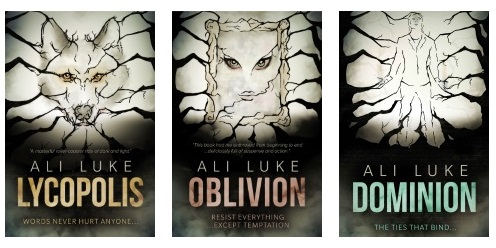
My contemporary fantasy trilogy is available from Amazon. The books follow on from one another, so read Lycopolis first.
You can buy them all from Amazon, or read them FREE in Kindle Unlimited.
0 Comments