
What’s a Plot Hole – and How Can You Fix it, Fast? (Six Examples & Solutions)

Ever been reading a story (or watching a TV show) and realised that something just didn’t add up?
Perhaps it was a character who travelled improbably fast (and with no access to money).
Maybe two characters inexplicably seemed to forget about their magical powers in the heat of action.
Or perhaps a hugely dramatic event, in public, went unnoticed by all the passers-by.
Whatever it was, it probably affected your immersion in the story. Suddenly, you were seeing the “joins” of the story, where things didn’t quite fit together logically.
Plot holes can be a huge headache for writers … and even if you haven’t spotted any plot holes to fix, you might be worrying that you’ve missed some altogether.
What is a Plot Hole?
A plot hole is an inconsistency, contradiction, or gap in the internal logic within a story. (If the story takes place in a fantasy/sci-fi world, the plot hole breaks the magic/science rules that have been established for that world.) It’s not a deliberate creative choice, but an accident: the author hasn’t quite thought something through.
A small version (in film/TV) is a continuity error, where a broken item is fixed in the next shot, a background character’s hair changes colour, etc.
Sometimes, there might be a plausible explanation for the plot hole … but the author hasn’t made this clear. If characters don’t even consider the simple, logical path to their goal rather than taking a convoluted one, that’s also a plot hole.
Patching Up Plot Holes in Your Story
Once you’ve spotted plot holes, there’s always going to be a way to fix them … even if it takes quite a bit of rewriting.
Let’s take a look at some common types of plot holes … and solutions for them.
Example #1: A Character Gets from A to B Way Too Fast
When you’re juggling different characters and different locations, it’s very easy to end up with a character getting between Location A and Location B at an improbable speed. (And if you’ve juggled some scenes around during redrafting, you might even have a character who arrives before they’ve left …)
To fix this, you have a few options:
- Extend the journey time. This is the most obvious fix, but it can often have a knock-on effect on other parts of your plot … especially if your story takes place on a tight timeline.
- Have them use a faster mode of transport. Maybe your character takes a taxi instead of two trains, regardless of the expense. Or perhaps they fly instead of driving to their destination.
- Get your characters to talk on the phone instead. If your character is only really in Location B because you need them involved in a conversation with other people there, then have the conversation take place on the phone or during a video call.
- Have a different character in the scene altogether. Perhaps you don’t actually need anyone to travel anywhere: if the travelling character isn’t that important to the scene, someone else could play their role in it.
- Use a technological/magical fix. If you’re writing science fiction or fantasy, then perhaps your character can teleport to the location, or meet characters in a virtual world or on the astral plane … whatever makes sense in your world.
Example #2: A Character Knows Something They Shouldn’t
Another common plot hole is a character having a piece of information that they haven’t yet been told. Perhaps your protagonist has a secret that only a couple of people know … but inexplicably, the antagonist has found out.
For your plot to work, the antagonist needs to have that information, but there’s no way the protagonist (or their friends) would actually tell them.
Again, there are a few ways to make this work. The character who needs the info could:
- Overhear a conversation. If they’re in the same physical location, perhaps they’re eavesdropping or even hiding to listen in. (This might work well if your characters are, say, at high school together.)
- Intercept a letter or message. In a historical novel, you might have characters communicating by letter or telegram across a distance – maybe someone could intercept this. Or in more modern works, perhaps the antagonist has installed spyware on your protagonist’s phone (or taken their phone from their pocket/bag, then put it back again after reading the messages).
- Guess the information. This could be a bit iffy, but depending on the info and the context, a character might be able to make a good guess at a secret – and have this confirmed by the reaction of the protagonist (or by someone else who’s privy to that information).
- Be told by a third party. Perhaps your protagonist’s best friend would never tell their enemy about that embarrassing incident at the school disco … but they’re a bit indiscreet and mention it to someone else. It ends up getting back to the antagonist.
Example #3: Something Violates the Established Rules of Your Story
In science fiction or fantasy, you might think that “anything goes” so plot holes aren’t an issue … but if anything, they can be more of a problem. The technology or magic of your world needs to operate by clear rules and have some limitations (otherwise, the whole story problem could be solved instantly).
Let’s say you’ve established the rule that magic requires a wand … but a character needs (for the plot’s sake) to perform magic after they’ve lost or broken their wand.
This can also come into play in non-SF/F stories. For instance, perhaps there’s a firm social or legal rule that you’ve established, and you need a character to break it … without the expected consequences.
In a situation like this, you could:
- Change the rules of your story. This will often require too much re-working of the rest of your novel … but if you’ve established a fairly small rule that’s making your plot tricky, you could simply change it.
- Re-establish the rule in question. The easiest fix is to keep the rule. For instance, if the rule is “magic requires a wand”, have the character obtain a temporary wand. Perhaps they borrow it from a friend, or maybe they claim on their wand insurance and get given one to use until their wand can be fixed.
- Make the rules (slightly) more flexible. Sometimes, a “rule” might not be completely fixed. For instance, perhaps it’s really difficult to do magic without a wand, but it’s possible – especially if your character has the right training, or they’re in a life-or-death situation.
- Have a character be mistaken about the rules. Maybe your protagonist (or other key character) thought that a particular rule applied … but it actually doesn’t. Perhaps it is possible to do magic without a wand, but they’ve only ever seen magic users working with wands, so they just assumed there was no other way.
Example #4: A Limitation or Detail Seems to be Forgotten
Plot holes can occur if something happens in your story that would put limits on a character, or that would affect the story in an ongoing way … but then you forget about working it in.
This might come up if a character gets injured. Maybe a character breaks their arm in Chapter 3, but when they reappear in Chapter 7 (which takes place a few days later), they’re using both arms without any mention of the injury.
Other limitations or important details include things like:
- A character is under house arrest / has an electronic tag, so can’t leave their home (or at least can’t travel far from it).
- A character is put in after-school detention for a week.
- A character loses some important object (their phone, a key, the MacGuffin) … only to have it again a few chapters later with no explanation.
- The horrendous storm caused flooding and road closures, but your character is still able to travel, seemingly without any difficulties.
If you’ve realised that a character should be more limited than they are in the story, then you might:
- Add in some description. Perhaps your scene works fine even if your character’s arm is in a sling … you just need to mention it, so the reader doesn’t think you forgot their arm was broken.
- Remove the limitation. In some cases, just taking away the limitation works. For instance, your character is in after-school detention all week … but you need them to go straight to the mall after school on Thursday. Maybe they successfully beg to be released from detention (or new evidence comes to light that they weren’t deserving of detention in the first place).
- Lengthen the timeline. If a limitation is going to affect the ongoing story too much (e.g. no one can leave town because the main road is flooded), then you might have to have a longer time gap, so the situation can be resolved.
- Have some kind of supernatural or scientific fix. If it suits your genre, and fits with your world-building, magic or technology can fix things quickly. Perhaps your character’s leg injury is quickly sorted out by the med bay on a spaceship, or by the wizard who lives in the woods nearby.
Example #5: A Key Question in Your Story Remains Unresolved
You don’t have to tie up every loose thread in your novel … but if you’ve trailed a key unanswered question, readers are going to expect some kind of resolution or answer. If you don’t resolve it, they may feel that this was an accidental omission … and even if they think you did it on purpose, they might be disappointed or confused.
For instance, if your story opens with parents rushing to visit an ill grandmother abroad, leaving their five children home alone, then we’ll be a bit disappointed if we never hear any mention of the grandmother again. (Looking at you, The Children Who Lived in a Barn!)
If you’ve realised you’ve left something unresolved, you may want to:
- Mention it briefly in the narrative. A quick incident in the narrative can sometimes be enough to resolve the situation. Perhaps a letter arrives from the grandmother, who’s doing much better now.
- Add in some dialogue to explain things. If you don’t want to add anything extra into the narrative, a couple of lines where the characters are discussing their grandmother would reassure readers that this aspect of the plot hasn’t been entirely forgotten.
- Cut out the unresolved situation, if it’s not important enough to get a mention at/near the end of your novel. Maybe you have a minor character who runs off to join the circus: if readers are left wondering how it all worked out, perhaps it’s easier to have that character stick around at home instead.
- Include some acknowledgement of the unsolved mystery. Perhaps your characters never find out who put £50 through their door when they desperately needed it to pay rent … but they’re still discussing it, and perhaps take some greater meaning from it (e.g. that there are kind, caring people who are rooting for them).
Example #6: A Character Behaves in an Unbelievable Way
The final type of plot hole is with characterisation. If a character does something stupid, without a good enough reason, just because it fits the plot … then the reader is going to feel annoyed.
For instance, if they enter the spooky house in the woods for no reason other than curiosity, we’ll wonder how they could be so silly!
Or if they fall out with their love interest over what’s clearly an obvious misunderstanding – that could be easily cleared up with a ten-second conversation – we’re going to find that at least somewhat ridiculous.
You may be able to justify out-of-character behaviour if you:
- Give them a plausible reason. Perhaps the action they take is vital to your story … but they need a much stronger “why” behind doing it. If they can hear what sounds like a child crying inside the spooky house in the woods, they may well run in there without a second thought (and we’ll admire them for it).
- Have them in a state of (understandably) heightened emotion. Maybe your plot requires your usually cool-headed character to lose their temper … so show why they’re so upset. Maybe what seems like an innocent misunderstanding touches on a huge trigger for them, for instance.
- Tweak their characterisation. If your rom-com needs a big misunderstanding between characters, perhaps at least one of them needs to be a little more hot-headed, or bad at backing down even when they know they’re in the wrong. Establish this early on, and the misunderstanding will be more believable.
- Establish a skill or talent earlier. Let’s say you have a scene where your character needs to step in and play the piano at a concert. This is going to seem unbelievable if you’ve never mentioned their musical ability before … but if you plant something earlier in the story, it could work. (This doesn’t even need to be explicit: e.g. just mentioning that there’s a piano in their living room could work.)
Watching Out for Plot Holes Throughout the Writing Process
Plot holes can creep in at almost any point.
You might need to look out for them as you develop your story idea and structure your novel: a little work up front can avoid the mess of a big plot hole in the middle of your story.
Often, though, plot holes are fairly small ones that creep in during the editing process. Maybe you moved a few scenes around, but now your character needs to be in two locations at once. Perhaps you adjusted when information is revealed, and now your antagonist can’t find out from their lackey in Chapter 10, because they need to know it in Chapter 8.
It can be hard to spot plot holes when you’re very familiar with your story: you might not have the distance from the work to realise that something doesn’t quite add up. This is where it’s really helpful to get beta readers involved, or to ask for feedback from writer friends.
Plot holes can be annoying, but they’re often just part of the writing and editing process. By looking out for them (and having some potential fixes to choose from), you’ll be able to edit and polish your story so that it’s a satisfying, immersive read.
In Writers’ Cafe, members can bring their work to live feedback hours – or post it in our dedicated feedback space at any time – to get direct feedback on their writing from me and fellow Cafe members. Whether it’s a plot hole that needs fixing, dialogue that needs a tweak, or a character who’s not quite coming across right, we’re here to help.
About

I’m Ali Luke, and I live in Leeds in the UK with my husband and two children.
Aliventures is where I help you master the art, craft and business of writing.
Start Here
If you're new, welcome! These posts are good ones to start with:
Can You Call Yourself a “Writer” if You’re Not Currently Writing?
The Three Stages of Editing (and Nine Handy Do-it-Yourself Tips)
My Novels
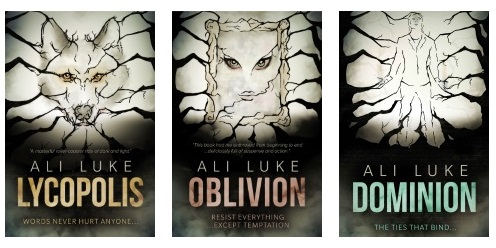
My contemporary fantasy trilogy is available from Amazon. The books follow on from one another, so read Lycopolis first.
You can buy them all from Amazon, or read them FREE in Kindle Unlimited.
0 Comments